


 Shkruar nga Vistazo
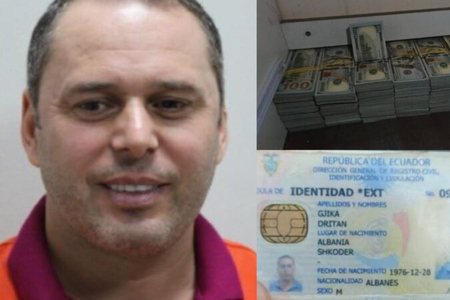
Ecuadorian media have released details about Dritan Gjika, the person suspected of running a cocaine trafficking network. According to them, he was linked to Ecuadorian businessman Rubén Chérres, who was killed last year after a corruption plot with public sector companies was uncovered.
The organization operated by shipping cocaine from Colombia, through Ecuador, to Europe and then laundered the money by buying real estate between legally established trading companies.
The name of the Albanian, born in 1976 and living in Ecuador since 2013, came to light as one of the main characters of the conspiracy involving Rubén Cherres (friend of Danilo Carrera, brother-in-law of former president Lasso). Both were partners in several companies.
According to data from his country, Dritan Gjika completed high school in Albania. However, in Ecuador his finances took off during the pandemic.

What was Gjika's profitable activity in Ecuador? Gjika founded a dozen companies on the same day, June 17, 2021, together with Rubén Cherres. The suspicious thing about the companies created at the same time is that they have a wide range of social objects, ranging from meat production, tourism and cultural promotion.
In an investigation by Vistazo Magazine in alliance with the Global Initiative Against Organized Crime and the Prensa y Sociedad Institute, IPYS, it was revealed that, on January 7, 2023, on the eve of the distribution of the first audio revealing the case involving Cherrez, the Albanian Gjika was leaves for Turkey. Since then, his whereabouts are unknown.
The anti-drug director of the National Police informed that at the moment he has not been arrested, but there are doubts about the places where he is hiding.
"We are coordinating with our counterparts in Spain so we can find him," Villarroel said.
He also emphasized that Gjika and Cherres have been partners in several construction companies, from which there is currently no evidence that they participated in the transportation of drugs.
The Great Operation 'Phoenix XIII'
57 raids were carried out in Spain and Ecuador. In Ecuador, there were 40 raids in the provinces of Guayas, El Oro, Santa Elena, Cotopaxi, Pichincha and Azuay. While in Spain there were 17, based in Barcelona, Málaga, Marbella and Valencia.
As a result of the simultaneous operations, 30 people were arrested - 18 in Ecuador and 12 in Spain - of various nationalities, including Ecuadorians, Colombians, Argentines, Spaniards, Albanians and Chinese. However, Villarroel explained that the number of people involved could increase.
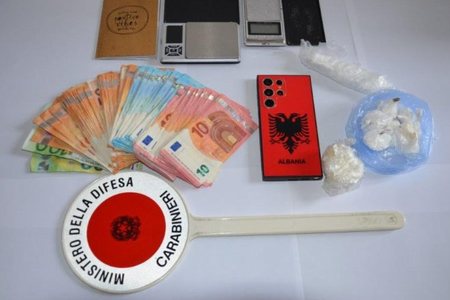
Also, during the investigations, 2377 kilograms of drugs, 10 weapons, 27 mobile devices, 22 vehicles, real estate, nearly 500 thousand euros were seized in Spain, while in Ecuador the money is still being counted.
Villarroel added that, in addition to the leader, the structure also had leadership coordinators, in charge of connections between groups, and logistics coordinators, responsible for transportation, storage and security. Also, they had people who made the payments for the drugs being transported to Europe.
" They brought the drugs from Valle del Cauca (Colombia) and reached the city of Tulcan (Ecuador) by land. They then advanced along the roads in trucks to collection centers, where they hid the narcotics, in Cotopaxi, Los Ríos and Guayas to later extract the drugs, transfer them to farms and then camouflage them in containers at the ports ," said the spokesman for the National Police.
According to the investigation, six companies legally incorporated in Ecuador and four in Spain were identified.
400 officers from Ecuador and 350 from Spain have been mobilized for this operation. In addition, Daniel Vázquez, head of the Operative Section of the Central Anti-Money Laundering Brigade of the Spanish Police, reported that they had the support of European organizations such as Europol to realize what he called an unprecedented milestone. And he added that, "organized crime knows no borders," so cooperation between the two nations was essential to dismantle an international criminal network. / Pamphlet




Lini një Përgjigje