


 Shkruar nga Pamfleti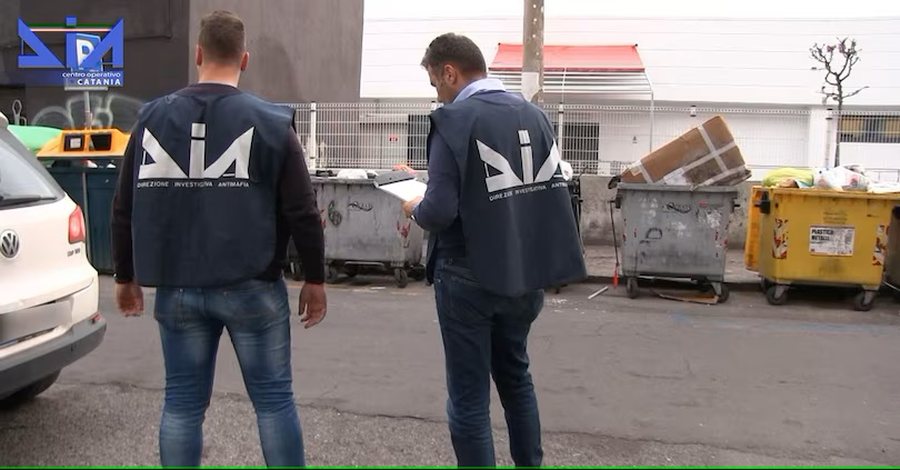
Albanian groups are capable of managing the transport of large drug shipments and communicating directly with Latin American cartels...
Albanian crime continues to be among the most dangerous in Italy and beyond. The Italian Antimafia has published its work report for 2024 today and a special section is dedicated to Albania.
According to Antimafia, mafia groups have infiltrated companies and civil institutions in order to influence decision-making processes, protecting the proceeds of criminal activities with increasingly complex forms of money laundering. According to it, in many cases the local mafia is assisted by Albanian groups.
“ The most active organizations appear to be those of Albanian nationality, from North Africa and those from Sub-Saharan Africa (especially Nigeria), with transnational projections in other European countries such as Belgium, the Netherlands and Spain, as well as in South America. Albanian criminal organizations, in particular, play an increasingly secondary role compared to the exponents of the 'Ndrangheta and the Camorra of Bari, being able to rely on their contacts in the main trading ports of Northern Europe and in South America ,” the report states.
Excerpt from the Antimafia report on Albania
Albanian crime represents one of the most complex and structured forms of foreign crime in Italy. Albanian criminal groups, widely present throughout the national territory, operate with different organizational and operational approaches. Some operate in small, sometimes multi-ethnic groups, focused mainly on crimes against property. Others, meanwhile, have formed strong and long-lasting criminal organizations, rooted in the territory and with operating methods that in some cases approach those of the mafia.
A distinctive feature of these organizations is the use of violence, which is used both to resolve internal conflicts for control of the drug market, and as a means of intimidation and control. A feature of them is the membership system, which is often based on family ties or on ties between individuals originating from the same city or region of Albania. These ties are reinforced by certain codes of conduct that consolidate the internal structure of the groups.
Drug trafficking remains the main sector of activity and the income derived from it is increasingly being invested in the purchase of legal businesses and real estate. Investigative evidence also confirms that Albanian groups are involved in other illegal activities, such as arms trafficking, human trafficking, exploitation of prostitution and the commission of fiscal crimes.

A recent investigation by the State Police, concluded on December 7 with the arrest of two citizens of Albanian origin, has also shown that Albanian criminality is also very active in advanced sectors such as online commerce. In drug trafficking, these ethnic groups sometimes collaborate with other foreign criminal organizations and are distinguished by their credibility and their already consolidated role at an international level. They are capable of managing the transport of large drug shipments and communicate directly with Latin American cartels for the import of significant quantities of cocaine intended for the supply of Albanian cells operating in the main Italian markets.
The ability to operate on a global scale and to offer drugs at competitive prices has enabled these groups to establish strong relationships with Italian criminal organizations, including those with a mafia character. Many anti-drug operations carried out in different regions of Italy have revealed real operational synergies between Albanian and local organized crime, favored by a stable connecting line between the Albanian and Apulian coasts.
The so-called “Adriatic route” is a key node for the passage of narcotics from Albania to Italy and the rest of Europe, also facilitated by air connections with the Balkan countries bordering the Adriatic. These relations are also facilitated by the lack of rivalry for control of the territory, as the Albanians are mainly involved in the supply of drugs, while the distribution is left to Italian criminal groups. Cocaine is imported into Italian territory by sea and land, along the main European distribution routes, relying on their collaborators in Northern Europe, through whom they have managed to penetrate the main commercial ports (Antwerp, Rotterdam and Hamburg) . /Pamphlet



Lini një Përgjigje