


 Shkruar nga Ilir Çumani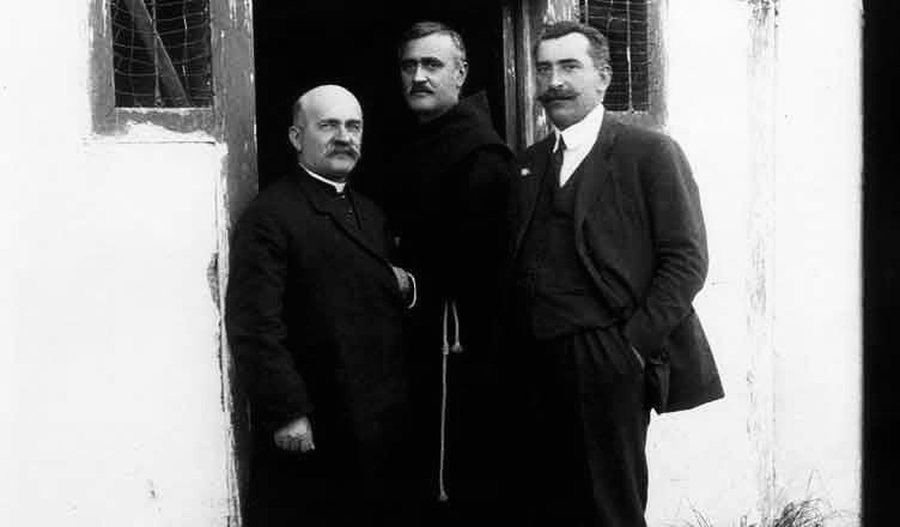
They never saw the state as property, but as a trust; they did not expect the applause of the moment, because they knew that time was the most accurate and strict judge at the same time.
In this old black and white photo, Ndre Mjeda, Gjergj Fishta and Luigj Gurakuqi appear next to each other, with tired but calm faces. Their gazes are sharp, but with a light that does not leave you indifferent. They are the faces of real men who saw Albania not as a source of profit, but as a child that needed to be raised, educated, nurtured and protected.
They never saw the state as property, but as a trust; they did not expect the applause of the moment, because they knew that time was the most accurate and strict judge at the same time.
Mjeda worked for the mother tongue, Fishta for culture, Gurakuqi for the state. All three, each in their own way, worked only for Albania.
Today, as many photos of politicians appear daily in the media and social networks, at ceremonies, in endless "official" activities, it is impossible not to notice the deep contrast between those who built the state and those who today forget even the meaning of the word "state".
The builders of the past did not see themselves as heroes; today's politicians often seek to appear as such. They once gave their lives for Albania; many of them today take from Albania, and give it almost nothing.
Every November, the ritual is the same: flags waving, beer being released duty-free, long sentences being recited with a stilted solemnity.
Politicians, often in the front row, give speeches that talk about freedom, sacrifice, independence, and state formation, while, in everyday life, they are the first to destroy institutions, ignore laws, and trample on citizens.
In this annual theater, celebration becomes the decor, history the backdrop, while reality is silent beneath the carpet. Their patriotism, photographed from every angle, remains only in the image.
But the state is not built with appearances, nor with statuses on social networks, nor with heavy, pompous, supposedly "patriotic" speeches.
The state is built with work, justice, responsibility, transparency, honesty, and sacrifices that the camera cannot see.
This is exactly what the three big names we see in this photograph had: a silent but unwavering dedication that sought neither benefits nor privileges.
While today's politicians often appear surrounded by unbridled luxury, protocols, and privatization of interests, those of the past lived in poverty, but left behind an inexhaustible national wealth.
The reality of Albania today resembles a house once built with strong foundations, but left at the mercy of those who see it as plunder.
Institutions that were supposed to be independent have often become political tools. Laws that were supposed to be sacred are interpreted according to the next political interest.
Shumë shërbime publike janë katandisur në forma burokratike që lodhin qytetarin dhe ushqejnë klientelizmin e nepotizmin. Besimi tek shteti është tretur. Dhe gjithmonë, në çdo krizë, në çdo keqfunksionim, shfaqet e njëjta fytyrë politike që flet për patriotizëm.
Kjo është një plagë e madhe morale që nuk fashitet me protokolle ceremoniale shtetërore. Shqipëria po zbrazet nga truri, nga rinia, nga energjia, ndërsa politika zbrazet nga përgjegjësia. Në vend që të ndërtohet shtet, ndërtohen fasada; në vend që të prodhohet drejtësi, prodhohen justifikime; në vend që të forcohen institucione, forcohen individë të gjithëpushtetshëm.
Dhe ndërsa populli përballet me sfida reale, politikanët e sotëm shpesh zhyten në retorikë boshe, në pretendime të lodhura për atdhedashuri, në performanca që nuk lënë gjurmë.
Por historia nuk është naive; ajo nuk i ngatërron lehtë ndërtuesit me rrënuesit. Ajo i shikon qartë dallimet, i shfleton me qetësi dhe i lë të shkruara me ngjyrë të pashlyeshme: dikush ndërtoi ditë pas dite, dhe dikush tjetër ndërroi vetëm dekorin.
Ndërkohë që politikanët sot vendosen në podiume për të “nderuar” të shkuarën, është vetë e shkuara që nuk i nderon ata.
Mjeda, Fishta, Gurakuqi nuk u shpallën patriotë, ata u bënë të tillë me vepra të çmuara në shërbim të kombit. Politikanët e sotëm shpesh shpallen atdhetarë pa dhënë prova për vepra të mira.
Dita e Flamurit dhe ajo e Çlirimit nuk janë vetëm ditë feste, por ditë e gjykimit moral. Janë ditë kur kombi shikon pas për të kuptuar se nga jemi nisur, dhe shikon rreth e rrotull për të parë se ku kemi mbërritur.
Janë ditë që na kujtojnë se shteti nuk është trashëgimi biologjike, nuk është pronë partie, nuk është instrument për të mbuluar mungesat e sotme me lavdinë e djeshme.
Shtetbërja është një arkitekturë e brishtë që kërkon kujdes dhe përgjegjësi të përditshme. Dhe kur kjo arkitekturë lihet në dorë të atyre që nuk dinë, ose nuk duan ta mirëmbajnë, gjithçka fillon të rrënohet pak nga pak.
Në fund, Shqipërisë i duhet një kthim tek modeli i atyre që vepruan për kombin, jo tek modeli i atyre që veprojnë për vete. Sot, më shumë se kurrë duhet të rikthehemi në seriozitetin e ndërtimit të shtetit, në idealin që e ngriti një komb të vogël drejt lirisë dhe identitetit të tij.
Ngase ata që ndërtuan shtet nuk u morën kurrë me protagonizëm; ata lanë një trashëgimi të pasur. Ndërsa ata që harrojnë të ndërtojnë shtet, edhe kur afrohen nëpër festa kombëtare, e dinë fare mirë se historia nuk do t’i vendosë kurrë pranë Mjedës, Fishtës e Gurakuqit. Historia i vendos njerëzit jo sipas fjalëve që shqiptojnë para flamurit, por sipas veprave që lënë pas.
Dhe pikërisht këtu qëndron dilema e madhe e kohëve tona: Shqipëria është ende në udhëkryqin mes atyre që e ngritën dhe atyre që rrezikojnë ta rrënojnë.
Future generations will easily understand who deserves eternal honor and who lived only for a day's applause. The truth is simple: the state is built only by those who love it more than themselves. And Albania awaits these people to return.


Lini një Përgjigje