


 Shkruar nga Pamfleti
These items specifically belong to the Illyrian tribe of Enkelejts, who lived in the regions around Lake Ohrid and created the first dynasty of the Illyrian kingdom at the end of the 5th century BC.
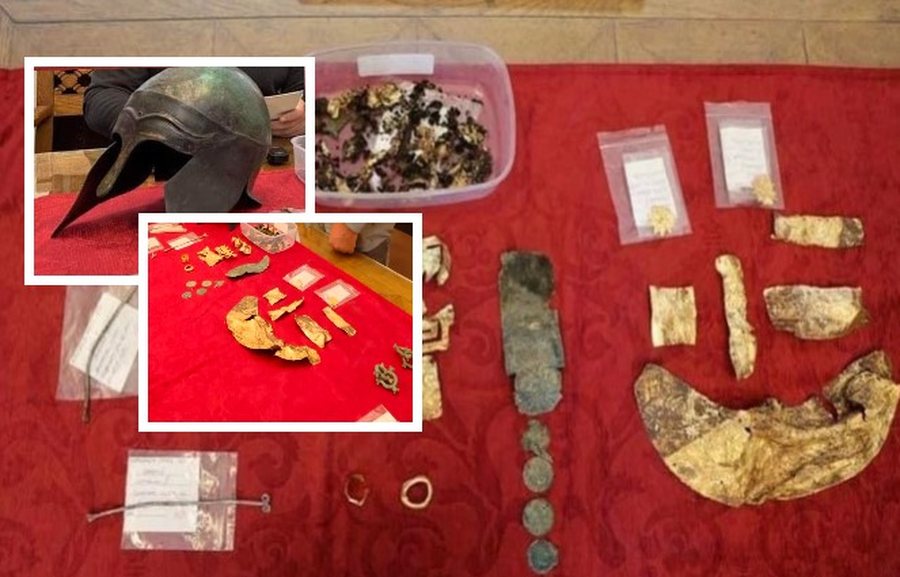
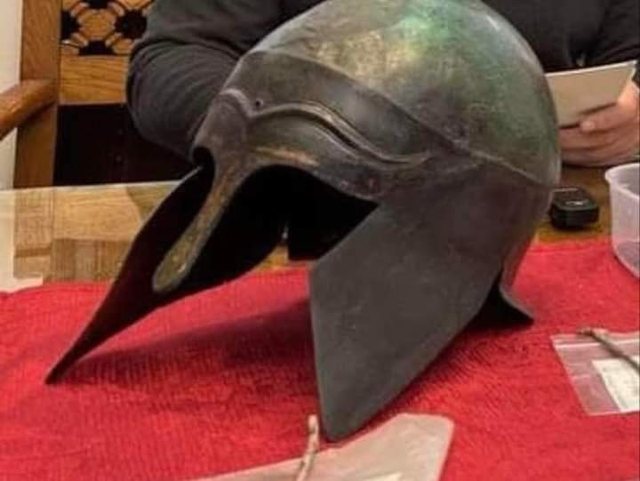
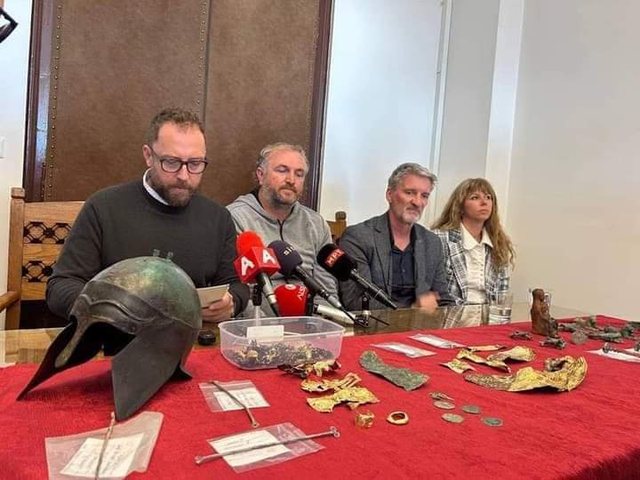
Another surprising archaeological discovery has been found in Struga. It is about a helmet which is said to be the helmet of the Illyrian tribes since ancient times.
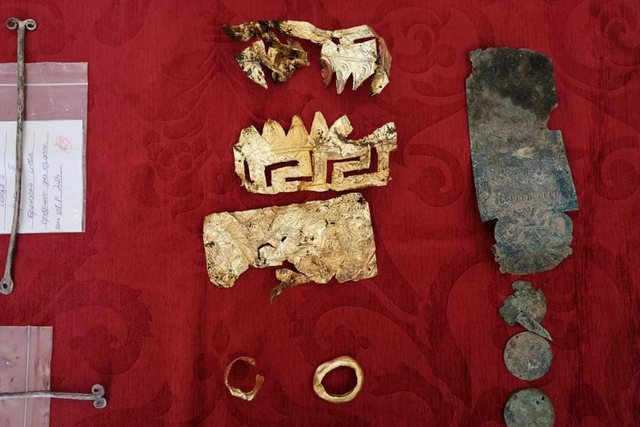
Also, some objects have been found in the royal tomb which is said to date back over 2500 years ago, which contain ceramic materials, bronze and gold.

According to archaeologists, this type of helmet comes from the ancient Pelasgian tribes, which is known as "Corinthian Helmets", used in Southern Illyria by the king "Pyrrhus of Epirus".
According to archaeologist Fitni Dalipi, these items belong specifically to the Illyrian tribe of Enkelejts, who lived in the regions around Lake Ohrid and created the first dynasty of the Illyrian kingdom at the end of the 5th century BC.
"Over 100 artifacts have been found here since we finished the excavations. We came to the conclusion that these artifacts belong to the population that lived in the basin of Lake Ohrid, Ohrid, Struga Pogradec. They are the tribe of Angels. They are 2,600 years old" , said archaeologist Fitni Dalipi.
According to him, these findings are found once in 100 years.
"We have linen, bronze, iron artifacts, we have silver and gold. In other words, it is a very rich tomb, which means that the population that lived in this area was a very economically strong population that had the opportunity to import objects from abroad," added the archaeologist.
The Minister of Culture, Zoran Lutkov, also spoke about their importance a few days ago, who while thanking the owners of the land, Bukuri Shemshedini and Shefit Shemshedini, who have detected, denounced and helped in these excavations, emphasized that this was the biggest archaeological discovery in Macedonia. North for the last 100 years.
The findings will be sent to the Archaeological Museum of Skopje, as there are no conditions to keep them in the Ohrid Museum.

We remind you that an ancient statue was found these days in the village of Raveni, near Gostivar, in North Macedonia.
The statue has natural height, without the missing head, it is one and a half meters high and made of a single block of marble, together with the base.
The well-known archaeologist, Professor Doctor Luan Perzhita, who carefully examined the images of the statue, says that the discovery is important.
"The CORINTHIAN helmet found in Struga is the helmet of the Illyrian tribes that originates from ancient times, the Pelasgians.
The much-awaited discoveries, not only by the residents of Struga, but also those throughout the Albanian territory, came to light!
■The objects found in the royal tomb contain ceramic material, bronze and gold. The bequest and memorial seems to have been made by the woman as various ornaments are found such as; spears for holding hair or clothes etc...
Above all, what interested us the most is the helmet.
■This type of helmet comes from the ancient Pelasgian tribes, known as "Corinthian Helmets" and widely used in southern Illyria as well as by our king "PYRHO OF EPIRUS".
In the presentation we also have objects of various gold works. But we don't have any information about the "mask" yet!", writes etymologist Lulzim Osmanaj.







Lini një Përgjigje