


 Shkruar nga Antara Haldar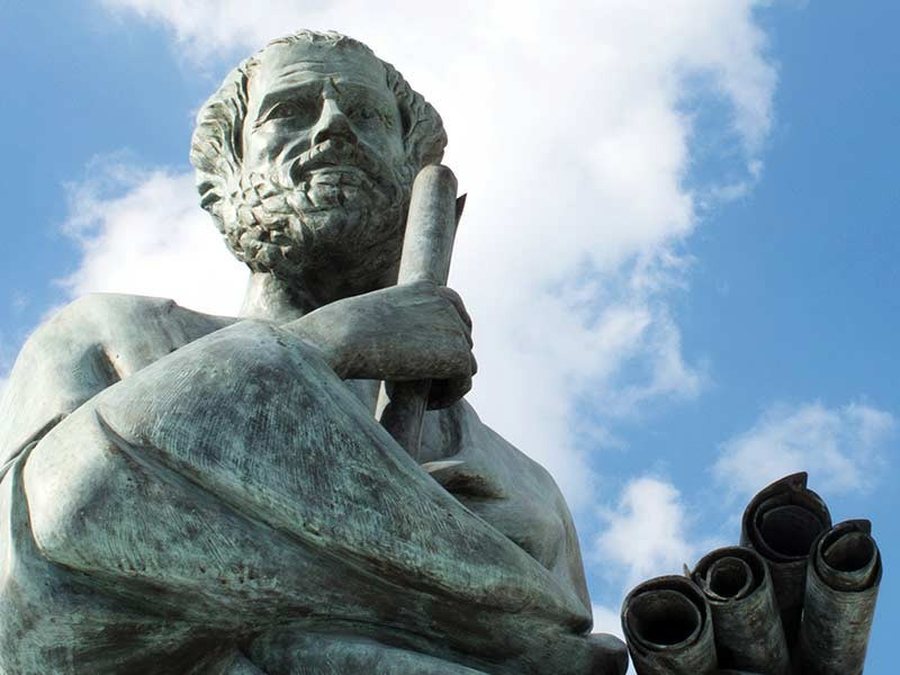
From the United States and the United Kingdom to India and Hungary, democracies are grappling not only with polarization but also with a deeper malady: the erosion of civic trust, the collapse of shared narratives, and the loss of public purpose.
By examining what constitutes the good life, Aristotle offered a framework that is extremely relevant to our current era of moral confusion and civic fragmentation. He would have seen that underlying all our apparent differences is a shared desire for purpose, belonging, and dignity.
In a 1995 speech outlining his “Visions for the 21st Century,” renowned astrophysicist Carl Sagan drew attention to the fragility of human civilization, given our infinitesimally small presence within the cosmos. Our future, he warned, depends entirely on our learning to live together with wisdom and humility.
Apparently, we didn’t get the message. Three decades later, our “pale blue dot” is torn apart by geopolitical turmoil, and the late twentieth-century hope for a rising global liberalism has faded. In the face of such radical uncertainty, the best strategy may be to go back to basics. And to explore the deepest question of all—what is the good life?—there is no better guide than Aristotle, whose Politics and Nicomachean Ethics provide a framework that is critically important for this age of moral confusion and civic fragmentation.
Unlike the modern liberal tradition, which exalts individual autonomy, Aristotle started from a different premise: human beings are not self-contained entities, but social animals whose flourishing depends on the cultivation of virtues within a political community. Living well does not mean simply doing what you want; rather, it requires the cultivation of character through lifelong education and learning, as well as engagement in a shared civic life. (Not coincidentally, the contemporary appeal of many nationalists and populists is that they offer a vision of the good life.)
Aristotle’s perspective stands in stark contrast to the libertarianism that has long defined the traditional right (at least until recently) and the expressive identity politics of the left. He reminds us that freedom is not simply the absence of constraint, and that justice is not simply the fair distribution of rights. True freedom, as he saw it, is the ability to govern oneself wisely and ethically in cooperation with others; and true justice is found not just in abstract rules, but in practices that enable people to live lives of purpose, dignity, and excellence.
This language has been lost in our current political culture. We legislate on the basis of competing claims of rights—my right to speak versus your right to defend yourself versus their right to engage. But without a shared concept of our shared purpose—our telos—we end up locked in zero-sum battles over whose individual preferences and identities should take precedence. The result is “hyper-politics”: a state of endless moral contestation with no moral basis.
Aristotle was able to provide the shared lexicon we need. He saw politics not simply as a mechanism for sharing power, but as a means for cultivating virtue (excellence). A well-organized polity does not just prevent harm; it forms good citizens, nurturing responsibility, reflection, courage, moderation, and concern for the common good.
Contrast this concept with today’s world. Our institutions often function as marketplaces of grievance, where attention, status, and anger have the greatest purchasing power. Our media ecosystems—especially online ones—are designed to encourage tribalism. Our education systems increasingly avoid talking about moral formation, lest they be accused of politicization. And our politicians have gone from paragons of public character to its antithesis.
From the United States and the United Kingdom to India and Hungary, democracies are grappling not just with polarization but with a deeper malady: the erosion of civic trust, the collapse of shared narratives, and the loss of public purpose. What Aristotle called eudaimonia—individual flourishing through participation in a just and well-organized community—has been replaced by an empty concept of success, narrowly defined as wealth, media virality, or personal power untethered from responsibility.
Embracing an Aristotelian conception of politics and the good life does not mean turning back the clock or ignoring the advances of modern liberal democracy. We rightly value rights, pluralism, and protection against tyranny. But Aristotle reminds us that no political system can flourish without a moral purpose that answers fundamental questions: What kind of people do we want to become? What kind of character should our institutions cultivate? How do we shape citizens capable of exercising true freedom, as opposed to unrestricted freedom?
Education, in an Aristotelian register, is not just about the accumulation of skills or knowledge. It is about the formation of character through exposure to models, ethical reflection, and active participation in civic life. Political consultation is not simply a clash of interests, but a shared pursuit of practical wisdom about how to live well together. Leadership is understood not as performance, but as stewardship—an exercise in guiding others toward a common good.
Such a policy may sound naive in an age of cynicism. But perhaps cynicism has become a self-fulfilling prophecy. True naivety lies in the belief that we can sustain democracy without cultivating the moral and civic virtues that make it possible. Aristotle understood what many modern theorists have forgotten: the health of a society depends not only on its laws or its economy, but also on the character of its people.
A defining feature of our time is that many people, raised to see themselves and others as isolated voters – like Homo economicus – feel powerless, disconnected and hungry for meaning. Some seek it in identity or nationalist projects, others in market success. But beneath these divergent paths lies a shared desire for purpose, belonging and dignity. Aristotle speaks directly to this desire, offering not a technocratic solution or a partisan slogan, but a moral vision of politics as a space for human flourishing.
Like the Japanese art of kintsugi (repairing broken pottery with gold), Aristotelianism teaches us that the broken polis of the twenty-first century has the potential to become whole. The task is not to hide the cracks, but to fill them with virtue, purpose, and a shared concept of the common good. / Adapted from “Pamphlet” by “Project-Syndicate”








Lini një Përgjigje