


 Shkruar nga Kastriot Kotoni
 Reflections on a murder that can still be heard.. this is what makes his dilemma interesting to this day...
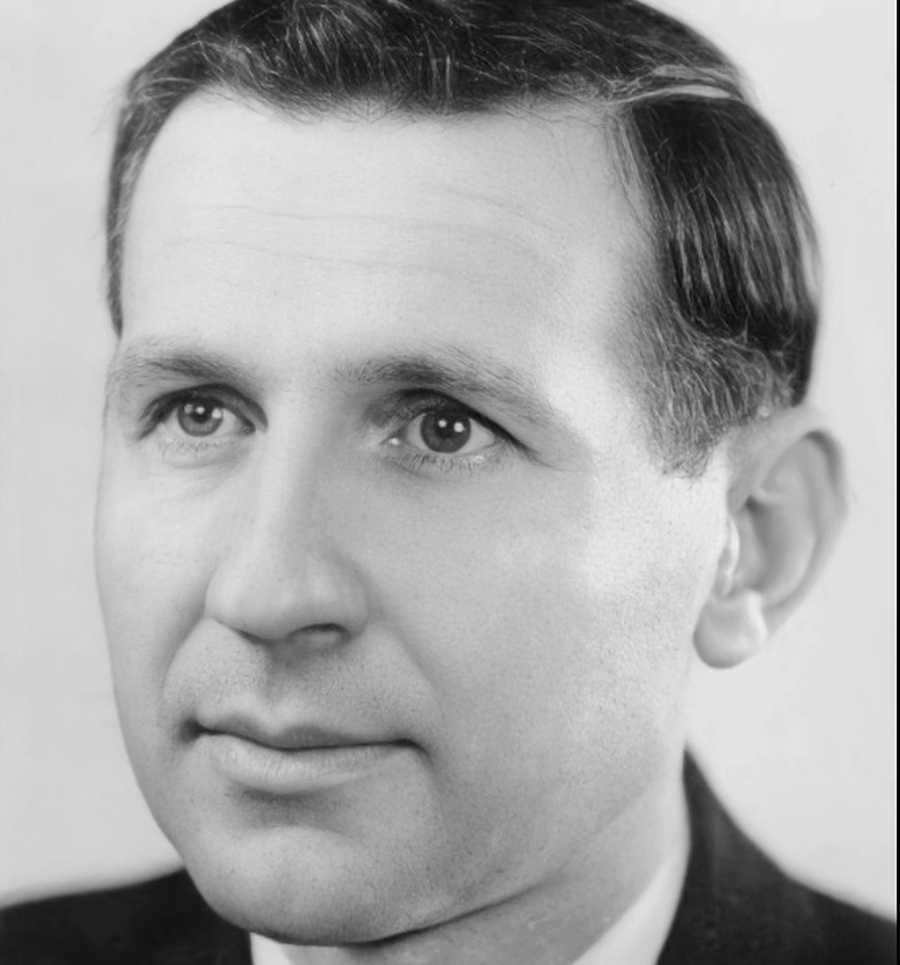
In Perlat Çaushi's book entitled "Who killed Mehmet Shehu?" In the chapter "Also a CIA agent?! author Perlat Çaushi writes as follows.
According to the "Synoptic Table", which Enver Hoxha drew up, Mehmeti was also put in the service of the American CIA. Enveri is not spared: "From the investigations after the suicide of Mehmet Shehu and from the documents that the Party has in hand, it turns out that Mehmet was recruited by the Americans when he was attending Fulzi's school in Tirana. By order of this, he went to study at a military school in Italy, but by order of the American agency he was also sent to Spain. Further, according to Çaushi, we have a treatment with the text of Nexhmije Hoxha in the book "Friendship Betrayed" while writing
"When he was recruited as a CIA agent is not known exactly, but, as it appears from a letter of an American CIA agent sent to an old Albanian agent, this happened before Mehmet Shehu went to the camp French refugees, after the Anti-Fascist Internationalist War in Spain..."
As can be seen, there is a discrepancy between what is written in the "Synoptic Table" and what Nexhmije Hoxha writes. Enver Hoxha ensures that Mehmet Shehu was recruited at the "Technical" school in Fulzi, while his wife defines, as the time of recruitment, a later period, before Mehmet went to the refugee camp in France. Based on the declassified file of Hari Fulzi, it appears that this personality was the director of the "Technical School" from 1922 to 1933, after which time he was nationalized by the Zog government and he returned to America. Fulzi was recruited by the OSS, America's secret service before it was called the CIA, in 1943 and not while he was running the technical school. In the years when Mehmet Shehu was studying at the technical school, Fulzi was not engaged in agency activity. Perlat Çaushi writes that: of all the documents of the CIA and Itelijens Servis, declassified until today, there is not even the slightest confirmation that Mehmet Shehu was in their service. In this context, either Enver's version or Nexhmija's version falls down. The failure and great losses suffered by the Anglo-Americans in the years 1948-1955 cannot justify the opinion that these failures were deliberately fabricated to strengthen the positions of the "agent". In the next chapter of the book entitled "Informative Miracle from Argentina", the author writes that: I don't want to dwell on this ordinary information. First of all, this is a fake information in English (forgery) created, either by the way of the content, or by the way it was added to the hand. As a general rule of the secret services, two files are kept for each agent, the personal one and the work one. In the first one, you find material or preliminary reports about the candidate's profile, the report of the proposal to recruit him, the candidate's reactions, the reward receipts signed by him, various characteristics, operational plans, line of conduct and tasks that are given to him to carry out etc. etc. While in the other file you will find the information reports where the agent supplies the detective who keeps him connected and through him, the discovery center. It is true that the correspondence between the scout in the field and the center, for the sake of secrecy, is coded so that, if eventually this correspondence falls into the hands of the enemy, the secrecy of its content can be preserved as much as possible, especially agent identity. But when this correspondence, transmitted by mail or radiogram, arrives at the center, the detective who administers the file makes the decryption and places the document in the corresponding file. Thus, anyone who receives the file in question for study does not need to refer to the list of pseudonyms, except for sources of information that may belong to another sector, although in the present case, we are dealing with one sector: Albania. The question arises - the person who photographed these documents, that is, had them in his hands, why does he not give us the complete ones,are you giving us the truncated and undeciphered correspondence? In the next chapter of the book titled "Did Mehmet Shehu get killed, or did he kill himself?" In his arguments, the author, with the smell of a superior level detective, elaborates, as follows, his opinion on the enigma of this event, which, as he says, has today been completely discredited. Since 1990, the print and television media were filled with articles and comments about the mystery of whether Mehmet Shehu killed himself or was killed. In violation of the rules of the State Archive, documents were published, still not declassified, minutes of the Political Bureau of the Central Committee of the party, expertise, testimonies of all categories, social, members of the Political Bureau, senior officers of the army of the Ministry of Internal Affairs, minutes of the fugitives, members of the staff who served Mehmet Shehu, books were written and conferences were organized. It was and remains a topic for nearly 42 years, for which public opinion is very interested and insatiable. Thus the members of the Political Bureau themselves, who were aware of the letter that Mehmet Shehu had left and who were given the opportunity to speak, did not agree. Likewise, the group of people who served that state personality, including doctors, or officers of the Ministry of Defense and the Interior, analysts and publicists, were divided. It is difficult to put forward from what premise people started to defend their thesis. Some members of the Hoxha family, even to this day, defend the thesis that Mehmet was killed by the Nexhmije-Ramiz duo, to pave the way for the latter to take over the country after the death of Enver Hoxha. Legends don't exist. So the tracks of Shehu's suicide or murder are endless and each of them is protected by its lawyers. Perlat Çaushi himself points out, I am convinced that Mehmet Shehu in a state of extreme despair decided and killed himself. We all know who pushed him to do this act. It would take thousands of pages to disprove the idea that Mehmet Shehu was killed. The most indisputable proof that he killed himself remains the letter he left behind.members of the staff who served Mehmet Shehu, wrote books and organized conferences. It was and remains a topic for nearly 42 years, for which public opinion is very interested and insatiable. Thus the members of the Political Bureau themselves, who were aware of the letter that Mehmet Shehu had left and who were given the opportunity to speak, were not in one mind. Likewise, the group of people who served that state personality, including doctors, or officers of the Ministry of Defense and the Interior, analysts and publicists, were divided. It is difficult to put forward from what premise people started to defend their thesis. Some members of the Hoxha family, even to this day, defend the thesis that Mehmet was killed by the Nexhmije-Ramiz duo, to pave the way for the latter to take over the country after the death of Enver Hoxha. Legends don't exist. So the tracks of Shehu's suicide or murder are endless and each of them is protected by its lawyers. Perlat Çaushi himself points out, I am convinced that Mehmet Shehu in a state of extreme despair decided and killed himself. We all know who pushed him to do this act. It would take thousands of pages to disprove the idea that Mehmet Shehu was killed. The most indisputable proof that he killed himself remains the letter he left behind.members of the staff who served Mehmet Shehu, wrote books and organized conferences. It was and remains a topic for nearly 42 years, for which public opinion is very interested and insatiable. Thus the members of the Political Bureau themselves, who were aware of the letter that Mehmet Shehu had left and who were given the opportunity to speak, did not agree. Likewise, the group of people who served that state personality, including doctors, or officers of the Ministry of Defense and the Interior, analysts and publicists, were divided. It is difficult to put forward from what premise people started to defend their thesis. Some members of the Hoxha family, even to this day, defend the thesis that Mehmet was killed by the Nexhmije-Ramiz duo, to pave the way for the latter to take over the country after the death of Enver Hoxha. Legends don't exist. So the tracks of Shehu's suicide or murder are endless and each of them is protected by its lawyers. Perlat Çaushi himself points out, I am convinced that Mehmet Shehu in a state of extreme despair decided and killed himself. We all know who pushed him to do this act. It would take thousands of pages to disprove the idea that Mehmet Shehu was killed. The most indisputable proof that he killed himself remains the letter he left behind.
Many supporters of the version that Mehmet was killed, rely on the fact that no autopsy was performed on him. Let's rule out this variant altogether! Enver Hoxha certainly knew the truth even before the autopsy was done, we would have today an autopsy report with the result that Enver Hoxha liked. But the years pass and now it becomes completely irrelevant which claim is true. This great murder has already been committed. And all the shots of an era and a system that has gone down fell on the murderer. Those who have remained alive and are divided in their opinions on whether it was a murder or suicide, are also divided in their love or hatred towards these two most important figures of the past half century. Those who have nostalgia and do not want to separate Enver Hoxha and Mehmet Shehu are understandable, regardless of how they themselves were separated. And it turns out that there are many people who are proud of the national liberation war and an era of trying to move forward, and they don't like to see evidence or hear justifications, how Enver Hoxha separated from Mehmet and pushed those comrades forward. squads of his riflemen, or unleashed murderous batteries of slander on those whom he failed to kill himself./ Pamphlet




Lini një Përgjigje