


 Shkruar nga Pamfleti
EU Council: Albania must intensify work to meet closing objectives in all chapters
Albania has opened all negotiating groups with the European Union, a symbolic step that marks progress in the integration process, but behind this positive diplomatic campaign, a stern warning from Brussels is hidden: high corruption and stalled justice remain real obstacles that could slow or block further progress.
The official conclusions of the EU Council clearly state that the progress of the negotiations will directly depend on concrete results in the core set of chapters dealing with the rule of law and the functioning of justice. To advance in the process, Albania must meet the interim objectives in chapters 23 and 24, which relate to the independence of the judiciary, the fight against corruption and the guarantee of fundamental rights.
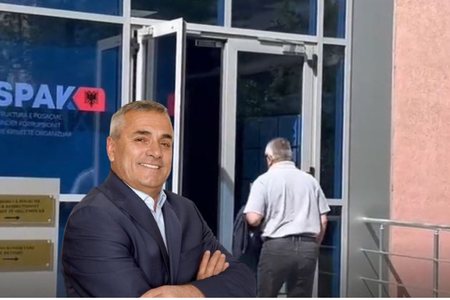
The European Commission has welcomed the results achieved so far by SPAK and the special courts, particularly in cases of corruption at the highest levels of the state. But the assessment is accompanied by a warning: Albania must ensure that justice is not influenced by political pressure or vested interests. The EU calls for the integrity of the judicial system and the independence of SPAK to be preserved, stressing that internal or external interference is unacceptable and undermines the credibility of the process.
A particular concern is the non-implementation of court decisions. According to the Council, Albania needs to ensure effective legal protection and consistent implementation of court decisions, which means that selective justice and tolerance towards impunity for officials remain a serious problem.
In the field of media, the EU is clear: freedom of expression in Albania is under pressure. The Council calls for the full decriminalization of defamation, transparency on media ownership and financing, and a safe environment for journalists, underlining that investigative journalists reporting on corruption should be protected, not punished.
Another area vulnerable to corruption is property. The EU calls for a deep reform of the land sector and the consolidation of property rights in a transparent and credible manner. This is directly related to one of the oldest wounds of the Albanian state: the extortion of property, the manipulation of documents and the clashes between interests linked to power and ordinary citizens.
Although the parliamentary elections of May 2025 were considered competitive, they did not escape criticism. The Council calls for a deep electoral reform, implemented in a comprehensive manner and in line with the recommendations of the OSCE/ODIHR and the Venice Commission.
Excerpt from the report
The Council of the European Union has welcomed the significant progress made by Albania, stressing that this has led to the opening of all negotiating groups. The Council welcomes the ambitious plan of the Albanian government to successfully conclude the accession negotiations and encourages all political forces and institutional actors to intensify their efforts and work together to ensure further progress.
The Council recalls the essential role of the Albanian Parliament in debating and adopting EU-related reforms and in ensuring an inclusive, constructive and transparent process.
The Council underlines that progress in the core set of chapters (rule of law, democratic institutions, etc.) will determine the overall pace of the negotiations. Albania is encouraged to accelerate reforms in this set, in particular to meet the interim benchmarks in chapters 23 and 24, which relate to the rule of law — a key step that would allow the provisional closure of the negotiating chapters to begin. Albania should also intensify work on meeting the closing benchmarks in all other chapters.
In the area of fundamental reforms, including justice, the Council welcomes the continued implementation of the justice reform and stresses the need to maintain the integrity and accountability of the judicial system, through the high standards set by the vetting process. The Council stresses the importance of the independence of the judiciary, including the special anti-corruption and organised crime structure (SPAK), as well as the need to further strengthen the justice system against internal or external influences. Albania should ensure effective legal protection and consistent enforcement of judicial decisions.
The Council welcomes the progress in the fight against corruption and organised crime and encourages Albania to further strengthen its institutional record and capacity in this area. It also welcomes the good results achieved by SPAK and the relevant courts, including in high-level corruption cases. It also commends the good cooperation with EU and Member States' law enforcement agencies, in particular in financial investigations.
In terms of fundamental rights, the Council welcomes the adoption of legislation on the rights of national minorities, in the areas of self-identification and use of languages, as well as on the protection of personal data and gender equality. It underlines the importance for Albania to continue strengthening the protection of fundamental rights.
Freedom of the media and expression needs to be further strengthened. The Council calls for increased efforts to ensure pluralism and independence in the media, through the full decriminalization of defamation, transparency on media ownership and financing, and the provision of a safe environment for journalists.
The importance of promoting children's rights and the effective implementation of secondary legislation on minorities is mentioned, as well as the need for a comprehensive reform of the land sector and the consolidation of property rights in a transparent and credible manner, in line with the EU common position on Group 1 of chapters. The role of civil society should be strengthened and sustainable and meaningful consultations should be carried out.
The Council notes that the parliamentary elections of 11 May 2025 were competitive, despite identified shortcomings that need to be addressed. In this context, a comprehensive and timely electoral reform is required, in line with the recommendations of the OSCE/ODIHR and the Venice Commission.
In the area of border management and migration, the progress made is appreciated, but further improvement of asylum systems and procedures is required, as well as rapid and full alignment with EU visa policy.
As regards the economic criteria, the Council assesses that Albania has a good level of preparation for the development of a functioning market economy. It encourages it to step up its efforts to cope with competitive pressure within the EU market and to implement structural reforms in a sustainable manner.
The Council remains committed to Albania's further gradual integration into the EU internal market, through the reinforced implementation of the Stabilisation and Association Agreement. It welcomes the ongoing implementation of the Western Balkans Growth Plan in Albania, which is on track to deliver concrete benefits to citizens. It positively notes the disbursement of the first two partial tranches of the Reform and Growth Mechanism and encourages Albania to continue implementing its Reform Agenda.
The Council welcomes Albania's continued constructive engagement in regional and multilateral cooperation. Good neighbourly relations and regional cooperation remain essential pillars of the enlargement process and the Stabilisation and Association Agreement.
The Council strongly commends Albania for its continued cooperation in foreign policy, as well as for its full and continued alignment with the EU's common foreign and security policy, including restrictive measures, a strong signal of Albania's strategic commitment to its European path.
Active participation in EU missions and operations within the framework of the Common Security and Defense Policy is also appreciated, as is the readiness to deepen cooperation within the framework of the Security and Defense Partnership with the EU. / Pamphlet





Lini një Përgjigje