


 Shkruar nga Pamfleti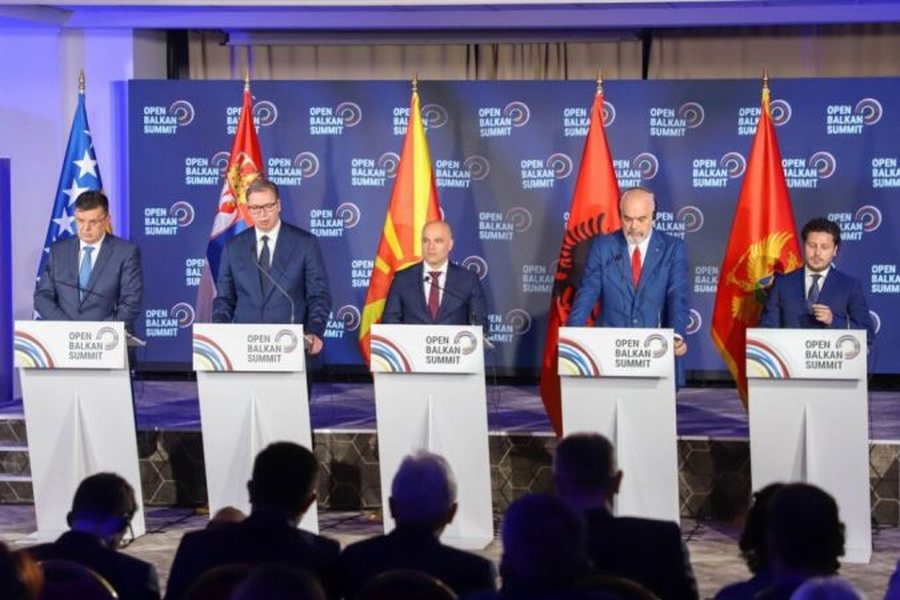
When Edi Rama of Albania announced the end of the Open Balkans initiative on July 1, he claimed that it had "accomplished its mission". His statement surprised Albania's partner countries, Serbia and North Macedonia.
Experts, however, say that if the regional "mini-Schengen" will end, it will not be because of any announcement by Rama, but because, contrary to the claim of the prime minister, it has achieved very little.
The Open Balkans Initiative was introduced in 2019 as an internal effort to deepen the economic cooperation of its three members, with the aim of expanding to the rest of the Western Balkans at a critical moment in the region's integration into the European Union.
Four years on, no other country has joined, the initiative has been plagued by a lack of transparency and experts say a series of agreements signed by the troika have been weak in its ambition. They argue that it was more political than practical.
"In my opinion, the Open Balkans has a problem of inconsistency between the big words in its declared goals - such as the 'single market' - and the very modest practical steps taken in the signed documents," said the Belgrade-based lawyer. , Relja Radovic, who specializes in international law and especially international economic law.
"I don't think it would be meaningful to talk about achieving goals in such an environment."
Big ambitions
In his remarks, Rama did not declare the Open Balkans dead, but simply said that it had "fulfilled its mission" to advance the Berlin Process, initiated by Germany in 2014 as a way to encourage cooperation among the states of the Western Balkans in the absence of any perspective of progress on the EU integration front.
Open Balkans began as an initiative to replicate the EU's free movement of people, goods and services in the Western Balkans.
But while the three founding members – Belgrade, Tirana and Skopje – have called on others to join, Montenegro, Kosovo and Bosnia and Herzegovina have not, for various reasons.
The idea of a single market remains a long way off, given the lack of any real, substantive progress on the basis of agreements that fall far short of their stated goals.
Radovic, however, questioned the real significance of Rama's announcement.
"On the one hand, it would be difficult to conclude from that statement that Albania will withdraw from what has already been signed, but it could simply mean that Albania will not pursue new Open Balkan agreements." Radovic told BIRN.
"On the other hand, Mr. Rama can only speak on behalf of Albania and even if Albania were to abandon the initiative, it does not mean that Serbia and North Macedonia, or any other potential member, will abandon it as well .”
As Beogradi dhe as Shkupi nuk kanë dhënë ndonjë indikacion se synojnë të largohet nga projekti. Teksa priste Ramën më 7 korrik, presidenti serb Aleksandër Vuçiç tha se kjo kishte ndihmuar në përmirësimin e tregtisë midis Serbisë dhe Shqipërisë.
“Nëse shikoni vetëm shifrat dhe nivelin e shkëmbimeve tregtare në periudhën nga viti 2019 deri në fund të vitit 2020, do të shihni se sa dukshëm është rritur bashkëpunimi mes vendeve tona, si në import ashtu edhe në eksport nga njëri vend dhe tjetri. Kjo përkon me Ballkanin e Hapur, por edhe me marrëdhënie më të mira politike”, citohet të ketë thënë Vuçiç.
Vetë Rama ishte dikur një nga tifozët më të mëdhenj të nismës dhe madje e ka përkrahur zgjerimin e saj në Turqi, Greqi, Itali dhe Hungari.
Vetëm vitin e kaluar, një sondazh i iniciuar nga Rama pyeti shqiptarët për 12 çështje të rëndësishme të politikave, përfshirë Ballkanin e Hapur. Pesëdhjetë e nëntë për qind thanë se e mbështesin projektin.
Kundërshtarët e kryeministrit shqiptar, në pushtet për një dekadë, thanë se ai po vepronte si një “shërbëtor i Beogradit”, duke qenë se disa ekspertë argumentojnë se Serbia, si vendi më i madh në rajon, do të përfitojë më shumë nga një treg i vetëm.
Projekt personal
Ekspertja e komunikimit me qendër në Tiranë, Edlira Gjoni, tha se si Vuçiç ashtu si edhe Rama mbanin përgjegjësi për mungesën e rezultateve të nismës.
“Ishte një nismë personale dhe është një dështim personal i këtyre dy liderëve që janë më populistët në të gjithë rajonin”, tha Gjoni për BIRN.
Gjoni përmendi edhe mungesën e transparencës.
“Ballkani i Hapur nuk ka arritur asnjë nga premtimet që tha se do të bënte dhe, në fakt, premtimet që disa liderë bënë përmes nismës Ballkani i Hapur nuk u bënë kurrë mjaftueshëm transparente për publikun, as për ata që do të kuptonin dhe analizonin dhe madje mbështesnin Ballkanin e Hapur”, tha Gjoni.
Ndryshe nga Procesi i Berlinit, tha ajo, Ballkanit të Hapur i mungonte gjithmonë një “agjendë e qartë dhe një qasje gjithëpërfshirëse”.
Gjoni argumentoi se Vuçiçi ishte i motivuar nga përfitimi ekonomik i Serbisë dhe Rama nga përfitimi i tij personal dhe politik. Si e tillë, ajo nuk kishte asgjë për t’i ofruar pjesës tjetër të rajonit.
Kosovo, for example, had long made it clear that its priority was the Berlin Process. Prime Minister Albin Kurti repeatedly opposed Rama's calls for the membership of the former Serbian province with an Albanian majority, citing the lack of equality between the member states. Montenegro saw this initiative as a distraction from the EU integration process.
"I believe this initiative ended mainly because it was not an initiative for everyone, it was not comprehensive and it did not take into account the challenges, doubts and lack of answers that some nations had for this initiative", Gjoni told BIRN.
"It was seen more as an initiative of Rama and Vucic, than of the six Balkan countries. She failed to bring them all together.”/BIRN



Lini një Përgjigje