


 Shkruar nga Pamfleti
SPAK prepares for decisive elections in the fall; while Duman approaches the end of his mandate between two fires: the pressure for the status quo and the West's offer to enter politics as a "deus ex machina" against the old caste...
The dismissal of Arben Kraja from the position of Director of Foreign Relations at the Special Prosecution Office has caused a stir, although there was no official announcement from SPAK. A new prosecutor, Dorina Bejko, has been appointed in his place, who does not have Kraja's experience in relations with international partners, especially at the levels where he operated as a former three-year head of SPAK and a key figure in contacts with the US and the EU.
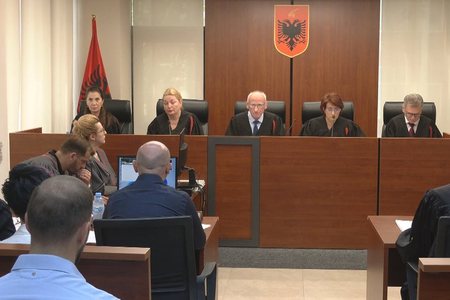
The move has been made in silence, without explanation or transparency, at a time when SPAK is at its most sensitive political and institutional moment since its creation. Two major elections are taking place this fall: for the new head of the National Bureau of Investigation and for the new head of SPAK. Meanwhile, Altin Dumani's three-year mandate ends in December 2025, and he is expected to seek a second term.
In 2022, Dumani was elected by just one more vote, amid tremendous diplomatic pressure, with Ambassador Yuri Kim personally attending the KLP meeting to secure the votes. Today, the situation is more delicate and polarized.
In this context, the dismissal of Krajë and the approach of loyal figures to Duman can be read as part of a scheme to establish a loyal circle, which will influence the future structure of SPAK and its strategic decisions. Especially in relations with international partners, which are the essence of SPAK's functioning in investigating transnational organized crime and high-level political corruption.
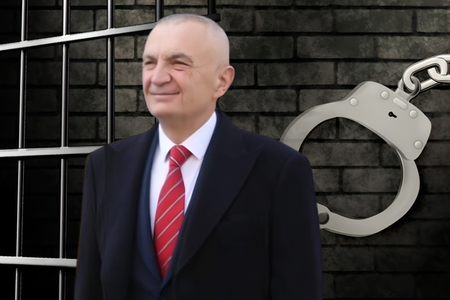
Altin Dumani's moves so far have been strong and visible: Sali Berisha is under house arrest, Ilir Meta is under investigation, while Erion Veliaj has been arrested in his office. Initially, these blows were read as a challenge to Rama, but then the prime minister's rhetoric changed. Edi Rama began to congratulate SPAK publicly, praising Dumani's work at every appearance, as if to convey a message of reconciliation.
But this "détente" has a tactical background. Veliaj's arrest was used as a deterrent, to curb investigations into other high-level figures. Rama used it to set limits on Dumani: "away from my phone and office", "the Americans are no longer there", "be careful with the high-level attacks", are phrases said in different ways, but with a single message: seek a status quo, not an all-out attack.
Meanwhile, another silent maneuver is being prepared: the involvement of Altin Dumani in politics. This idea has been circulating for more than a year in diplomatic circles and European political institutes, like the “Romanian plan” that at that time tried to bring Laura Codruța Kövesi closer to overthrowing the old political class in Bucharest. It was sabotaged by politics. But in Albania, the situation seems more heated and sensitive: Dumani has higher popularity than any other public figure, even more than the American embassy, according to a recent survey published on a Tirana television, with a source from a Greek institute.
This poses a serious threat to Edi Rama, who understands well that any open clash with Dumani, at this moment, could expose the latter as a real political alternative to him. Therefore, more than out of conviction, Rama is supporting Dumani's reconfirmation as head of SPAK for a second term, simply to keep him under control and avoid radicalizing his role in public.
A clash now would be dangerous. Dumani may not retreat any longer, and with the support of the West, he could become a figurehead uniting the opposition, the gray vote, and discontent within the SP itself. This is why Sali Berisha is attacking him harder than Rama, calling him “Altin Troplini” and accelerating the rhetorical attacks against him.
While Rama will make every effort to survive until 2026, with every possible compromise, as long as this does not put Dumani in the role of the next opposition leader. If this happens, the game stops. And the political history of Albania may change faster than expected./ Pamphlet


Lini një Përgjigje