


 Shkruar nga Pamfleti
The Russian threat to the European Union has pushed the latter towards an acceleration of the integration process of the candidate countries. Itaiania "La Repubblica" cites the European Commission's latest report on enlargement, which emphasizes the "strategic interest" in adding new members who will give greater geopolitical weight and influence on the global stage to the European Union.
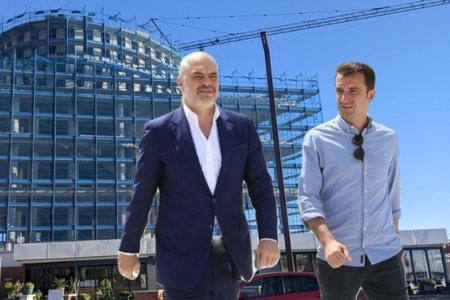
In its analysis, the Italian media emphasizes that the EU is projecting a partial and gradual integration of new members, including the countries of the Western Balkans. "La Repubblica" assesses in its article at what point each country is on the path to integration: "Albania applied for membership in April 2009 and was granted candidate status in June 2014. Albania can benefit from the excellent relationship between Prime Minister Edi Rama and Italian Prime Minister Giorgia Meloni, with whom he recently signed an agreement on reception centers and the repatriation of immigrants".
Serbia's path to the EU is full of obstacles, due to the lack of progress in relations with Kosovo, but also its close friendship with Russian leader Vladimir Putin: "Serbia's path, a candidate since March 2012, remains full of obstacles, due to the lack of progress in relations with Kosovo. But also for the very close friendship with Putin's Russia. Serbia presents itself as a potential candidate for expansion".
Bosnia-Herzegovina is the most problematic country in the Western Balkans, due to the ambitions of the leader of Republika Srpska, Milorad Dodik, for union with Serbia. However, Bosnia has received the status of a candidate country in 2022. The path is clearer for North Macedonia, says the Italian media, which after solving the name problem with Greece and removing the Bulgarian veto, aims for faster integration . / A2CNN


Lini një Përgjigje