


 Shkruar nga Fadil Lepaja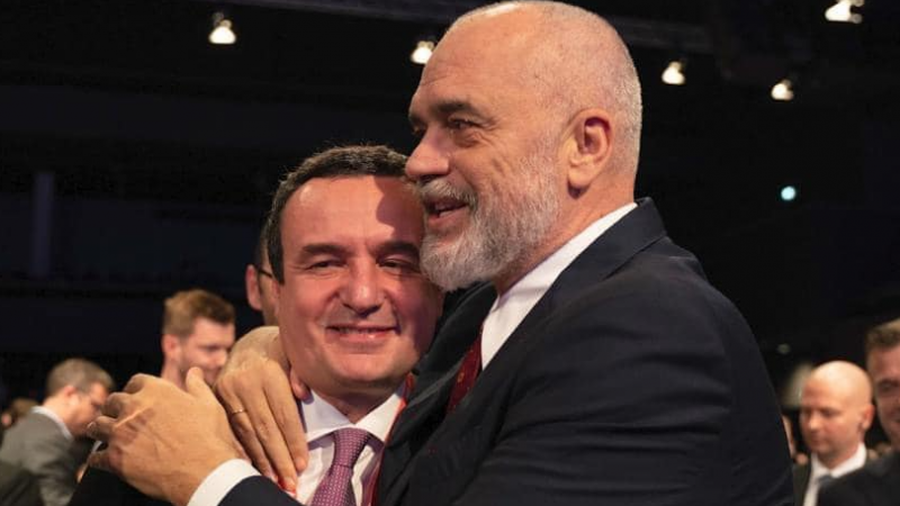
One seeks to change the world through principles, the other to lead it through instinct. Between Kurti's ethics and Rama's aesthetics lies the Albanian dilemma of power...
In Albanian politics, two figures have been keeping the scene in tension and contrast for years: Albin Kurti and Edi Rama. Both speak of justice, nation, development and dignity, but each translates these words in their own way. Like two hemispheres of the same language, they are separated not only by the border, but by the way they see themselves in relation to power and the public. Today I will not deal with their exploits, but with their styles and political orientation.
Kurti is a man of restrained speech. He speaks slowly, with thoughtful pauses, like a professor who seeks to guide the listener's logic, not his emotion. His rhetoric is pure, without ornament; often dry in form, but charged with honesty. He feels politics as a moral obligation, not as a spectacle. When he speaks of justice, an inner fire lights up in his eyes, but this fire never bursts into flames, because he guards it with discipline. All his movements; folded hands, straight posture, eyes that do not look away, are part of a choreography of restraint. He seeks to be heard, not admired.
On the other hand, Rama sees politics as the highest art of communication. He is an orator, actor and director of his own. His speech is a performance; every metaphor is a blow, every joke is an arrow. He uses language like a painter mixing colors on a canvas; for effect, for feeling, for drama. Kurti seeks to convince with ideas, Rama with images. Kurti seeks to build a new order, Rama manages chaos with elegance.
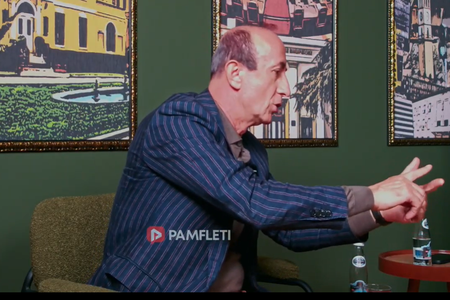
In body language, this division is even clearer. Kurti stands as if in a cold academic chair, body straight, hands motionless, face focused. Rama stands as if on stage: hands moving widely, body leaning towards the audience, eyes seeking dominance. Kurti is a symbol of restraint, Rama of expression. Kurti gives the impression of honesty that sometimes becomes stubbornness; Rama of cunning that sometimes becomes the art of manipulation.
The handshake between them is a metaphor for their relationship: Kurti shakes his hand with institutional respect, Rama pulls it with friendly skill, as if to set his own frame for each meeting. In the photograph, Rama seeks the corner, Kurti maintains dignity. One rules the scene, the other defends the principle.
Essentially, there are two philosophies of power. Kurti believes that strength comes from right; Rama that right comes from the ability to exercise strength. Kurti is dogmatic in principle, Rama flexible in purpose. Kurti believes that the people must learn freedom; Rama that they must feel it. And perhaps this is why one is seen as a symbol of idealism, the other as a master of realpolitik.
But beyond the contrasts, there is a common thread: both are products of an Albanian space that seeks the leader as a moral and emotional figure at the same time. One offers ethics, the other the aesthetics of power. And perhaps this is precisely where our political drama lies, between the man who seeks to be just and the one who seeks to be effective.
In the end, Rama speaks through metaphors, Kurti through principles; Rama touches on emotion, Kurti builds the argument. One plays with light, the other measures shadow. In an ideal world, perhaps Albania and Kosovo would need a mix of both; Kurti’s stoic honesty and Rama’s theatrical intelligence. But politics, as always, is the art of the (impossible): it produces contrast, not harmony.
As long as one remains the cold portrait of dignity, and the other the warm tableau of power, our political history will continue to oscillate between the two extremes of the same question: is the one who does not lie more valuable, or the one who knows how to tell the (un)truth with style?
It has been more than twenty years since I wrote an article entitled “Egalitarianism or Efficiency”, a dilemma that at the time was attributed to two visions for the future of Kosovo; one to the so-called line of war and the other to parties that differentiated themselves as citizens. Since then, reality has changed a lot, in Kosovo, in Albania and in general in the Albanian space of the Balkans. The geopolitics of the region has also changed under the pressures of the technological, scientific and energy revolution. Albanians can no longer build an autochthonous politics, unless they want to revive proletarian internationalism and become “again” the center of the world revolution, or to “again” take up the banner of Islamism and align themselves with the East.
Every Albanian policy in the region is a compromise, but to what extent and with whom?
Someone has said that progress depends on the irrational, as they try to change the world according to their needs, while the rational adapt.
Principles or interest?
We will see anyway. If we do not change the world, perhaps we will have to learn to adapt. / Pamphlet


Çfarë të flasësh për Edi Ramën, është mashtrues klasik, i pa arritshëm nga të ngjashmit e tij , më vjen keq për njerëzit që nuk arrijnë ta kuptojnë. Sa për Kurtin punon me shpirt për Dardaninë.