


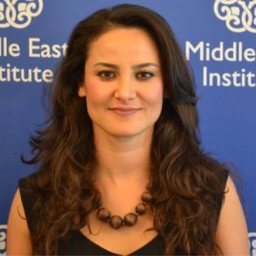
 Shkruar nga Gonul Tol
In a world where principles are subordinate to interests, The New York Times reveals the ways in which Sultan Recep Erdogan has consolidated his power in the clearest example of modern politics. He has built a system balanced between domestic authoritarianism and foreign cooperation, economic contracts, strategic agreements for refugees and concessions that serve the security of great powers. In return, the West turns a blind eye to the suppression of the opposition, the imprisonment of journalists and the gradual destruction of democratic institutions. This is the cold trade of our era, a silent alliance between interest and hypocrisy, where apparent stability buys silence in the face of injustice.
In September, just days after tens of thousands of Turks took to the streets to protest President Recep Tayyip Erdogan's latest crackdown on his political opponents and a faltering economy, Erdogan stood smiling alongside President Trump at the White House.
The price of the much-sought-after meeting had been high: Reports circulated ahead of the meeting that Turkey would buy Boeing and F-16 jets, and Ankara announced the lifting of additional tariffs on American goods and a 20-year deal to buy liquefied natural gas from the United States. But for Erdogan, it was certainly worth it: his foreign policy partnerships, especially with the West, have given him political cover and a vital economic lifeline to strengthen his grip on power, just as he moves to dismantle the last remaining pillars of Turkish democracy.
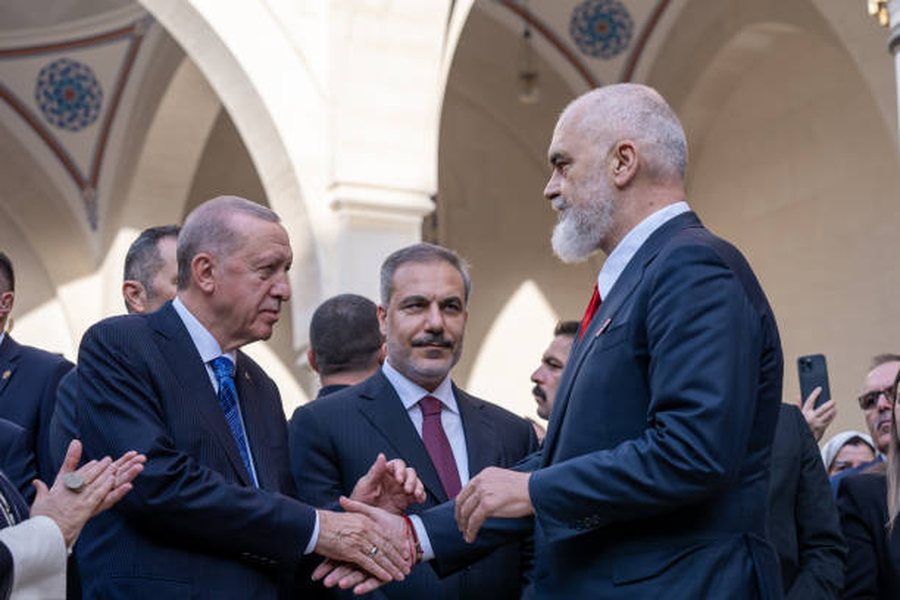
The photos of Erdogan with the US president were a special trophy and sent a powerful message to Turkey. So were the photos last week of Erdogan shaking hands with Friedrich Merz, the German chancellor, and Keir Starmer, the British prime minister. We are in an age of realpolitik, and the world is willing to do business with authoritarian leaders who get the job done, like Erdogan, even if it makes the fight for pro-democracy voices in Turkey and elsewhere much more difficult.
In March, Turkish police detained Ekrem Imamoglu, the mayor of Istanbul and Erdogan’s main rival, along with many of his associates, on charges of corruption and terrorism. The ensuing massive protests suggested that after more than 20 years in power, Erdogan may have finally gone too far. But months later, more than 10 mayors from the main opposition Republican People’s Party, known as the CHP, including Imamoglu, remain in prison, along with hundreds of CHP members and officials. To the surprise of many, the protests have continued, but Erdogan has shown no sign of relenting. On the contrary, he has intensified the crackdown. A Turkish court recently issued another arrest warrant for Imamoglu, this time on charges of “political espionage.”
Recep Tayyip Erdogan came to power promising to fight corruption, reduce poverty, and expand freedoms. For a while, he succeeded. Turkey even began EU membership negotiations in 2005, but years of economic mismanagement and democratic slippage not only wiped out the gains of his early years in office. They also left Turkey poorer, more divided, and less free.
Disgruntled voters dealt Erdogan a major blow in the 2019 municipal elections, when his party lost several major cities. As his popularity plummeted and Turkey’s economy falters, Erdogan turned to foreign policy for both money and credibility, betting that Turkey’s strategic irreplaceability would buy, if not always silence, at least a reluctant acquiescence.
He had good reason to believe that it would. In early 2016, the European Union, desperate to stem the flow of refugees from Syria, reached a migration deal with Turkey. The bloc pledged six billion euros to support refugees. Last fall, it even delayed a damning human rights report to keep Erdogan in the deal. That deal told Erdogan what he needed to know: If Turkey did what Europe wanted, Europe would turn a blind eye.
Since then, Turkey’s strategic value has only grown. Erdogan has walked a particularly thin diplomatic line since Russia’s invasion of Ukraine in 2022, keeping channels open with both Russia and Ukraine while deepening his cooperation with Western capitals. And Turkish defense firms have emerged as key suppliers to Ukraine. A Texas munitions factory, inaugurated last year, uses Turkish-built production lines, assembled locally by Turkish workers, and is expected to supply about a third of the Pentagon’s production target.
The war in Ukraine has also accelerated Europe’s push to build up its defence capacity, a drive reinforced by Trump’s return to the White House and renewed doubts about the US commitment to NATO. Here too, Turkey is essential. The EU’s top diplomat, Kaja Kallas, announced Ankara’s inclusion in the bloc’s new ‘SAFE’ initiative in June, giving Turkey access to defence funding and joint procurement. And just last week, as Turkish prosecutors accused Ekrem Imamoglu of indirectly spying for British intelligence, Starmer sealed the sale of Eurofighter jets to Turkey in a meeting with Erdogan in Ankara. A few days later, Chancellor Merz was there, saying that “there is no other way but a good and deepening partnership”.
Turkey keeps thousands of troops in Syria, where maintaining stability is essential for Europe to prevent another wave of refugees, and maintains a military presence in Libya, exerting influence over another conflict that European governments fear could push migrants toward Europe's shores. In the South Caucasus, a vital corridor for Europe's trade and transport, many European capitals now see Turkey as the most capable broker to push Azerbaijan toward lasting peace with Armenia.
This emphasis on practicality is a sign of the times: a transactional US, an aggressive Russia, a tense Middle East, while Europe's strong concern is its own defense. And Turkey, with its proximity to conflict zones, military strength, and expanding defense industry, is strategically important.
But Western capitals should be careful not to treat democracy in Turkey as a luxury rather than a necessity. Turks will not quietly surrender their right to choose their leaders. As long as they continue the fight, Erdogan will find it difficult to consolidate his rule, no matter how much cover he gets from the West. And this is not just an Erdogan issue, but an enduring problem for the democracies that have come to depend so heavily on him./ New York Times
* By Gonul Tol, Senior Fellow at the Middle East Institute and author of a book about Recep Tayyip Erdogan


Lini një Përgjigje