


 Shkruar nga Pamfleti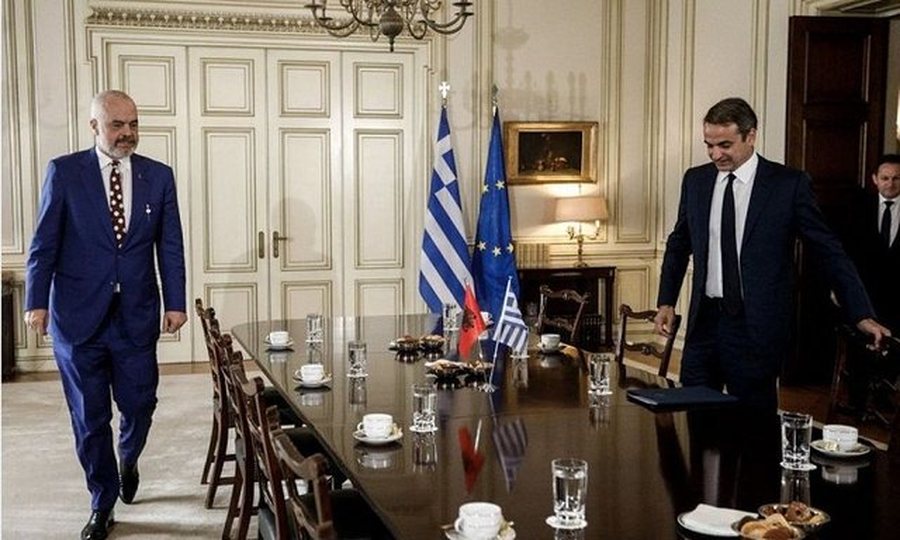
Athens uses political bans as a means of pressure on Tirana, while the Albanian government does not build a state strategy in the face of provocations...
The detention of journalist Artan Hoxha in Kakavija and his declaration of "Non Grata" shows that Greece is pursuing a calculated political plan that aims to seat Albania at the diplomatic tables. The Greek government violates freedom of movement and uses pressure tactics, while official Tirana does not object with official notes and does not build a clear state position on relations with Athens.
The political act of Greece that punishes Albanian journalists with the title “Non Grata” represents a behavior that contradicts European standards and minimal democratic principles. The Greek police detained Artan Hoxha in Kakavija, treated him with inhumane behavior and communicated the detention to him without any acceptable argument. This action leaves no room for any rational explanation. Athens is using a tool that is not found in the practice of EU states against journalists who criticize the domestic politics of a country.
The Greek authorities directly violate the universal freedom of movement, recognized by the UN Charter and by the treaties that regulate the functioning of the European Union. This violated standard presents Greece as a problem beyond relations with Albanians. The Greek government does not take this action as an emotional reaction. It follows a studied plan, which seeks to place Tirana in a subordinate position and direct European perception against it.
Athens uses the logic of double pressure. It teases and then softens. It hits and then offers talks. This mechanism is consistent with the classic behaviors that states use to dictate the pace of the other side. The decision to declare the journalists Non Grata occurred before the visit of Foreign Minister Elisa Spiropali to Athens on December 15. This visit begins another cycle of old talks, where the parties return to the same list of topics such as the sea, pensions, minorities and Northern Epirus.
During these years, the parties examine the same issues without a final result. Athens disrupts every process as soon as the government changes. At the same time, Edi Rama maintains power and changes only the ministers he sends to the table. The first was Ditmir Bushati. Then comes the turn of Elisa Spiropali, who enters the same cycle.
This scheme only gives Tirana consequences. Albania does not receive any measurable benefit. It only faces Athens' reactions, which are carefully planned. The Beleri case, the intervention in domestic politics and the support of opposition structures show that Athens builds every step with clear calculation.
On the other hand, Edi Rama is not building a strategy. He is seeking support from Giorgia Meloni and Erdogan. This support has value as a political signal, but does not replace a plan from Tirana. Albania needs a position approved in Parliament or in the National Security Council. The government must clarify whether it aims for a maritime agreement or not. This decision requires an institutional mandate. Not personal decision-making.
Edi Rama is trying to use the punished journalists as public capital. In fact, he bears direct responsibility because he does not oppose any of Athens' measures with diplomatic notes. The government should have reacted forcefully. Even if it uses the alliances that the prime minister himself cites. Erdogan punishes journalists in Turkey. But this does not prevent Rama from seeking political refuge behind him. This behavior shows a lack of strategy and a lack of seriousness in confronting Greece./ Pamphlet






E thjeshte fare. Fusni mik Fred Belerin e Saliun dhe beheni miq me greket.
Po, ke te drejte, vetem me TRADHETARET mund ta zgjidhesh.