


 Shkruar nga Pamfleti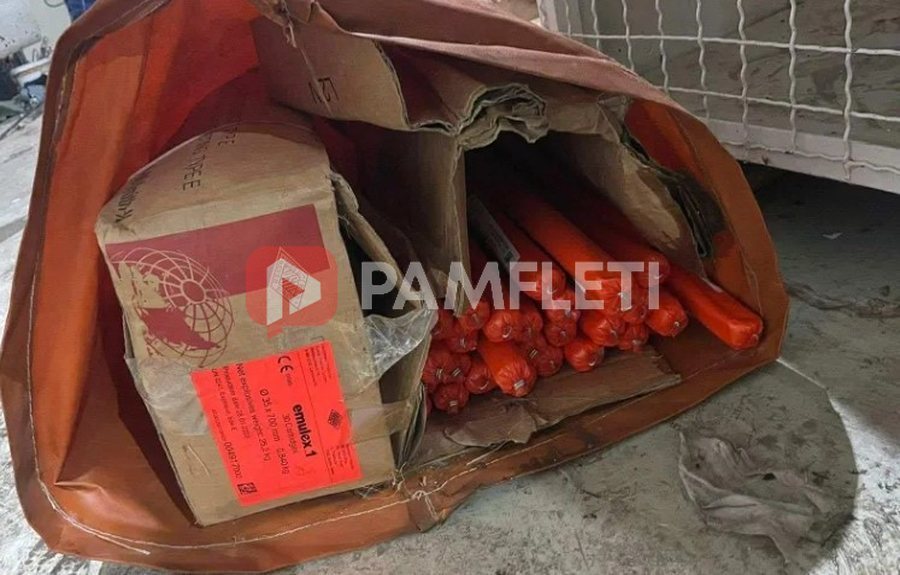
Material with extraordinary destructive power crosses the border, while Albanian authorities avoid transparency...
A quantity of 300 kilograms of industrial explosives and detonators of Polish and American production was seized on the border with Kosovo, but Albanian police have not given any public explanation. The material has high destructive power and its transportation indicates organized smuggling. Suspicions of links to radical elements and the government's efforts to keep the noise down raise questions about the real danger and purpose of this quantity.
It has been two days since a frightening amount of deadly explosives entered Kosovo from Albania, but the incident is being kept quiet by both the police and the media here. It involves 300 kilograms of poladyn and ammonium explosives, as well as a large quantity of high-quality Emulex 1 detonators.
The quantity was seized while crossing the border into Kosovo with two people traveling in a van. The news was initially reported by Kosovo media and then picked up by several Albanian media. But so far there has been no official announcement from the State Police about the investigations, the origin of the explosives and the final purpose of this quantity.
The seized explosives were manufactured in Poland, where one of the largest factories producing nitrate-based explosives is located, which are used mainly for industrial purposes, for mineral excavation and quarries, not for military use.
Meanwhile, Emulex 1 detonators are American-made from the main plant in Austin, Texas.
Industrial explosives are traded with a special permit and each purchase must be accompanied by a usage plan, deadlines and defined territory. All entities that have a license to use explosives are required to continuously report to state authorities and the police.
Smuggling this amount shows that we are not dealing with an industrial activity, because quarries and mines cannot use unregistered explosives without risking closure of the activity and criminal prosecution.
The quantity of 300 kilograms of poladyn and ammonium is extremely large and represents explosive potential with serious consequences.
To illustrate, the assassination attempt on Giovanni Falcone in Capaci in 1992 used 500 kilograms of TNT, while polyaluminum and ammonite have an explosive power about twice that of TNT.
This indicates that we are dealing with extremely dangerous material. Questions abound: what was this quantity planned for, who ordered it, who sold it, how much it cost, and where the money came from.
The Albanian police were found unprepared, especially after the interest of international partners. To reduce the noise of the event, the RENEA action in Orosh of Fushë-Arrëzit was amplified, which was important because it involved two armed and dangerous individuals who are considered radicals and who have fought in Syria.
It is not ruled out that the events may be connected. It seems that Edi Rama did not want this situation to attract attention, especially on the eve of his visit to Qatar, to avoid any connection between the explosives and radical Islamic elements./ Pamphlet








Lini një Përgjigje