


 Shkruar nga Pamfleti
The head of the Socialist Parliamentary Group, Taulant Balla, declared that the socialist majority will intervene in the Criminal Procedure Code to amend Article 242, clarifying that constitutional institutions cannot be suspended from duty by court decision.
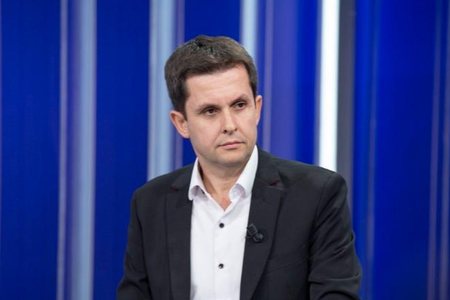
Asked on the show " Real Story" what the Parliament will do after the 4-4 "non-decision" of the Constitutional Court on the lawsuit of Prime Minister Edi Rama, he said that it is the duty of Parliament to resolve the constitutional impasse that has been created.
According to Balla, the current interpretation of Article 242 could lead to legal absurdities, opening the possibility that even the President of the Republic, the Prime Minister, or heads of independent institutions such as the Supreme Audit Office could be suspended from office.
According to him, the amendments that are ready will clearly stipulate that the President, the Prime Minister, members of the Council of Ministers, the Chairman of the Supreme Audit Office, the Ombudsman and other monocratic constitutional institutions cannot be suspended from office. Balla added that this practice exists in other European countries and argued that the Constitutional Court had the opportunity to resolve this issue itself, but did not reach a decision due to the 4-4 split. He stressed that the amendments are ready and will be submitted in a matter of hours.
Excerpt from the interview:
-Then what will you do? Then we must take responsibility that this institution where you are today is the institution in the state pyramid. There is an impasse that must be resolved. Who is the impasse? To the question of the Prime Minister on behalf of the executive, where both the parliament and the President are called parties, the Constitutional Court due to the absence of a member, that if there were, it would separate it. For.. I do not know the reasons, and I will not go into them, because there are other reasons that undoubtedly must be there, we do not have them. Then what should we do? We have a duty to clarify it.
Taulant Balla : Someone says, from these dinner counters, look, they made a mistake, or they forgot in 2012 when they changed, we removed it as a concept, we forgot that the minister has the same status as the deputy, not only immunity, the minister also has it there. This may be the case, but it is not so. Let's say there is a case in a prosecutor's office in the case in question because of the attributes, the office and the chair that the Special Prosecutor's Office holds, there is a case for the President of the Republic. And the prosecutor says, because he is the Commander-in-Chief of the Armed Forces, I want to suspend him. He is not elected as 242 in the Code of Criminal Procedure tells me, I can suspend him. The question I have is, can the President of the Republic be suspended if we read it as they read it in the case in question. The President can be suspended. Naturally, the President cannot be suspended. Even for the interrogation procedure in the case of the President or Prime Minister, the Criminal Procedure Code has other methods defined. It is not presented to the Prosecutor's Office. It is asked in his office, these are the details. So, being in these circumstances, can the head of the Supreme Audit Institution be suspended? And the question that arises after it, Can he be delegated? No, he cannot be delegated. The Supreme Audit Institution cannot delegate to anyone. We have had cases, we stayed 6-7 months, the former head Bujar Leskaj left, for a while, then he returned again because he could not be replaced.
-Someone can stand up and say we should suspend the prime minister, here we have a power that determines while normally the majority is determined by the people.
Taulant Balla : Back in college, I mostly studied constitutional law rather than criminal, civil or administrative law. The Constitution, which is the fundamental book, clearly states that a government cannot suspend another government. This is the fundamental principle, check and balance. We are talking about suspension, not arrest, we are talking about suspension. So, they are confusing things here. You sir, if you have the evidence, go ahead and request an arrest, that's another matter. You requested suspension. And when you requested the case in question, of my colleague and friend Belinda Balluku, you requested two measures. The revocation of the passport, that is, the restriction of mobility abroad, and suspension. You argued that you are ok with these two measures. And you argued that there is no need for another measure for the reasons you listed in the court decision. Today, with the Constitutional Court's decision, we are exactly where we were, where we were on November 20.
-Suspension is reinstated
Taulant Balla : So, the suspension was returned, when the Constitutional Court comes to light, it is published in the official gazette, Balluku is suspended. We are in the conditions where we were on November 20, that's it. What are we going to do? The Constitutional Court did not give us any help, in its inability, in its uncertainty, I don't know, because there are many, on an issue that they themselves said the hour is 8-0, there is interference in the competence of the parliament.
-Then, Mr. Balla, what are you going to do?
Taulant Balla : What are we going to do? I am telling you here today, I have also said it in the Albanian Parliament, Article 242 does not reflect the constitutional principles of guaranteeing the independence of constitutional institutions, and we must prevent the misinterpretation of this article regarding constitutional institutions, which means that with the changes that are ready, the President, the Prime Minister, the members of the Council of Ministers, the Chairman of the Supreme Audit Office, the Ombudsman, and other monocratic constitutional institutions, which will be the intensive work of the responsible committees in the Albanian Parliament, cannot be suspended.
-So you will propose this change
Taulant Balla : A practice, a norm that, according to our experts' research, exists throughout Europe. Even though it was in the Constitution of Albania, the Constitutional Court could not read it, or it read it but did not...
-Okay, let's talk a little about the Constitutional Court.
Taulant Balla : I can't speak anymore.
-I'm a journalist, I'll ask the questions, you choose, don't answer.
Taulant Balla : I am one of those people who took it personally, as far as this issue is concerned, I have been and remain convinced, a constitutional body cannot be suspended. It cannot be suspended, because the day a constitutional body suspends a constitutional body, democracy is over. Look, we are a Republic with separate powers. We have legislative, executive and judicial power. Naturally, this judicial power has one or two prerogatives that everyone knows, when there is other evidence in a row, it calls you to condemn, in 2012 this Assembly gave it the right to investigate without informing, that in 2012 you had to come and get permission, can I investigate this person with immunity? Now you no longer have this. Some countries have preserved it, Romania has preserved it. You cannot even be investigated if you do not get permission from parliament. There are cases, I mention Romania because of recognition, education, a similar reform was made. There have been cases, in 2014, when an investigation of Prime Minister Viktor Ponda was requested, parliament told him that he could not be investigated for this matter.
-Then we come to this point, you will submit the amendments to Article 242 of the code, when?
Taulant Balla : First, I need to clarify something, many people tell me, look what happened with the SP with the parliamentary group, with Prime Minister Rama who in cases 1, 2, 3, 4, 5 has taken a different position, and why is it different now. The changes are ready, the parliamentary procedure requires that changes to the Code cannot be made through an accelerated procedure. We will have to wait, that 14-day period of time that is called the sleeping time of the draft law on the publication page. Only after the 14-day period has passed, will the review process begin.
-When will you deliver it?
Taulant Balla : It's ready, it's just a matter of hours



Taulant, nuk jemi Republike nese jeni leshuar i madh e vogel, nen siglen dhe qeverisjen tuaj per te abuzuar me pushtetin, me kartonin, me besimin e qytetareve, per te vjedhur. Nese gjyqesori nuk ushtron detyrat kushtetuese, atehere nuk jemi republike, por kur i zbaton eshte fiks ne vendin e duhur.
Ja edhe juristi qe ka mbaruar me leke ne Rumani, foli! Peshtire
Ketu duhet Ushtria, por kur ske, ha m!