


 Shkruar nga Pamfleti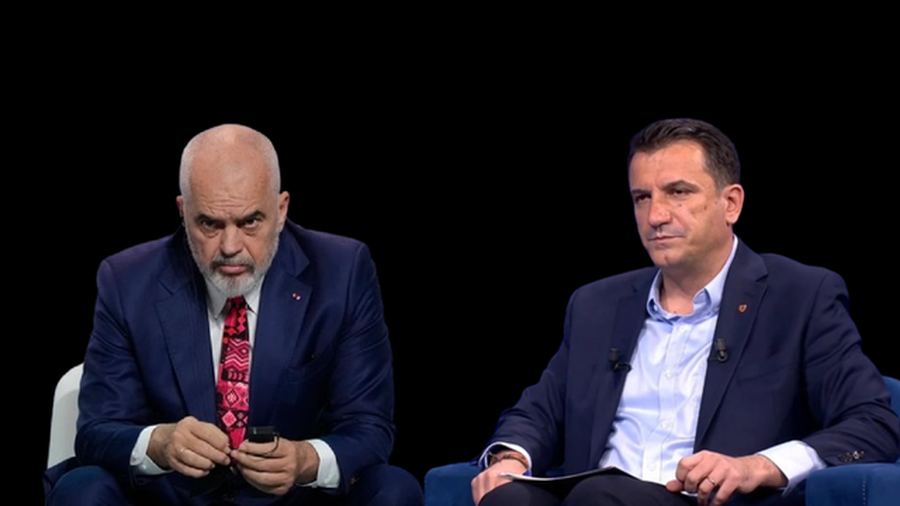
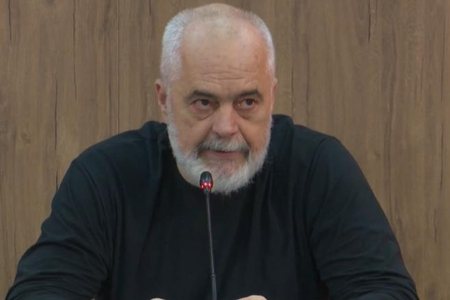
Rama gives an interview to German media, but when asked about Veliaj, he doesn't mention the mayor at all...
Prime Minister Edi Rama appears to have confirmed his divorce from Erion Veliaj. After sending him to the SPAK court, Rama has not been heard talking about him again, except for working behind the scenes to purge the municipality of his people.
Rama recently gave an interview to the German media outlet " Zeit ", which did not spare any criticism. The journalists who interviewed Rama also asked him about Veliaj's arrest.
But Rama never spoke about his case. Before the elections, he started defending him and did not spare attacks on SPAK, but now he does not even mention his name.
“For decades, the answer was to form a protective shield and provide political support accordingly. We have put an end to that. Our party is not a protective shield for anyone; our majority in parliament is only the protective shield of the independent judiciary ,” he said.
In addition to the interview, the German newspaper has also inserted passages in it, where it states that Rama only does not talk about 3 things: drug trafficking, money laundering, and government affairs.
Excerpt from the interview
-A politician close to you, the former mayor of Tirana, was arrested in his office a few months ago, on charges that include bribery and money laundering. Has corruption reached your government?
It goes without saying that people at different levels of government are also affected when corruption is involved. So the question is not whether there is corruption, but what are we doing to combat it and reduce its influence in government.
And I am proud that we have done something big, radical, a judicial reform that, for the first time in our history since Albania's independence in 1912, brought high-ranking officials before an independent judiciary and led to indictments or convictions. On the other hand, I believe that an organization, a company, or a governing majority is not judged by the fact that one or several of its members are suspected of corruption or are being investigated for corruption, but by the way it reacts to such a case.

For decades, the answer was to form a defensive shield and provide political support accordingly.
We have put an end to this. Our party is not a protective shield for anyone; our majority in parliament is only the protective shield of an independent judiciary.
- You have never denied that corruption remains a major problem in Albania. Is it becoming a crucial obstacle in the country's efforts to join the EU?
Our fight against this is an important guarantee of our sincere desire to become a member of the EU. Our successes in this fight have been highly appreciated by the EU.
Edi Rama has managed to elevate Albania onto the European political stage: a largely ignored country of 2.7 million people that now attracts more than ten million foreign tourists each year. Modern buildings are rising in many cities and startups are being founded. But something is also flourishing that Rama is reluctant to talk about: drug trafficking, money laundering, government crime. “Edi Rama has collaborated with organized crime from the beginning,” says the well-known Albanian journalist Enton Abilekaj, who initially viewed Rama favorably. It all started with a policy that promoted the cultivation and trade of cannabis. “He needs criminals to stay in power,” the journalist says. “They provide him with political support.” Andi Bushati, who runs one of the few independent online media outlets in Albania, puts it this way: “Rama’s record is negative. His diplomatic successes are simply a facade that legitimizes his autocratic rule.” Rama appoints unknown ministers without consulting anyone. He leads a party, but for ten years, the election of its leader has been neglected. His governing style? "Form obscures substance."
Fatos Lubonja is even more critical of Rama. The 74-year-old writer, who spent 17 years in prison during the dictatorship, is a prominent spokesman for the left in Albania. He was once friends with Rama, but today the author says: "Rama is a narcissist. He does not accept criticism. He controls the police and the judiciary. It is like under Putin." The biggest problem, however, are the Albanians themselves: "In other countries, someone like Rama would have been in the hospital a long time ago, recovering. Here, he is allowed to govern."
-How do you explain that Fatos Lubonja, who was once your friend, is now one of your harshest critics?
We were very close friends when we fought together in civil society. But since I crossed over to the opposing camp of everyday politics, Fatos has declared me a traitor to the cause. Since then, he has been mainly concerned with proving what a disgusting traitor I am. I respect him and I feel sorry for him.
- What was your biggest mistake as head of government?
Rama: Oh, I will comment on this only when I leave office./ Pamphlet


Lini një Përgjigje