


 Shkruar nga Pamfleti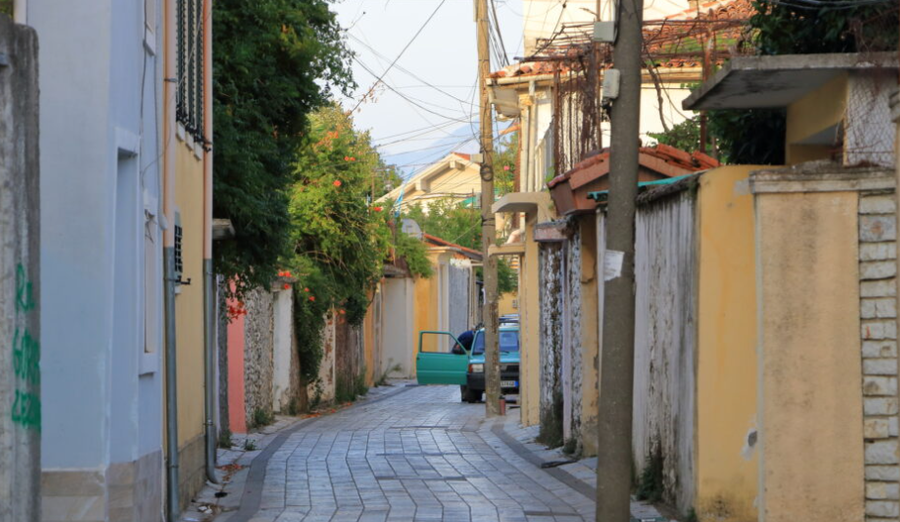
The Western Balkans are stuck in a peculiar position: too European to ignore, too problematic to accept. So Brussels has found a middle ground. Roads and schools today, but never membership…
On the outskirts of Tirana, diggers are preparing the ground for what will become an electrified railway line connecting Albania’s capital with its main port. In North Macedonia, school classrooms are being renovated to be more energy efficient.
Montenegro is also getting help for its educational facilities. The European Union announced on January 27 that it will provide 171 million euros for infrastructure and business support across the Western Balkans, as part of its Growth Plan to bring the region closer to the bloc.
“Investing in our Western Balkan partners is key to bringing them closer to the EU,” said Marta Kos, the European Commissioner for Enlargement. Quite right. The money will mobilise €263 million in total investment in transport, energy, digital connectivity and human capital.
Small and medium-sized companies will receive support to become more environmentally friendly. Bosnia and Herzegovina is being offered improvements in drinking water. All of these measures are very valuable.
But here's the problem: some of these countries have been waiting decades for EU membership. North Macedonia applied for membership in 2004. Albania's candidacy dates back to 2009. Montenegro has been negotiating since 2012.
Two decades later, they are still stuck in the Brussels waiting room while the EU happily signs checks for broadband internet and sewage treatment. The bloc's latest package makes that abundantly clear.
Infrastructure projects receive 91.8 million euros. Another 2.9 million euros is for technical assistance, helping to prepare future investments in energy and water.
The remaining €76.3 million supports private entrepreneurship: export programs for companies in the region, green economy initiatives, and a pilot scheme called “Western Balkans Opportunities from Non-Traditional Debt,” which sounds much less exciting than it is (it helps small companies access financing beyond traditional bank loans).
Ms Kos insists that the investments are “creating real opportunities for citizens and making the EU a lived reality across the region.” That’s one way to look at it.
Another view is that Brussels has discovered a convenient path: economic integration without political commitments. Why deal with the difficult issues of rule of law, judicial reform, and anti-corruption measures when you can simply build things instead?
The Reform and Growth Programme, launched in May 2024 with a budget of €6 billion until 2027, is the financial engine of the plan. It operates through the Western Balkans Investment Framework, a 15-year platform bringing together the European Commission, international financial institutions, EU member states and Norway.
Since its launch, 13 investment projects worth €156 million have been approved. The program offers €3 billion in grants and loans to priority sectors. On paper, the Growth Plan aims to integrate Western Balkan partners into the EU single market while pushing forward reforms.
In practice, it seems more like a consolation prize. The EU can claim that it is supporting the development of the region, and that is very true. The Western Balkans benefit from roads and railways. That is also true.
But what it doesn't get is membership. That remains strangely elusive, blocked by a host of member state objections and Brussels' own reluctance to enlarge. Some countries have fared better than others in this uncertain situation.
Serbia, despite its close relations with Russia, has attracted large Chinese investments in infrastructure. Albania's tourism sector has flourished without EU help.
North Macedonia changed its name to please its southern neighbor, Greece, only to find Bulgaria blocking its progress over language differences. The whole process has turned into a huge disappointment.
The current package includes some really useful projects. Broadband internet provision in Albania will connect remote areas. Improvements to electricity transmission in North Macedonia will address real gaps in infrastructure.
School renovations in Montenegro address both the quality of education and energy efficiency. These are sensible investments that will improve lives.
But they also serve a useful political function for Brussels. Each funding announcement gives EU officials the opportunity to demonstrate a commitment to enlargement without actually enlarging. €171 million sounds like a significant amount (and it is). The projects are well presented.
Everyone can point to tangible progress. Ms Kos can say with great sincerity that the EU is working to make enlargement “a lived reality.” But what is lost is the original promise: membership in the bloc itself.
The Western Balkans Investment Framework has been in place for 15 years. North Macedonia has been a candidate for two decades. At a certain point, infrastructure investments start to look less like preparation for membership and more like a substitute for it.
Of course, the EU has its reasons. Accepting new members is a complicated process. France is very concerned about institutional paralysis. The Netherlands about migration. Germany wants to finish the reforms first.
Everyone has a veto, and someone always wants to use it. In these conditions, it is much easier to write checks and build railways. The Western Balkans are stuck in a peculiar position: too European to ignore, too problematic to accept.
So Brussels is determined to pursue an intermediate solution. Roads and schools today; but never membership. Infrastructure will be useful. But the patience of the countries waiting at the EU's door may not last that long. / Adapted from "Pamphlet", from "Emerging Europe"



Me falni,por fotoja eshte Rruga e Gurazezeve ne Shkoder