


 Shkruar nga Diplomatico | Pamfleti.net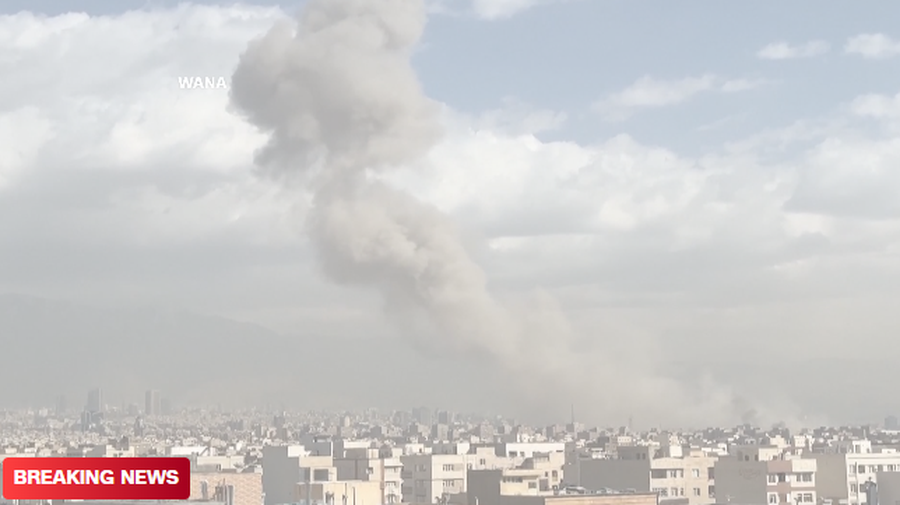
Airspaces are closed, alarms are sounding: the escalation chain has just been activated...
As the world woke up on February 28, 2026, the Middle East entered a new cycle of danger: Israel announced it had launched a “preemptive” strike against Iran, with explosions reported in Tehran and other cities, while Washington confirmed that the operation was coordinated and that US forces were involved in the strike. Sirens were heard in Israel, airspace was closed, and schools and activities were suspended, a signal that Tel Aviv expected immediate and multiple counterstrikes.
Iran, in the same predictable vein of "inevitable retaliation," reported communications disruptions and responded by launching missiles and drones toward Israel, while international media reports of waves of attacks in progress.
This places the crisis on a terrain that goes beyond rhetoric: when two states with advanced capabilities directly strike each other's territory, any incident, whether it be a mistaken strike on civilians or a vulnerable strategic object; can transform the "operation" into open war.
The first major risk is the expansion of the front beyond Israel-Iran. The reports themselves warn that Iran considers it legitimate to strike American targets in the region if the US participates, and in the first hours explosions were also reported in places where American bases are located, while governments and airlines began to close or avoid air corridors. Even when some of these reports remain unclear in the first minutes, the “operational panic” alone is enough to paralyze air traffic, tourism, trade and military logistics, and this makes each side more inclined to react forcefully so as not to appear weak.
The second risk is the global economy, because this crisis touches the energy nerve. Oil markets are reacting not only to the bombings, but to fears of supply disruptions in the Persian Gulf and around Hormuz; even before the strikes, market analysts were pointing out that a US-Iran escalation could push Brent higher if there was even a partial disruption to production/exports.
If the conflict is prolonged, the increase in the risk premium will hit prices, inflation, and the cost of transportation; so it will be paid by the ordinary citizen in Europe as much as in the region.
The third risk is political: this is a direct blow to any hope for a functional "diplomatic channel."
Reuters reports that there were US-Iranian negotiation efforts in February on the nuclear file, but with diametrically opposed demands (Israel wants dismantling of nuclear infrastructure and missile restrictions; Iran wants sanctions relief and refuses to link missiles to the deal). When diplomacy is replaced by missiles, “elegant exits” become rare: each side increases the political price of withdrawal and turns compromise into a domestic taboo.
The fourth risk is the logic of the “second strike”: once the exchange begins, the priority shifts from symbolism to capacity.
Israel aims to reduce Iranian missile/drone capability and strike command nodes; Iran aims to demonstrate that it can strike Israel, increase the cost to the US in the region, and activate pressure through allies/proxies.
This type of spiral has a peculiarity: even if the parties want to "keep it contained," information warfare, intelligence errors, and misguided strikes push the conflict out of control faster than diplomacy can contain it.
And the final risk; one that is rarely said out loud, is that this crisis could become a “decisive moment” for the security architecture in the region: if the strikes affect objects that Iran considers existential, Tehran could build the justification for a harsher response; if Israel feels that it has not neutralized the threat, it could expand its objectives; if the US goes deeper, the region risks sliding into a wider conflict with chain reactions, from attacks on bases, to sabotage at sea, to cyberattacks, to market shocks.
For the Albanian public, this is not just "distant news": any escalation that affects energy, NATO stability, and migration flows translates into political and economic costs in Southeast Europe as well./ Pamphlet




Lini një Përgjigje