


 Shkruar nga Pamfleti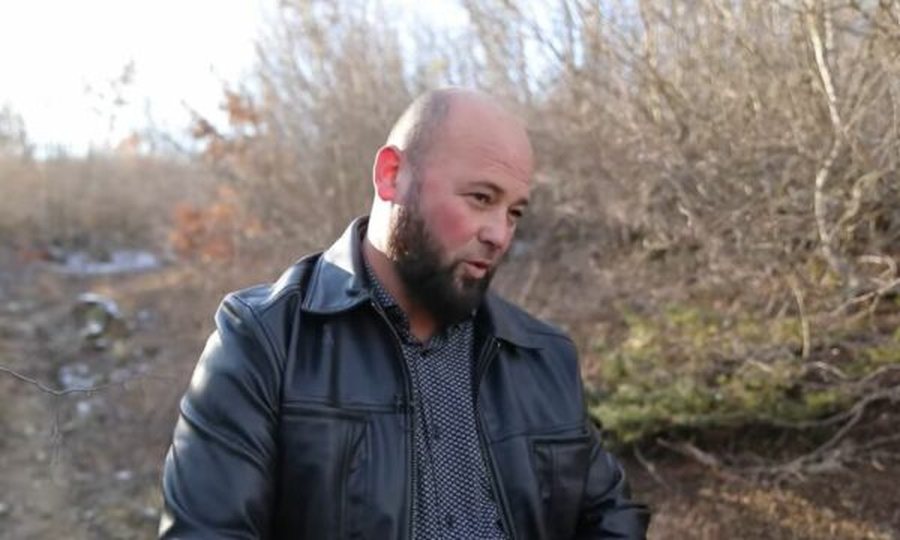
"They beat them with sticks as much as they could. We were inside the house and heard them screaming. They told you 'walk uphill, run away', but they didn't know that above were the Serbian forces, the infantry, waiting for them. They climbed up and when they arrived they were ambushed. There they were massacred one by one by the police and the Serbian army", says Albert Imeri, a survivor of the Reçak massacre.
Serbian police-military forces with large numbers and heavy weapons landed on the morning of January 15, 1999 in the village of Recak.
They entered Sadik Osman's house, where the remaining villagers in Reçak had gathered.
The men were ordered out into the courtyard where rampant violence began. What would await them next would provoke the reaction of the democratic world and was called the massacre of Recak. Albert Imeri was only 16 years old that day and the last among the men who were ordered to go to the yard. He took advantage of the Serbian policeman's distraction and hid at the last moment. He was forgotten and today he tells what happened 25 years ago.
"When he approached me, they said to me, 'take you too', even when I went outside, the policeman was in front of me, and this policeman ran in front of me to hit the other men who were in the yard. At that moment I went back inside, I didn't make a sound", says Imeri.
The 24 men were ordered to leave in the direction of the hill. After the police left Alberti, the women and children who remained in the house then headed to another house in the village.
Sahide Metushi and Nazmi Imeri, still missing, were the first two victims they saw on the road. Meanwhile, another military police unit had ambushed the group of 24 men who were heading towards the hill.
The horror was learned in the early hours of January 16. Alberti with Enver Imer and Adem Bajram illuminates the great drama with a lighter.
"We came here, it was the morning of January 16, terr, with matches, uncle's son, Enveri, we took turns inspecting the corpses, we didn't touch them, but let's see who was massacred". he says.
Alberti immediately begins to identify those massacred on Kodra e Bebushi.
"To be honest, when I came I was horrified, when I saw the corpses, because it was January, it was cold, the corpses were frozen, when I saw my cousins, when I saw my friend Xheladin Jakupin, with him I'm really terrified", said Imeri.
Headless and heartless people were just some of the sights Albert will never forget.
"When we arrived, they were all cut on the body, in the abdomen, later we found Ragip Bajram, who did not follow his heart." [...] They were not even soldiers, they were civilians, simple people, they had nothing to do with the army. It was a terrible massacre, Serbia committed genocide on civilians in Reçak", he added.
Alberti, Ademi and Enveri meet the first observers of the OSCE mission. Immediate reporting also brought Ambassador William Walker to the scene.
"The helicopter came from Shtima, it flew over us three times, about 40 meters above our heads. Even that day we were saved thanks to the OSCE, because that day the Serbian army and police came to take the corpses. Fortunately, I didn't take it because we arrived before theirs, we brought the OSCE and the helicopter went in the direction of Shtime"
Only after the visit of Ambassador Walker, the residents moved the bodies to the village mosque.
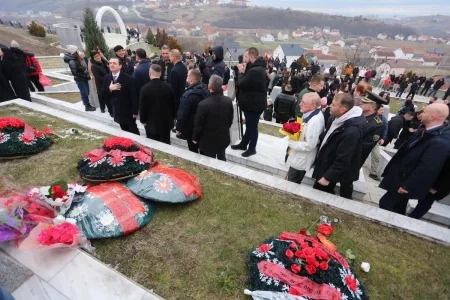
After Serbian resistance, the burial took place almost a month later. The failure of the Rambouillet conference led to NATO's military intervention. 25 years later, what is required is justice.
"I'm really very disappointed with the justice. Our country very little, not a little but nothing, for how many years, no one has been convicted for war crimes, for genocide in Reçak, not a single Serb, don't let me down, the state is asleep. The prosecutors are not working at all, we have evidence, if it is the case we have evidence", he said.
Serbia has not stopped denying a crime it is accused of. Such statements add to the pain of family members but do not diminish the pride of Reçak.




Lini një Përgjigje