


 Shkruar nga Pamfleti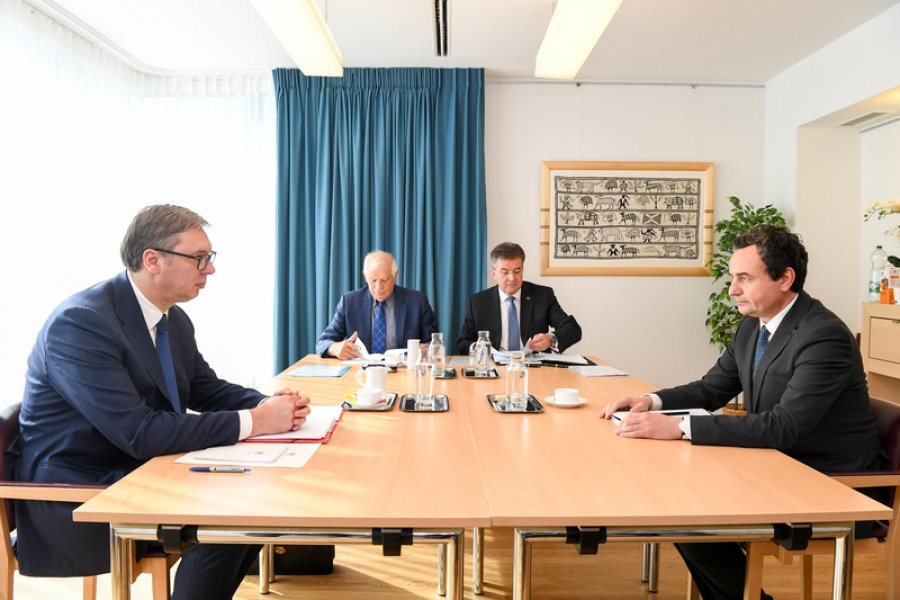
The Austrian newspaper "Der Standard" has severely criticized the West's approach to Serbia and the dishonest pressure on Kosovo to destroy its Constitution.
In the Balkans, people are feeling cheated and betrayed by the West, fear and disappointment are reigning. Serbia's hegemonic intervention has the effect that the democrats (even in Serbia) are weakened, the rule of law and civil rights are hit and radical nationalism becomes the dominant ideology again.
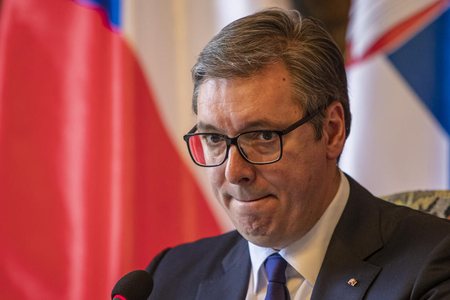
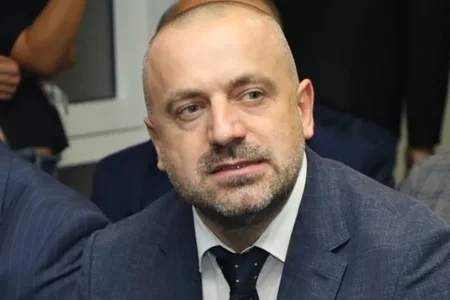
According to the liberal daily in Vienna, Vienna, behind the attack of the Serbian gang in the north of Kosovo, are the politics and circles of the secret services in Belgrade. For Vučić, the failure of the operation is a heavy slap, as the dirty work of his friends in Kosovo comes to light
After the attack, the West cannot argue that it is 'ok' to sacrifice the integrity of the Kosovo state in favor of geopolitical interests, as has happened in recent months.
"Der Standard" points out that the current American administration, especially the person in charge of the Balkans, Gabriel Escobar, and the US ambassador in Belgrade, Christopher Hill, have teamed up with EU emissary Miroslav Lajçak and are unilaterally putting pressure on Kosovo to establish an association of Serbian municipalities in the north of Kosovo according to the imagination of Belgrade. Such an association could bury the sovereignty of the state of Kosovo, which is guaranteed by the constitution.
The newspaper criticizes that in the face of the Russian war against Ukraine, the West has only one goal: to keep Serbia under control. To put it plainly: smaller states like Bosnia-Herzegovina, Montenegro and Kosovo must pay the price for Vučić not to throw himself entirely into the arms of Russian President Vladimir Putin.
"Der Standard" writes that the West has abandoned its project for the democratization of the region, because it prefers to support autocrats. Despite the attack against the Kosovo police, EU sanctions have not yet been imposed against Serbia, because Hungary supports its friend Vučić. The Austrian newspaper doubts that the West will change course despite the terrible Serbian propaganda, ranging from Serbian newspapers using racist language against Albanians to Foreign Minister Ivica Dačič, who openly lied that the footage presented by the Kosovo government showed snow, therefore, according to him, it was not a question of actual filming.
It seems that the Kremlin is also involved in this whole situation, writes "Der Standard". As in the case of the invasion of Ukraine by the Russian army, the Serbian attack against the integrity of Kosovo was also warned. During the summer, graffiti appeared in Serbia with the following content: "When the army will return to Kosovo".
This, according to the Austrian newspaper, is reminiscent of the rhetoric of the 90s, when Vucic, among other things, was minister of propaganda under Slobodan Milosevic. At that time, the population in Serbia was filled with the idea that a genocide was being prepared against them, in fact Serbian racists committed genocide against Bosniaks. This propaganda is likely intended to "legitimize" future decisions. Vucic has threatened several times to send Serbian security forces to Kosovo.
According to "Der Standard", one thesis is that with the secret operation in the north of Kosovo, Vucic wanted to incite conflict in the north of Kosovo to create a trigger for the intervention of the Serbian army "for the protection of the Serbian people" in the north of Kosovo and thus achieve the division of Kosovo. Despite expensive lobbying on the "exchange" of territories during the Trump administration, Vucic did not achieve this through negotiations, so now he is likely trying other paths.
Many people in the Balkans fear that the West is unwilling to end the ongoing provocations of Serbian paramilitary groups in Kosovo. Many have lost their lives and futures in the 90s, when the West closed its eyes and, despite beautiful speeches, tolerated ethnic cleansing and the destruction of states like Bosnia-Herzegovina, "Der Standard" points out.
"They thought that a lesson was learned from this story. But it seems that the Balkans are viewed with an ignorant, semi-colonialist, semi-arrogant approach, saying that it is not a part of Europe", - concludes the prestigious Austrian article.



Lini një Përgjigje