


 Shkruar nga Pamfleti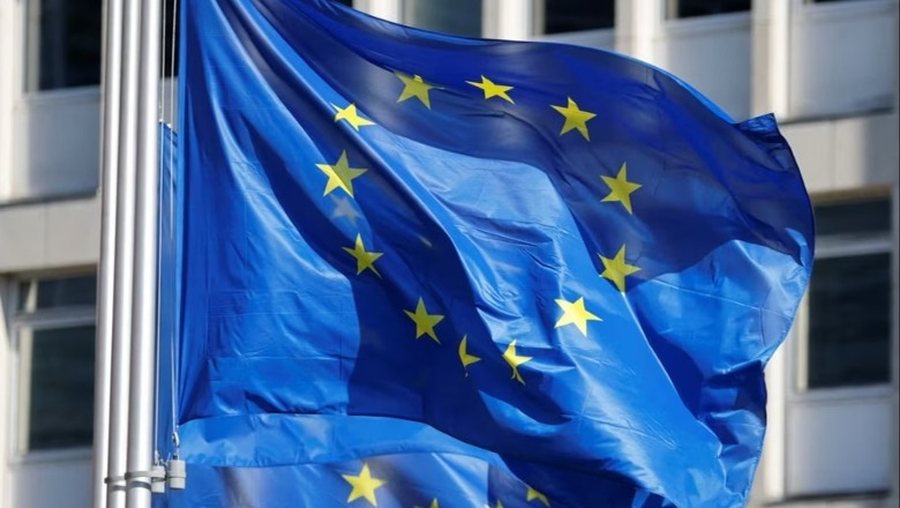
At the meeting of the college of 27 European commissioners on Wednesday, November 8, the enlargement package will be approved, together with individual progress reports for all the countries involved in this process.
For the first time, progress reports will be approved for ten states that are in the process. The reports will be approved for the six countries of the Western Balkan region – Kosovo, Albania, Serbia, North Macedonia, Bosnia and Herzegovina and Montenegro – and for Moldova, Georgia and Ukraine. Likewise, the Progress Report is still being drawn up for Turkey, a country that formally still has the status of a candidate country.
Also, it is expected that the European Commission will recommend the initiation of membership negotiations with Ukraine and Moldova, as well as recommend the granting of the candidate country status to Georgia.
The efforts to reach an agreement to recommend the start of negotiations for Bosnia and Herzegovina also met with objections during the meeting held on Tuesday of the cabinet chiefs. In this meeting, the final text is usually agreed before it is approved. However, on this issue, the last efforts are expected to be made by the commissioners at the meeting on Wednesday.
In the enlargement process, the European Commission makes assessments and gives recommendations, while the formal decisions are approved in the European Council by the leaders of the member countries who decide unanimously.
The recommendations and reports that will be approved on November 8 by the European Commission will be on the agenda at the next meeting of the European Council, which will be held in December.
Regarding the progress reports for the Western Balkan countries, Radio Free Europe published on November 7 the contents of some drafts to which it had access. In the Progress Report for Kosovo, in most of the areas that are assessed, the European Commission has said that Kosovo has made "limited progress".
The report extensively mentions the tense security situation in the north of Kosovo - which is inhabited by a majority of Serbs - but also about the process of normalizing relations with Serbia through the dialogue mediated by the European Union.
In the report on Kosovo, expressions of regret are expressed that Kosovo and Serbia have not begun to fulfill their obligations from the dialogue without preconditions and other delays. Kosovo is invited separately to establish the Association of municipalities with a Serbian majority. In the report, it is already requested that the Association be established based on the last draft status proposal for the Association, which was presented to the parties on October 21.
"Kosovo is expected to start the process that leads to the establishment of the Association of municipalities with a Serbian majority based on the European proposal that was presented to the parties on October 21, 2023. It asks Serbia to support this process and at the same time start fulfilling its obligations its key points from the Agreement [towards the normalization of relations]", the text states, adding that "formalities, including those related to approval, should not be an obstacle in the way of progress in implementation".
The agreement towards normalization, which was reached earlier in the year, requires the parties to develop normal relations of good neighborliness, to recognize each other's relevant documents and national symbols. For Kosovo, the agreement means de facto recognition by Serbia, while for the latter, its annex foresees that Kosovo form an Association of municipalities with a Serbian majority.
Meanwhile, the draft statute presented on October 21 by the representatives of the EU, the United States, Italy, Germany and France, is said to be a modern European model. This document has not been made public, but the Prime Minister of Kosovo, Albin Kurti, has said that he has accepted it and that the same was written with care to the Constitution of Kosovo.
The report on Kosovo also mentions the removal of Serbs from Kosovo's institutions in November of last year and their boycott of the local elections in April of this year. These actions are described as "violations of Serbia's obligations arising from the dialogue and represent a step back by Serbia in fulfilling the obligations taken from the first agreement on the principles for the normalization of relations [of 2013] and represent a direct violation of the agreement on the justice of of 2015".
"Serbia is requested to encourage Kosovo Serbs to immediately return to institutions, while Kosovo to make this possible. Since November 2022, neither side has taken any steps in this direction," the report states.
After the increase of tensions in the north of Kosovo at the end of May, due to the opposition of the Serbs to the new Albanian mayors of the municipalities, Kosovo has drafted a legislation that enables the citizens to change the mayors of the municipalities through a petition.
The situation in the north of Kosovo worsened even more on September 24, after the attack on the Kosovo Police by a group of armed Serbs. The responsibility for the attack was taken by Millan Radoicic, the former vice-president of the Serbian List - the main party of the Serbs in Kosovo, which enjoys the support of the official Belgrade.
Kosovo blames Serbia for the attack, but Belgrade denies any involvement.
Otherwise, after the approval in the college of commissioners, the enlargement package will be presented to the journalists by the president of the European Commission, Ursula von der Leyen, while to the deputies of the European Parliament, the Commissioner for Enlargement and Neighborhood, Oliver Varhelyi./REL



Lini një Përgjigje