


 Shkruar nga Pamfleti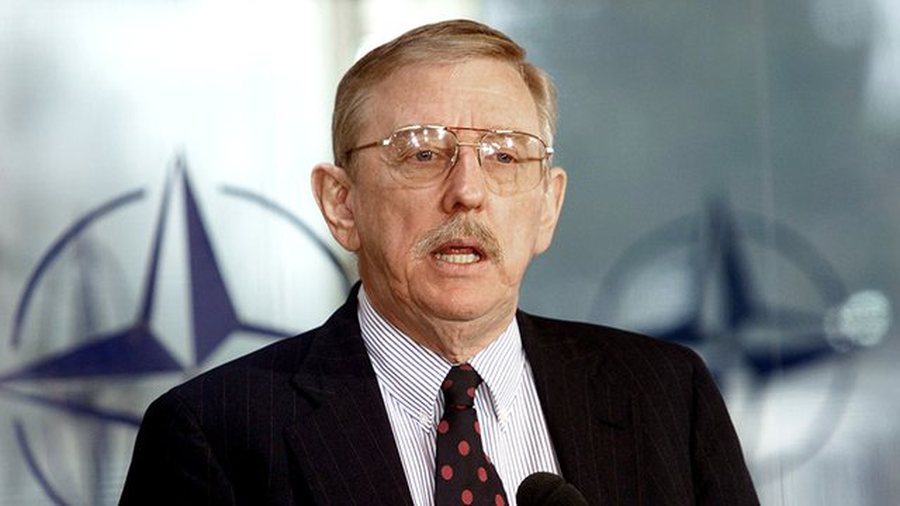
Former American diplomat William Walker has called the trial of former KLA leaders at the International Criminal Court in The Hague a major fiasco.
In a direct link to "Off the Record" on "A2 CNN", he said that the accused have been held for years in detention without concrete evidence and without full access to the defense, making the process unfair.
" I see this process that has been going on at the International Court in The Hague for over 10 years as a violation of the law. So the process in The Hague in my opinion is the injustice that stems from an attempt to understand what happened and who was responsible for those events. These gentlemen, these former KLA leaders have been accused, they are accusations of committing war crimes after the bombings and I have not seen any evidence for this. I have seen a very long process from a legal perspective, a trial that has taken place in The Hague, 10 years of investigations, four years of detention, the detention of these gentlemen, Hashim Thaçi, Mr. Krasniqi and Mr. Veseli and one or two others, have been detained without any sentence which for me is simply unheard of. I have never heard of people being accused of a crime and not being proven guilty and being held in detention without access to the outside world for almost four years. I see this whole trial as a huge fiasco ," he said.
He stressed that war crimes in Kosovo, including the Racak massacre, were committed by the Serbian government and its chain of command, while former KLA leaders did not give orders for crimes.
“ You described the Racak massacre. I described it as a war crime. Slobodan Milosevic was the head of the government, the head of a chain of command, who led the soldiers who killed the villagers in Racak. This chain of command was clear to everyone and they still haven’t gone through the entire chain of command, to go to their participation in the genocide that took place in Kosovo in 1999. I think from the very beginning of what happened in Kosovo before the Racak massacre, the government in Belgrade was committing terrible war crimes in the province of Kosovo. They continued to do this until the NATO bombing campaign. But up until that moment the government in Belgrade was committing terrible war crimes ,” he continued.
According to him, the KLA was decentralized, with regional command, and the fighting against Serbian forces was mainly organized by local leaders, without orders from the command center. According to Walker, crimes occurred after the end of the NATO bombing, but they were not the result of orders from KLA leaders.
" I'm sure that very bad things happened after the liberation, but it wasn't under the direction, or the orders of the KLA. They weren't under the orders of Hashim Thaçi, or Jakup Krasniqi, or Kadri Veseli or anyone who was part of the KLA. Yes, crimes happened, but they weren't the result of orders coming from the KLA chain of command, and I'm convinced of that. As I said, the security forces in Kosovo committed terrible war crimes under a very direct chain of command from the top of the government to other leaders, and they weren't prosecuted for war crimes because they were in a direct chain of command. The KLA didn't have this similar chain of command ," he said.
He also describes the situation of Albanian refugees who were expelled from Kosovo, emphasizing that citizens were seeking retribution for the violence they experienced, but this was not related to the actions of KLA leaders.
“ I have tried very hard to present myself as a witness for the defense and to present the context in which Kosovo lived after the end of the NATO bombing. I have been to Macedonia and I have traveled to Albania and I have visited the refugee camps, where there were hundreds of thousands of Albanians who had been brutally expelled from their country and there had been a genocide against them and there were many refugees in the camps who had heard that their families had been killed, that their homes had been destroyed, their villages had been destroyed, their women had been raped and the people in these refugee camps told me that when they returned to Kosovo they would seek retribution for what had happened to them ,” said William Walker.



Lini një Përgjigje