


 Shkruar nga Carlo Renda
The proceedings at the Special Court for Kosovo in The Hague against the former president and three senior military officials for war crimes and crimes against humanity committed during the conflict with Serbia have concluded. The prosecution is seeking sentences of up to 45 years in prison for those many consider heroes of the country. It casts a shadow over the Balkan country, which today celebrates its 18th birthday and is protesting in support of the defendants...
The Prosecutor of the Special Court for Kosovo in The Hague has requested sentences of 45 years in prison for former Kosovo President Hashim Thaçi and three former senior military officers, Kadri Veseli, Rexhep Selimi and Jakup Krasniqi, on trial for charges of war crimes and crimes against humanity, allegedly committed during the conflict with Serbia (1998-1999).
The four defendants are accused of murder, torture, persecution and unlawful detention, both in Kosovo and Albania, of hundreds of civilians, including Serbs, Roma and political opponents.
“The gravity of the charges does not diminish with the passage of time ,” prosecutor Kimberly West said in her closing arguments. The trial ends on Wednesday, February 18, when the court, based in The Hague and composed exclusively of international judges but part of the Kosovo judicial system, will have one month to issue its sentence, a deadline that can be extended by another two months in exceptional circumstances.
Likewise, former President Thaçi will also be tried in The Hague starting on February 27, along with his four co-defendants, on charges of obstruction of justice and witness tampering.
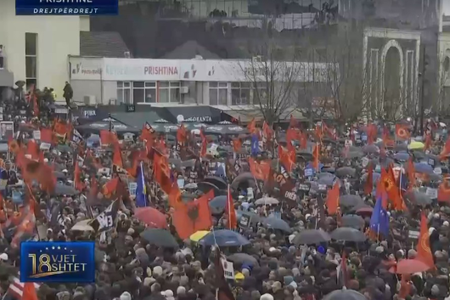
The second trial is about efforts to overturn the outcome of the first. The Democratic Party of Kosovo (PDK), founded by Thaçi and now in opposition, has called a protest in Pristina in support of the defendants. Hashim Thaçi, 57, resigned as Kosovo's president after being indicted by the court in 2020.
He was the political leader of the Kosovo Liberation Army (KLA), of which the three other co-defendants were high-ranking officers. For Kosovo, they are the leaders of the guerrilla movement that achieved independence from Serbia.
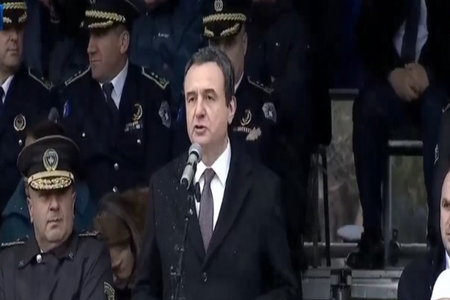
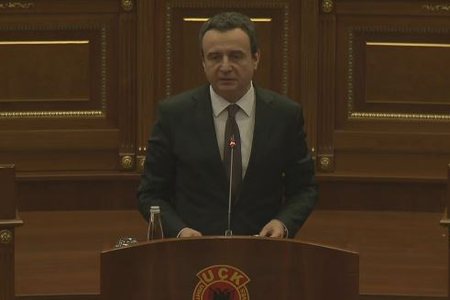
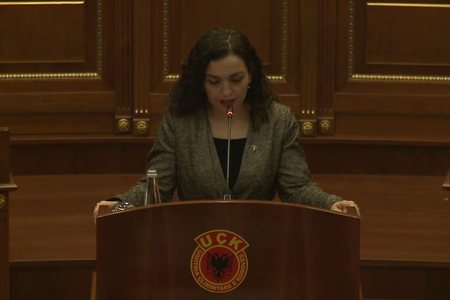
They are heroes of the homeland. Large pictures of Thaçi and his co-defendant, Kadri Veseli, have already appeared in the main squares of Kosovo. It is no wonder that Prime Minister Albin Kurti, speaking in Parliament, reacted sharply to the request for sentencing, calling it “ an attempt that contradicts the truth and denies the historical and political context of our liberation war.”
“It is absurd to compare the leaders of the KLA with a genocidal regime ,” he added, referring to Slobodan Milosevic’s Yugoslavia. President Vjosa Osmani echoed these sentiments, saying that “ any attempt to equate the liberation war waged by the KLA with the genocidal actions of the Serbian aggressor endangers sustainable peace in the region.”
Furthermore, with 90 votes in favor and one against, the Kosovo Assembly recently approved a resolution prepared by a group of experts, which calls for “a fair trial” for the defendants and reaffirms Kosovo’s commitment to financially support their defense.
For many in Kosovo, this is effectively a trial of the Kosovo Liberation Army and therefore the independence movement. The case was prepared for years and has led to a reconstruction of the alleged crimes committed between 1998-1999.
The KLA is suspected of committing horrific crimes against hundreds of civilians and non-combatants in camps in Kosovo and northern Albania. The court accuses Thaçi and his co-defendants of carrying out a “criminal enterprise” that included murder, torture, persecution and unlawful detention in dozens of detention camps in Kosovo and Albania.
However, most of the evidence was provided by Serbia, which has never recognized Kosovo's independence. The war for independence against Slobodan Milosevic's Serbian forces left 13,000 people dead, mostly Kosovo Albanians.
It ended with a US-led NATO bombing campaign. A dozen senior Serbian officials have been convicted by international justice of war crimes. Hashim Thaçi, born in 1968, grew up in the western region of Drenica, the cradle of Kosovo Albanian separatism and a stronghold of the KLA during the war.
In the early 1990s, he became involved in “passive resistance” against Serbia. Later, after moving to Switzerland, he studied history and distanced himself from the “father of the nation” of Kosovo Albanians, Ibrahim Rugova, and his pacifism.
Along with other separatists, Thaçi decided to create a guerrilla movement to fight Milošević's forces. Known by the nickname "The Snake", he led the political wing of the KLA.
After the war, Thaçi took on the guise of a politician: then-US Vice President Joe Biden called him “Kosovo’s George Washington.” After Rugova’s death, Thaçi won the November 2007 elections. Today, he remains a hugely popular figure in Kosovo. His peak came in 2008, after the declaration of independence, achieved despite opposition from Serbia.
For more than 7 years, he served as the prime minister of independent Kosovo, then in 2016 he was elected president. However, even earlier, in 2010, a Council of Europe report revealed a very serious accusation against the KLA, which damaged its reputation.
Accusations of corruption and favoritism were added to this. Thaçi has always proudly proclaimed his innocence and pledged to wage a “just war” against the Serbian oppressor, accusing international justice of wanting to “rewrite history.”
Despite this, he resigned in November 2020, after the announcement of his indictment by international justice, to preserve the “integrity” of the presidential office. “ History cannot be rewritten; freedom for the liberators! ” is the appeal of Memli Krasniqi, former leader of Thaçi’s party, the PDK.
By seeking a sentence of 45 years in prison, the prosecution is trying to impose “collective guilt” on all of Kosovo, argues political scientist Lulzim Peci. The prosecution alleges that in 1999, Thaçi and others misled the US administration and NATO military leaders about what was really happening in Kosovo, effectively shaping the narrative surrounding the war and the Atlantic Alliance’s intervention against Belgrade.
"There is no evidence that Thaçi gave orders to the perpetrators of the crimes, nor are there any reports from the perpetrators about Thaçi. There is also no credible evidence that he was personally involved in the commission of war crimes ," the defense argues.
Moreover, “this is an incredible request from an office that knows that the Special Court and the Special Prosecutor’s Office would not exist if it were not for the accused.” In fact, to gain recognition of Kosovo’s independence from the international community and to facilitate its accession to the EU, Thaçi had agreed to stand trial.
He was convinced that this would take a few months and that everything would be easily clarified soon, but this has not happened. And after years of delays, backlash, threats and abuses, whatever the court's decision is, it will not be accepted without reaction, neither in Kosovo nor in Serbia.
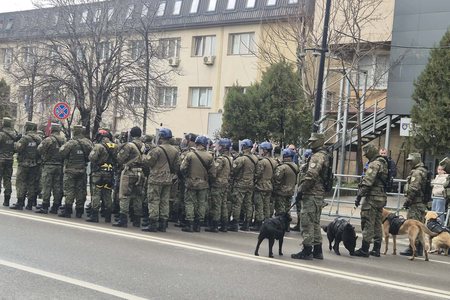
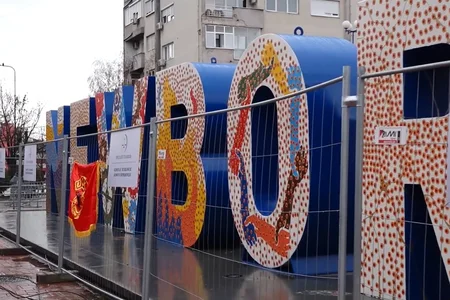
A heavy shadow hangs over Kosovo, which today celebrates the 18th anniversary of its declaration of independence. An anniversary marked by celebrations, but also by protests by supporters of Thaçi and other defendants.
The defense argues that the request for a sentence of 45 years in prison has no legal basis under the law of the former Yugoslavia in force when the crimes were allegedly committed, nor under current Kosovo law. By comparison, former Bosnian Serb leader Radovan Karadzic was sentenced to 40 years in prison, later commuted to life imprisonment, for numerous charges, including the Srebrenica massacre./ Adapted from "Pamphlet" by " Huffington Post Italia "


Lini një Përgjigje