


 Shkruar nga Pamfleti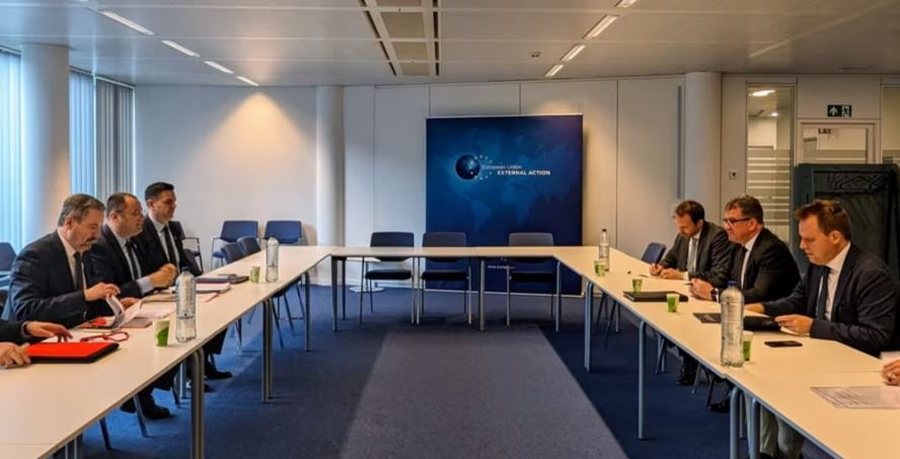
After the meetings held today, with the representatives of Kosovo and Serbia in Brussels, on the dinar issue, the European envoy for the Kosovo-Serbia talks, Miroslav Lajçak, said that other meetings are needed.
According to him, many questions on this issue have not yet been answered.
Lajçak also said that he welcomes the commitment of the parties to find a sustainable solution for the communities affected by the regulation of the Central Bank of Kosovo.
"Today's dialogue meeting was an important first step, but many political questions remain unanswered. Additional meetings will be needed," he wrote in a reaction on social networks.
The Serbian team was led by chief negotiator Petar Petkovic, while the Governor of the Central Bank of Kosovo, Ahmet Ismaili, participated from Kosovo. The chief negotiator of Kosovo, Besnik Bislimi, refused to participate in the meeting, as according to him "the dinar issue is not part of the dialogue".
The Central Bank of Kosovo said through a communiqué that in the meeting with the European envoy Lajçak, "the constitutional and legal authority of the Central Bank of Kosovo and the established regulation was not discussed or contested by the European Union, but some concerns were raised about the possible impact to our citizens of the Serbian community.
The communiqué states that during the meeting with a delegation from the Ministry of Finance of Serbia, "the possibilities presented by the CBK were discussed and the possibility and ease of their realization in practice was argued if such a will exists on the part of the sender, without any change of the legal framework in force".
Serbia's chief negotiator Petar Petkovic said after the meeting that the unilateral decision of the authorities in Pristina means seeking a solution through the political level.
"The consequences of such a unilateral decision are political and affect the survival of the Serbian people in Kosovo. When (Besnik) Bislimi says that he should not come to Brussels because the issue of the dinar is not a topic for dialogue, I will tell you that the dinar and the payment system of the Republic of Serbia have never been discussed in dialogue until now, but since this decision directly affects the life of Serbs in Kosovo, it violates the very process of normalization of relations. Of course, it will be discussed, discussed in Brussels, then where will they talk, if not here?", he said.
Mr. Petkovic said that Belgrade will do everything to reach a solution in Brussels while stressing that they have requested that the controversial parts of the regulation be removed, but also that the Post Bank of Serbia continues to operate in Kosovo.
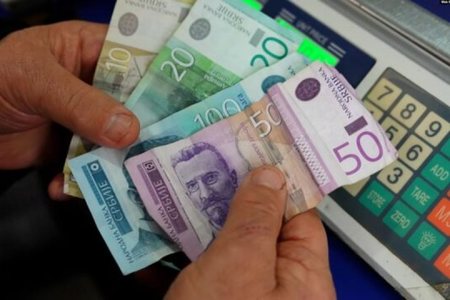
Today's meetings followed the regulation of the Central Bank of Kosovo, according to which the euro is the only currency that can be used for ready payments in Kosovo. The regulation, which came into force on February 1, prompted an angry reaction from Belgrade, and the concerns of Western diplomacy about its impact on the lives of Kosovo Serbs who continue to be financially supported by Belgrade, as well as on tensions between the parties.
Diplomats have called on the government of Kosovo to suspend the regulation of the Central Bank and to give time to the affected citizens to adapt to the new situation.
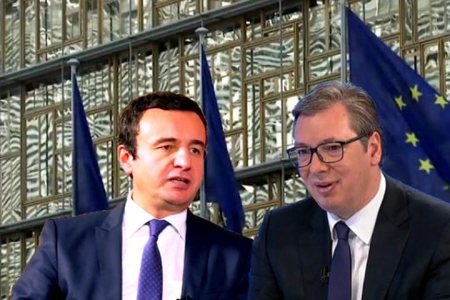
Tuesday's meeting took place on the one-year anniversary of the Brussels agreement between Kosovo and Serbia on the normalization of relations, which has not yet begun to be implemented.
The Deputy Prime Minister of Kosovo Besnik Bislimi wrote today on social networks that Serbia still refuses to sign and therefore implement the agreement a year after the reconciliation. He said that throughout this one-year period, Kosovo has faced the violations of the agreement by Serbia and the escalation of the situation on the ground.
On February 27 of last year, the leaders of Kosovo and Serbia agreed on an agreement supported by the West for the normalization of relations, but without signing it. The agreement does not include mutual recognition, although it is required that the parties respect each other's independence, sovereignty and territorial integrity. /VOA




Lini një Përgjigje