


 Shkruar nga Pamfleti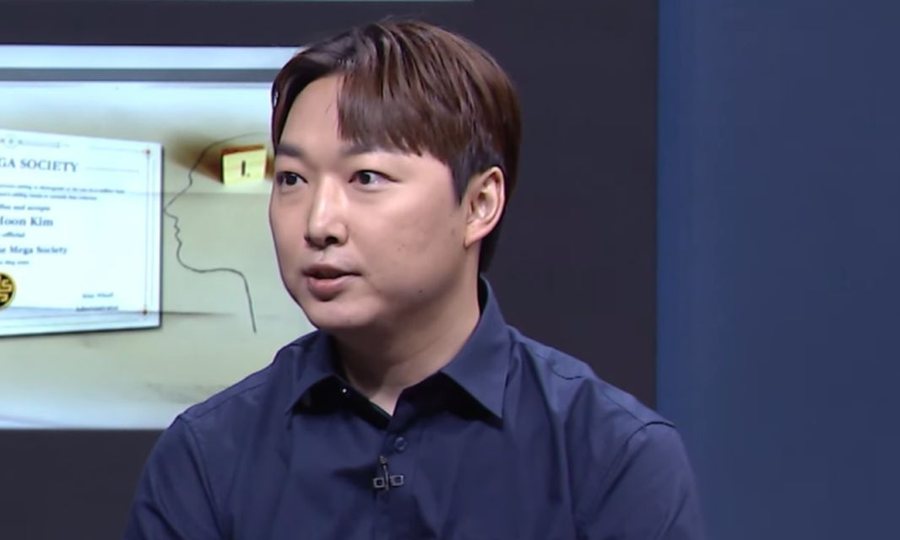
When we talk about the highest IQ in the world, people usually think of figures like Albert Einstein, Isaac Newton, or Leonardo da Vinci. But in reality, things are much more complicated.
Modern measurement of intelligence only began in 1905, when French psychologist Alfred Binet and psychiatrist Théodore Simon introduced the first IQ test. This means that all assessments of historical figures before that time are purely postmodern and hypothetical. However, figures such as Shakespeare, Goethe, Voltaire, and Thomas Woolsey have occasionally been rated with impressive scores.
Woman with official data
The highest officially recorded IQ belongs to Marilyn vos Savant, who entered the Guinness Book of Records with a score of 228 points. After her case, in 1985, the Guinness Book of World Records stopped recording IQ, citing the great scientific controversy surrounding the reliability and comparability of the tests.
The man who claims to be "the smartest in the world."
Adding to this dark landscape is South Korean scientist YoungHoon Kim, who claims to have an IQ of 276 and describes himself as the smartest person in the world. Many dispute his claim, although he himself is a member of the Giga Society, an extremely closed club that only accepts people with an IQ above 190 and has only nine members worldwide. The credibility of these organizations has been heavily criticized, even by international media.
Faith, science and metaphysics
Beyond the numbers, Kim has been criticized for his public statements about religion. A self-proclaimed Christian, he claims that God absolutely exists and that Jesus and God are the same person. In a post on X, he wrote: "As the owner of the highest IQ in the world, I believe that Jesus Christ is God, the way, the truth, and the life."
What happens after death?
YoungHoon Kim doesn't stop there. He has publicly expressed his opinion on what happens after death, trying to connect religious belief with quantum physics. According to him, consciousness is not just brain activity, but something deeper. "Quantum physics says that information never disappears, it just changes form. If consciousness is quantum information, then it can continue to exist after the death of the body," he argued.
He compares the human brain to a local device and the afterlife to a kind of cloud storage, arguing that quantum entanglement shows that consciousness is part of a larger system beyond the physical world.



Lini një Përgjigje