


 Shkruar nga Pamfleti
Tensions between RTVE and the European Broadcasting Union (EBU) continue to escalate. El Pais reports that the network decided on Monday to request an audit from the organization responsible for Eurovision to investigate the Spanish televoting, which gave the highest score, 12 points, to the Israeli representative.
The initial information the Spanish delegation received was a list of the countries with the most votes, without specifying the number of votes each received.
After insisting on more accurate data, RTVE received a new document sent by the organization that organizes the festival, which only shows that, on the night of the grand final, it received 7,283 phone calls, 23,840 text messages and 111,565 online votes. Participating countries can vote via the Eurovision app (up to 20 votes per person, at a cost of €0.99 per vote), by phone or by text message.
During the first semi-final, held on Tuesday and in which Israel did not compete, RTVE received 774 phone calls, 2,377 text messages and 11,310 online votes.
But this report only shows the data summarized by the German company responsible for counting them, without a more precise breakdown.
For this reason, this Monday the network will request an audit to clarify all its doubts. In the professional vote, the Spanish jury did not give any points to the Israeli representative Yuval Raphael and his song "New Day Will Rise", in contrast to the maximum score given in the televoting.
RTVE is aware that other countries will also request similar audits, the same sources explained to EL PAÍS.
David Saranga, acting director of public diplomacy at the Israeli Foreign Ministry, admitted last year to the Israeli news site Ynet that his agency intervened “among the pro-Israel public to encourage voting.” These online campaigns, often supported by right-wing and far-right parties in each country, were successful. Spain also gave all 12 popular vote points to Israel in 2024.
Over the past two years, the popular vote has clearly favored one country, Israel, whose government has admitted to actively interfering in the collection of these votes. In 2024, it received 323 points from the public, coming in second behind Croatia. In 2025, it achieved fewer points (297), but became the country most popularly voted for.
A possible fine
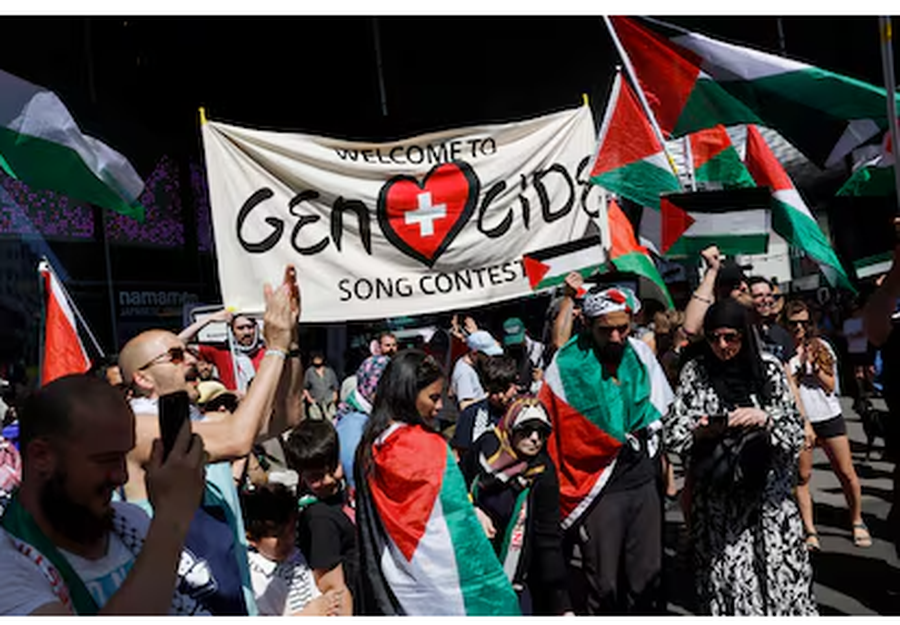
Spain's critical stance towards Israel's military intervention in Gaza stems from a petition RTVE sent to the EBU in April, requesting a debate on the country's participation in the contest. Other delegations joined it, including Slovenia, Iceland and Ireland.
RTVE commentators Julia Varela and Tony Aguilar recalled this request last Thursday during the broadcast of the second semi-final of the festival on La 2. During the presentation video of the Israeli candidate, they also mentioned the more than 50,000 civilian victims of the attacks on Gaza, of whom more than 15,000 are children, according to United Nations data.
Despite specifying that the message was not directed at any specific country, Israel's public broadcaster KAN filed an official complaint with the EBU at noon on Friday. Hours later, Eurovision officials contacted RTVE to ask what could be read in the letter sent during a conversation in which "there was no room for negotiation," sources close to the public broadcaster told the newspaper.
On Friday, the president of the Eurovision Reference Group, Swiss Bakel Walden, who will be replaced by Spaniard Ana María Bordas in June, and Swede Martin Osterdahl, the contest's executive supervisor, sent a letter signed by Bordas himself threatening "punitive fines" for Spain if RTVE repeated references to the conflict in Gaza in its broadcast of Saturday's final.








Lini një Përgjigje