


 Shkruar nga Pamfleti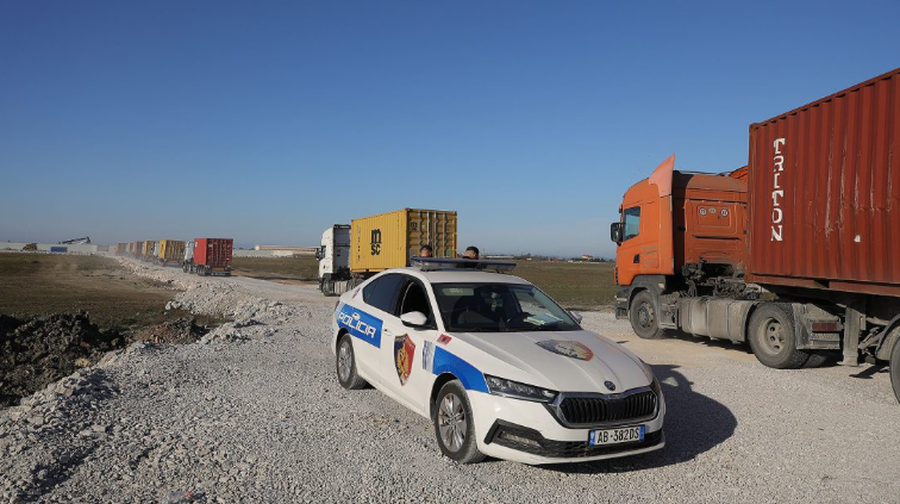
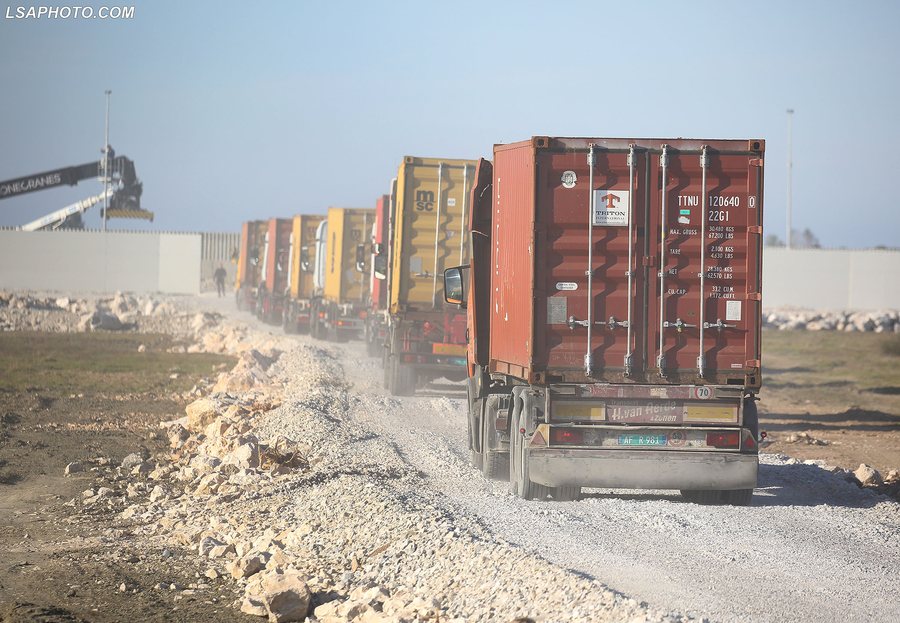
On the morning of October 28, 2024, the Turkish-flagged ship "Molivia" dropped anchor at the outer berth of the port of Durrës, returning to Albania 102 containers of suspected waste, which previously caused a global environmental alarm.
The unwanted cargo had left the same port heading for Thailand, but remained at sea for months after the environmental organization Basel Action Network, BAN, raised concerns that it could contain tons of hazardous waste originating from electric furnace ash (EAFD).
The containers were seized by order of the Durrës Prosecutor's Office and deposited in Porto Romano as part of a proceeding initiated for the criminal offenses of "smuggling of prohibited or restricted goods", "transportation of waste and abuse of office".
But eight months later, the contents of the remains are still unclear and the fate of the investigation is in question, as the Durrës Prosecution claims it has not yet found a laboratory to test the remains, even though it publicly stated the opposite on March 5.
Asked about these contradictions and the delay in the investigation, the Prosecution told BIRN in a written response that they had not reached an agreement with the first laboratory and had continued to find another laboratory abroad.
"...for this reason, the search for another laboratory abroad has continued, verification of compliance with all international protocols and standards by this laboratory, as well as negotiation, a process which is also being carried out with the help of foreign partners ," stated the Durrës Prosecutor's Office.
The head of the Durrës Prosecutor’s Office, Suela Beluli, who was also part of the investigation team, told BIRN by phone that the tests had been delayed due to difficulties in finding a laboratory and high costs.
But foreign and local environmental activists raise suspicions of a deliberate strategy to drag out the investigation and evade justice for those responsible.
"The delay is unacceptable and outrageous ," said Jim Puckett, executive director of BAN, the organization that first reported the scandal.
"This is a disgrace to any competent government institution and is now clearly emerging as a cover-up or deliberate strategy to delay the results and consequently the prosecution's findings ," Puckett added, stressing that the matter "reeks of political interference."
The tons of suspected waste originated from the chimney filters of the Turkish company "Kurum International" that operates in the premises of the former Metallurgical Plant in Elbasan, while the Prosecution identified the company "Sokolaj" owned by Gjovana Sokolaj as the exporter of the containers.
BIRN revealed in a previous investigation that the seized quantity was just one of many shipments illegally exported out of Albania. Between 2020 and 2023, an amount of around 20,000 tons of waste generated by “Kurum” was exported out of Albania by the company “Sokolaj”, in violation of national and international laws.
There is no shortage of accredited laboratories that analyze heavy metals in Albania; BIRN was able to contact two of them within an hour and receive a quote. Analysis of a sample according to one of the laboratories cost 306 euros.
However, BAN's Puckett suggests that due to the importance of the issue, Albania should engage a laboratory in Germany or another European Union country, which he says has experience in sampling electric furnace dust (EAFD). He even estimates that the price for a comprehensive sampling of organic materials, including dioxins and metals for about 24 samples would cost between 6,000 and 10,000 euros.
“I had previously given the name of the laboratory to the Prosecutor’s Office. Then I heard that they wanted to do this work in Albania. Why? This doesn’t make sense ,” he told BIRN, adding that he personally did not trust that any laboratory in Albania would be free from “political influence.”
Environmental activist Lavdosh Feruni also believes that the delay in laboratory testing is not a matter of costs, but of negligence.
"I remember that after the explosion in Gërdec, analyses of this nature were conducted for heavy metals and I don't remember the cost being an issue," said Feruni.
"It's a drag to forget it as an issue, to make it irrelevant," he concluded.


Lini një Përgjigje