


 Shkruar nga Pamfleti
Ecuador's police chief, Roberto Santamaria, explains that one organization executes victims with three shots to the head, another cuts off heads and body parts, while another shoots them with a barrage of bullets.
Robberies, kidnappings and murders are common here, drug gangs have everything under their control. A ZDF report shows what is happening in Ecuador, which it considers a country on the verge of collapse, while drug gangs terrorize the population.
Ecuador is considered one of the most dangerous countries in Latin America. Drug trafficking and organized crime have a strong grip on the country, while cartel violence causes horrific scenes every day on the streets.
"The drug war in Ecuador, a country on the verge of collapse," is the title of the ZDF documentary, whose journalists have entered one of the most fearsome cities in the world.
"Five minutes ago, someone was killed here," says an Ecuadorian journalist, showing the ZDF team a corpse.
A shooting occurred in broad daylight in front of a public building. In many parts of the South American country, such events have long been the norm. In 2024, almost 2,500 murders were committed in the port city of Guayaquil alone, an average of seven a day. Street executions hardly shock residents here anymore.
A citizen expresses despair: "Every day there are murders, corpses, attacks, extortions or kidnappings in this city. It's all the work of organized gangs. One massacre after another. I don't know what else we can do. We should all arm ourselves to protect ourselves."
Drug gangs have everything under control.
For a long time, the beautiful country on the Pacific Ocean was considered one of the most peaceful in Latin America. The weak economy caused an explosion of violence starting in 2020. Cartels took control and turned Ecuador into a center for the international drug trade. Since then, rival gangs from Mexico, Colombia and even Albania have terrorized the population. Footage of kidnappings, robberies, torture and gun violence paint a horrific picture in the ZDF documentary.
What is particularly grim is that the gangs have their own distinctive style of killing. Ecuadorian police chief Roberto Santamaria explains to the film crew that one organization executes victims with three shots to the head, another cuts off heads and body parts, and another shoots them with a barrage of bullets. These operations are also extremely dangerous for the police, especially since many residents work as informants for the cartels, the police chief explains.
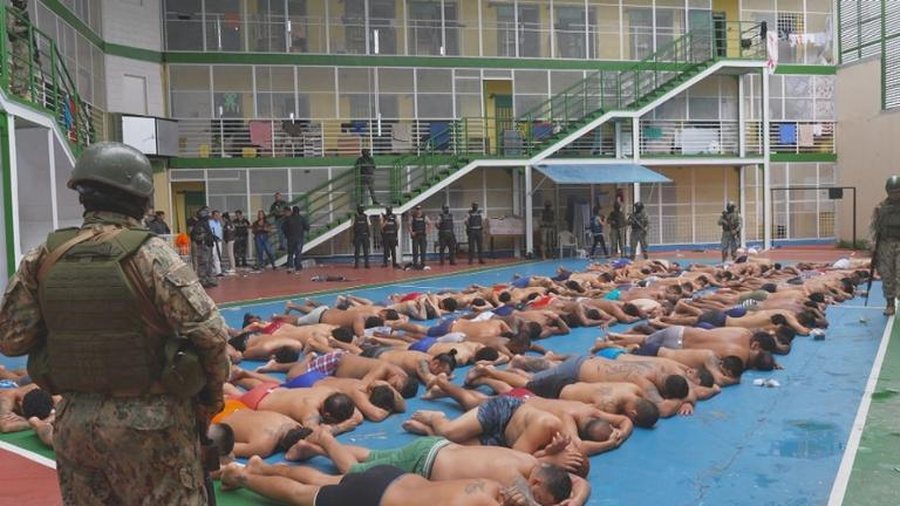
Things are no less dangerous in Ecuador's overcrowded prisons. Gang wars are not uncommon. Just a year ago, "Fito," the powerful leader of the Los Choneros criminal group, escaped from his cell. ZDF was speaking to the prison director about the drug lord's still-unexplained escape when the interview was abruptly cut short. The camera crew was ordered to leave the premises immediately, due to a tense situation.
The prison director politely removes the ZDF journalists when they are suddenly informed that they will not be getting their passports back, which they were supposed to hand in at the prison entrance.
"We have to pay $1,000 and only then will we get our passports back," says a journalist. Corruption on camera. The documentary does not answer whether the film crew paid the money.
The lucrative drug trade: Can Ecuador still be saved?
In November 2023, Ecuadorian President Daniel Noboa declared war on drug cartels. He announced tougher action against corrupt officials. But the enemy seems invincible: officials who refuse to be corrupted and who hinder criminal gangs in their operations are regularly killed. ZDF met, among others, a mayor who miraculously survived an assassination attempt and has since gone into hiding. A judge reported receiving constant death threats and is under constant police protection.
With 22,000 soldiers and 60,000 police officers, President Daniel Noboa will fight against an estimated 50,000 gang members. Indigenous peoples in the Amazon basin are also helping, as the dense jungle in eastern Ecuador provides an ideal route for smuggling cocaine from Colombia and Peru.
One of the main areas of action for drug enforcement is the port of Guayaquil. Since Ecuador is the world's largest exporter of bananas, tons of cocaine are hidden in banana boxes. In 2024, over 280 tons of cocaine were seized, yet only a small fraction of the smuggled drug was recovered. Despite the tough measures taken by President Daniel Noboa, drug trafficking remains an extremely profitable business for the cartels. The country is in danger of being plunged into violence, drugs and corruption. /Adapted from Pamphlet by Fr.de/




Lini një Përgjigje