


 Shkruar nga Pamfleti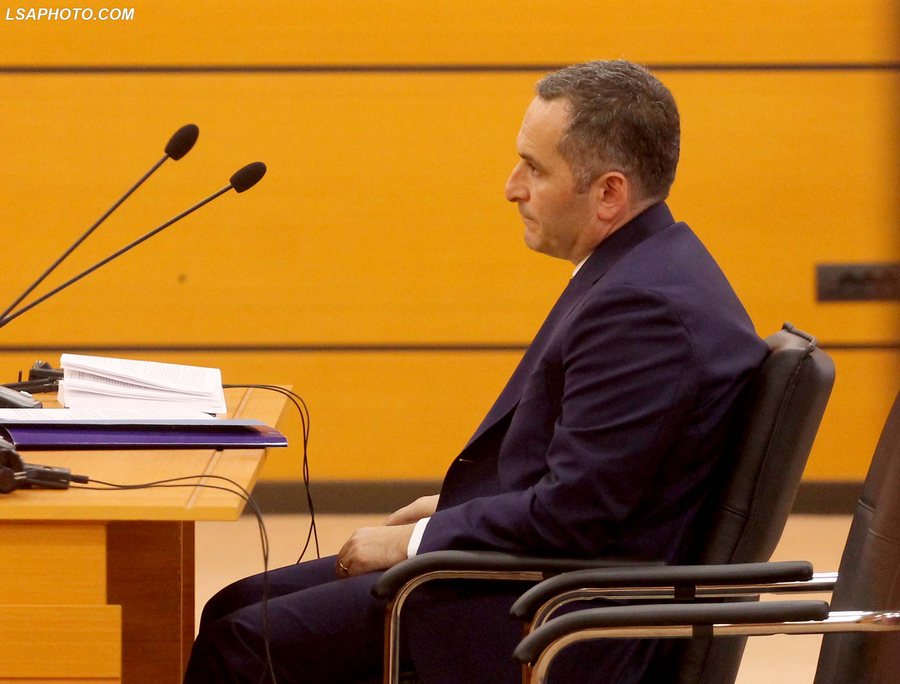
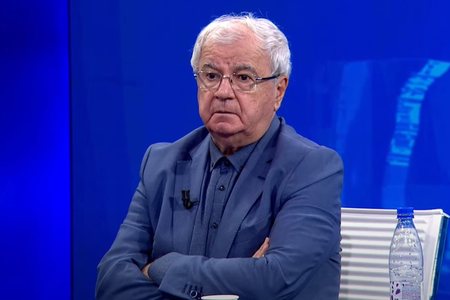
The trial of the criminal case against the former judge of the Supreme Court, Shkëlzen Selimi, for false declaration of assets, took place amidst debates and contestations in the session on Friday, which lasted for about two and a half hours.
The prosecutor of the case, Doloreza Musabelliu, presented as evidence two expert reports of former judge Selimi's assets, where one was with a positive balance and the other with a negative balance. She added that a third expert was found unsuitable, as she "had meetings with the defendant's wife, after leaving SPAK".
The evidence was considered unfounded and biased by Selimi and his legal representatives, lawyer Ylli Manjani and his wife Rilinda Selimi.
The judge of the case, Rudina Palloj, asked the parties several times to discuss in turn and asked them to take care to communicate in the right way in the courtroom – addressing each other with 'you' and not with 'you'".
Shkëlzen Selimi worked for two decades in the justice system, before being dismissed in 2018 from the vetting for concealing contacts with people involved in organized crime. Even his wife, the former judge of the Administrative Appeal, Rilinda Selimi, was dismissed from the College due to inappropriate contacts, while the majority of the panel of judges did not find any problems regarding the estate.
The criminal proceedings against Selim and several other judges were registered by SPAK three years ago for the criminal offense of "false declaration of wealth". In April 2021, the Special Court imposed a preventive seizure on the assets owned by Selim and his family members; a fuel station on the promenade of Vlora as well as a plot of land with an area of 2400 m2 in Jonufër of Vlora.
During the court session that took place on Friday, prosecutor Musabelliu invalidated the financial analysis of the Independent Qualification Commission as an act that does not prove anything about the criminal process. Selimi raised questions about this position of the prosecution, stating that it was SPAK that had requested this act, which according to him had led to the postponement of three hearings. But Judge Palloj affirmed that it was the defendant's own insistence to receive this act.
In the following, Selimi described the criminal process as the third veting of his family, considering it as a persecution and not as a criminal prosecution. He emphasized that the criminal case in his charge is a matter of judgment. Selimi said that the vetting process was more difficult for the property, since he had the burden of proof.
He stated that the Commission's financial analysis was drawn up by a constitutional institution, but prosecutor Musabelliu emphasized that the vetting procedure differs from the criminal process.
In the following, there was a debate regarding the financial analysis of the experts. The prosecutor said that two expertises were conducted regarding the income and expenses of former judge Selimi and his other family members.
The prosecutor claimed that the experts had concluded that until 1999 the income could not be determined and therefore it was not considered. According to her, the expertises were carried out in two variants and were based on Selim's annual declarations. One variant considered the income of the former judge's father from renting out properties and resulted in a positive balance of 2.6 million ALL, and the other variant where the income for which taxes were not paid was not considered, which resulted in a negative balance of 17 million ALL. For the purchase of fuel in Vlora, there was a negative balance in the amount of around 116 thousand euros.
Lawyer Manjani described the expert report of the prosecution as a proof that overturns the accusation. He argued that the life of the Selimi family had not started in 1999.
“Të vish në gjykatë me dy variante? Ndaje mendjen,” tha avokati, duke e quajtur autogol të Prokurorisë pretendimin e ngritur për pagesën e tatimeve.
Edhe i pandehuri Selimi këmbënguli se nuk mund të mbante përgjegjësi për mospagimin e tatimeve nga personat e tretë. Ai shtoi se nuk mund të ngarkohej me përgjegjësi as për arsye se institucionet nuk dispononin dokumentacionin përkatës lidhur me tatimin e këtyre të ardhurave. “Përgjegjësia penale është individuale”, tha ai.
Sipas, tij, babai kishte blerë në vitn 1996 një kamion dhe në '97-ën një pikë shitjesh të karburanteve, kohë para se ai të fillonte ushtrimin e funksionit të gjyqtarit. Sipas të pandehurit, këto pasuri babai i kishte blerë kundrejt vlerës 9 milionë lekë. “Tregon që ka pasur të ardhura”, tha ai duke kundërshtuar qëndrimin e akt-ekspertimeve që nuk kishin konsideruar të ardhurat para vitit 1999.
Sipas Selimit, mospagimi i detyrimeve nga qiramarrësit e objekteve të babait, është objekt shqyrtimi lidhur me legjitimitetin e të ardhurave sipas legjislacionit të vetingut. Ai pohoi se në procesin penal duhet hetuar nëse ka para të paligjshme. Selimi pretendoi se hetimi ishte i njëanshëm dhe se ekspertët kishin qenë nën trysni.
Asked by Selimi why the prosecution had chosen the variant of the expertise with the largest negative value, Musabelliu answered that this variant is closer to the income law.
After the discussion on the evidence was closed, Musabelliu requested that the experts and the defendant be questioned. The next session will take place on September 28, at 09:00. /BIRN



Lini një Përgjigje