


 Shkruar nga Pamfleti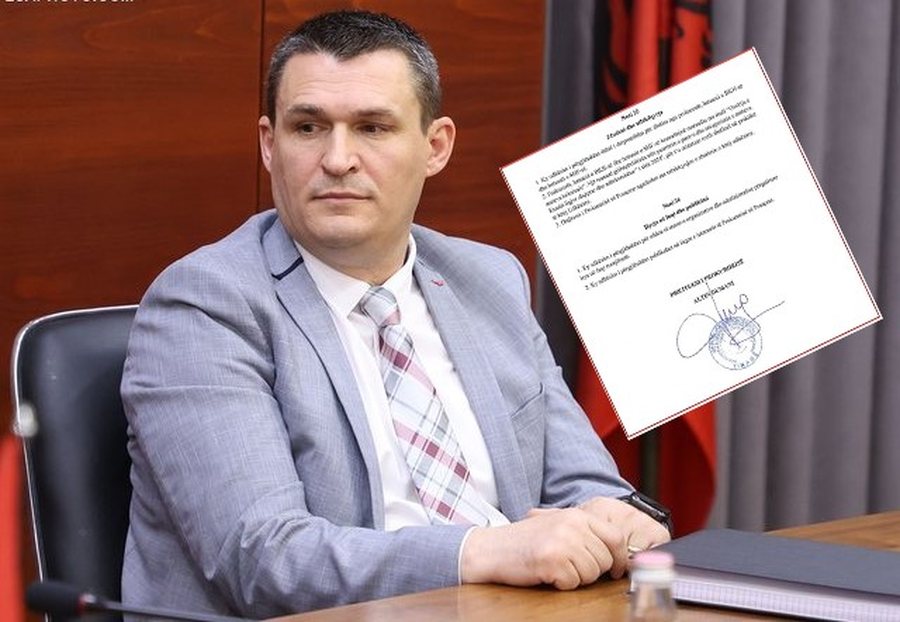
This is how SPAK builds the profile of a ruler immersed in wealth...
The head of SPAK Altin Dumani continues to panic the authorities. Many important names are today behind bars and many others under investigation. But it seems that SPAK will not stop there, as it will also go to the rich.
We all know that wealth is the "Achilles' heel" for many ministers, former ministers, MPs and high officials. There are names that own assets worth millions of euros and if they are not confiscated, the prison sentence is worthless.
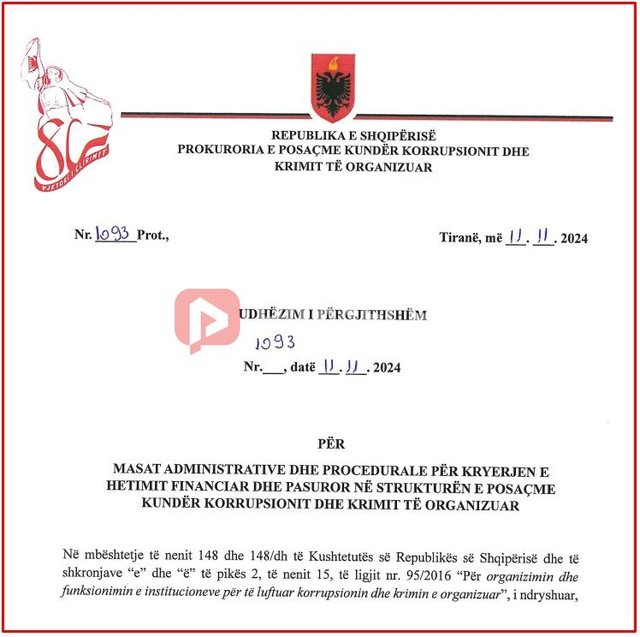
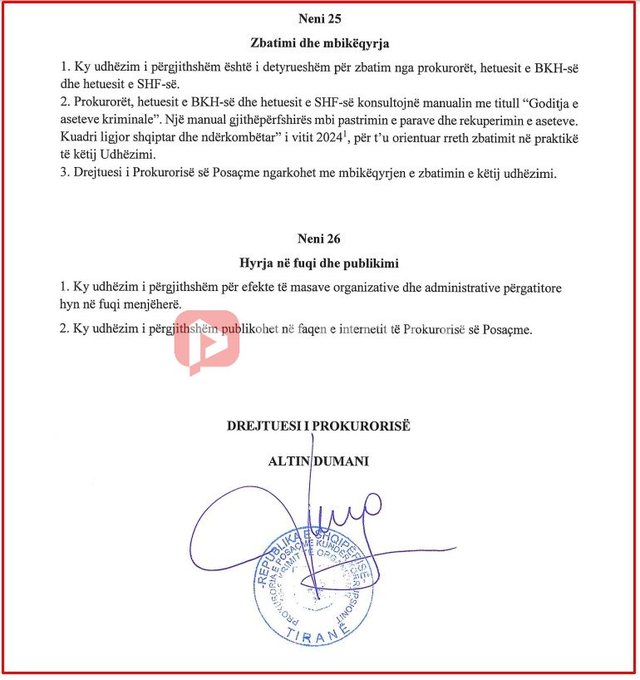
But it seems that SPAK has decided to dig where the authorities found the millions. " Pamphlet " has provided an instruction signed by the head of SPAK himself, Altin Dumani, which is related to the financial and property investigation of the subjects that are under the jurisdiction of SPAK. The instruction shows in detail how a prosecutor will act during the financial investigation, as it is known that SPAK will scan everything. Prosecutors themselves will have access to 29 databases.
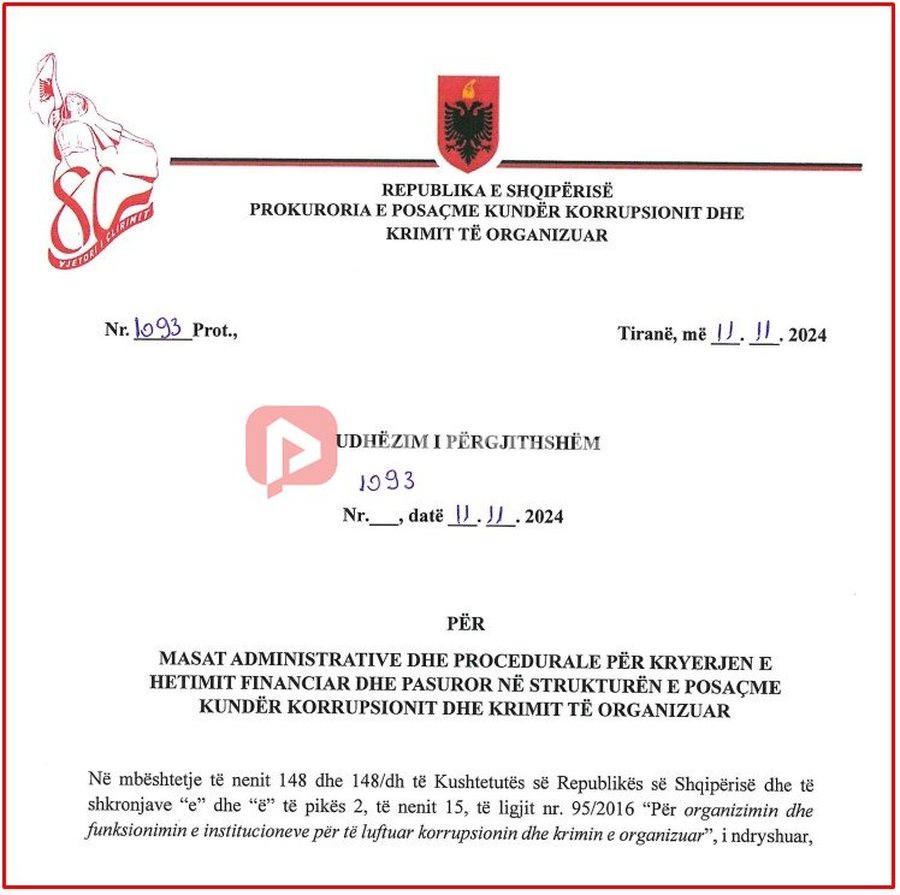
During the development of criminal investigations, financial or property investigations are also carried out in parallel for persons suspected of committing criminal offences, which generate income after the identification of the subject and the existence of reasonable suspicion of the criminal offence. In special cases, when it is deemed necessary to preserve the "investigative secret" of the criminal investigation, the property investigation or certain actions of the property investigation may be carried out at a later time. The financial investigation is not limited only to the perpetrators of the criminal offense, but should also be extended to third parties, regardless of whether they are individuals or entities, who by their actions try to legally justify the income gained from criminal activity ", the instruction emphasizes. .
The signals are that there will be very strong developments. Anyone who is under investigation by SPAK for corruption affairs today, should know that their properties have been scanned and we will probably have shocking revelations during 2025.
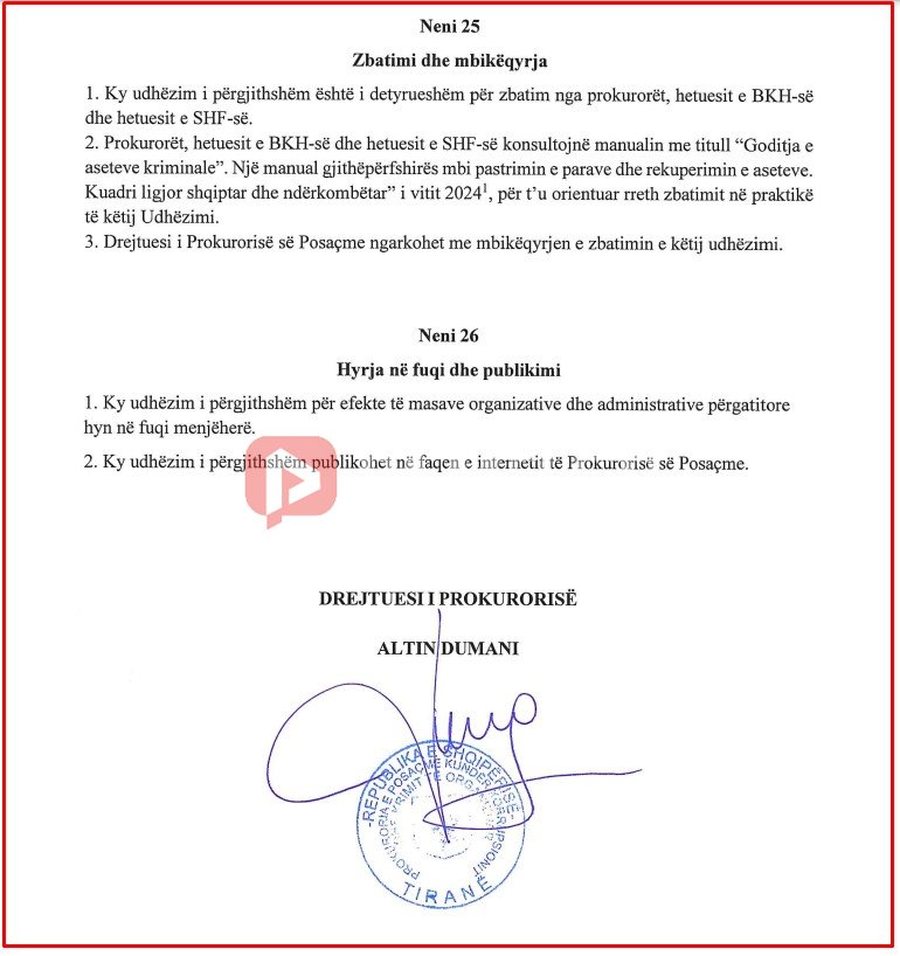
Part of the instruction
Article 7- The beginning of the property and financial investigation
1. During the development of criminal investigations, the financial or property investigation is also carried out in parallel for persons suspected of committing criminal offenses, which generate income after the identification of the subject and the existence of reasonable suspicion of the criminal offense. In special cases, when it is deemed necessary to preserve the "investigative secret" of the criminal investigation, the property investigation or certain actions of the property investigation may be carried out at a later time.
2. The financial investigation is not limited to the perpetrators of the criminal offense, but should also be extended to third parties, regardless of whether they are individuals or entities, who by their actions try to legally justify the income gained from criminal activity.
3. The results of the financial investigation, as the case may be, are integrated with those of the criminal investigation or the property investigation.
4. At the end of the financial investigation, when possible, the prosecutor must identify and include in the charged charge the specific value of the money or income, as well as the number and type of criminally acquired assets.
5. At the end of the criminal investigations, if the prosecutor assesses that the conditions exist for conducting further property investigations, he registers the property reference and continues with the property verifications according to law no. 10192/2009. If these conditions do not exist, the acts of the financial investigation remain part of the acts of the criminal investigation fascicle.
Article 8- Property investigation
1. The prosecutor, within 30 days from the arrival/registration of the preliminary verification material by the judicial police of the special investigative structure by the State Police, BKH investigators, or SHF investigators, based on the referenced acts, verifies and evaluates the existence of essential elements of fact and conditions of legal criteria as defined in Article 3 of Law no. 10192/2009, and decides:
a) In cases where the prosecutor assesses that there is no data, evidence or acts/documents that evidence essential elements of the fact for the implementation of law no. 10192/2009, or there are no assets for which the application of property preventive measures can be requested, decides the return of acts for completion or the archiving of the reference material.
b) In cases where there are data, evidence or acts/documents about persons and assets that evidence the essential elements of the fact for the implementation of law no. 10192/2009, or there are assets for which the application of preventive asset measures may be requested, the prosecutor registers the asset reference and orders the performance of preliminary asset verifications.
c) In cases where the prosecutor assesses that he has no competence, he declares his incompetence and forwards the acts to the competent prosecution.
2. With the registration of the property reference, the prosecutor and the judicial police perform all possible and necessary property verifications according to the requirements of articles 3, 5, 6, 8 and 9 of the law no. 10192/2009.
3. Property verifications must be completed within a reasonable time for their completion, depending on the needs for conducting property verifications, the relationship with property security measures established within the criminal proceedings, as well as the complexity of property verifications.
4. During property verifications or at the end of them, the prosecutor assesses whether the conditions exist for imposing preventive property measures according to law no. 10192/2009, and if these conditions exist, proceed with the registration of the property proceeding.
5. Nëse në përfundim të verifikimeve pasurore, prokurori vlerëson se nuk ekzistojnë kushtet për vendosjen e masave parandaluese pasurore sipas ligjit nr. 10192/2009, atëherë vendos mosfillimin e procedimit pasuror.
6. Me fillimin e procedimit pasuror, prokurori mundet të paraqesë kërkesë për vendosjen e masës së sekuestrimit të pasurisë, sipas nenit 11 e vijues të ligjit nr.10192/2009, dhe kërkesë për konfiskimin e pasurisë, sipas nenit 21 e vijues të këtij ligji.
7. Afatet e procedimit pasuror janë të njëjta me afatin e kohëzgjatjes së masës së sekuestrimit të pasurisë.
8. Në përfundim të procedimit pasuror, jo më vonë se 5 (pesë) ditë para përfundimit të afatit të kohëzgjatjes së masës së sekuestrimit të pasurisë, ose para përfundimit të afatit të zgjatur të masës së sekuestrimit të pasurisë, nëse ekzistojnë kushtet e parashikuara në ligj, prokurori procedon me kërkesë për konfiskimin e pasurisë.
9. Nëse nuk ekzistojnë kushtet e parashikuara në ligj për konfiskimin e pasurisë, brenda afatit të parashikuar në pikën (7) të këtij neni, prokurori procedon me kërkesë drejtuar Gjykatës së Posaçme për Korrupsionin dhe Krimin e Organizuar për revokimin e sekuestrimit të pasurisë.
10. Drejtuesi i Prokurorisë mund t'i kërkojë prokurorit të çështjes informacion me qëllim verifikimin e rregullshmërisë dhe vijueshmërisë së kryerjes së veprimeve në kuadër të hetimit pasuror.
Neni 10- Profili financiar
1. Hetuesit ndërtojnë profilin financiar të personit nën hetim apo subjektit të masave parandaluese, me qëllim identifikimin e pasurive produkt të veprës penale ose veprimtarisë kriminale, identifikimin e burimeve të fshehura të të ardhurave ose aktiviteteve të paligjshme, identifikimin e pasurive që mund të sekuestrohen dhe të konfiskohen. Profili financiar i një personi ndërtohet duke analizuar dhe krahasuar pasuritë dhe mënyrën e pajustifikuar të jetesës me të ardhurat e ligjshme.
2. Për të hartuar një profil financiar të saktë, analizohen elementët e mëposhtëm:
a) Pasuritë, të tilla por pa u kufizuar vetëm në to, si dhe mënyra e fitimit të pasurive si: - pasuritë e paluajtshme të regjistruara, si dhe ato që zotërohen prej tyre në mënyrë indirekte;
-pasuritë e luajtshme të regjistruara si automjete, avione, jahte etj.,,
-pasuri të luajtshme të identifikuara si bizhuteritë, veprat e artit ose objekte koleksioni, etj...;
-tituj dhe instrumente ligjorë që vërtetojnë tituj ose interesa të tjerë në pasuri;
-likuiditete si llogari bankare, aksione, kapital aksionar dhe obligacionet, paratë
-jashtë banke (shumë të holla parash);
-huatë dhe kreditë;
-mënyra, vendi i ruajtjes së vlerave monetare etj. dhe deklarimi apo jo në organet përkatëse (si në tatime, ILDKPKI);
b) Të ardhura por pa u kufizuar vetëm në to, si dhe mënyra e fitimit të të ardhurave, si: - përfitime nga sigurimet e jetës, të pronës apo shëndetësore, përfitimet nga skemat private të pensioneve;
-shumat e fituara në kazino apo baste sportive;
- burime potenciale të ardhurash në të ardhmen nga të drejtat e kontestuara apo pretendimet për përmbushje detyrimesh nga të tretë;
-të ardhurat nga aktivitetet e pavarura;
-të ardhura nga bujqësia ose pemëtaria;
-dividenti, të ardhurat nga veprimtaria tregtare e individëve ose bashkëpunëtorëve informale;
-të ardhurat nga aktivitetet e konsulencës;
-të drejtat e marra nga organizime familjare;
-të drejtat e pronësisë intelektuale;
-të ardhurat që rrjedhin nga prona (qiraja, interesi etj.);
c) Shpenzimet të tilla por pa u kufizuar në to, si edhe mënyra e kryerjes së tyre si:
-pagesat e qirasë;
-normat e leasing-ut;
-pagesat në dorë ose me kartë krediti;
-pagesat e huasë dhe kredisë;
-udhëtimet duke pasur parasysh qëllimin e tyre, kohëzgjatjen dhe vendin e akomodimit;
-shpenzimet e kryera për pushimet;
-tarifat e shkollimit;
-pagesat e taksave;
-primet e sigurimit;
-detyrimi për ushqim (alimoni);
-paratë e shpenzuara në kazino ose në festa, etj.
3. Për çdo pasuri ose detyrim, nëse ekzistojnë dokumente që vërtetojnë këto elementë, duhet të identifikohen data e blerjes/transaksionit, personi nga i cili është blerë, ose për çfarë është bërë shpenzimi, qëllimi i tij, si është përdorur shuma e fituar, metoda e pagesës (në dorë, urdhër pagesë, transfertë bankare) dhe burimi i fondeve, garancitë e përdorura.
4. Pasuritë e subjektit në hetim duhet të përcaktohen jo vetëm duke identifikuar çmimet e referencës të përcaktuara me akte ligjore, siç është kostoja e shitjes së ndërtesave ose e automjeteve, të cilat shpesh përfshihen në kontratat e transferimit të pronësisë me një çmim të ulët. Nëse lind dyshimi për uljen e vlerës, hetuesi i SHF-së kryen një analizë për të përcaktuar vlerën e tregut të pasurive në pronësi ose përdorim nga individët në hetim.
Lista e Bazave të të Dhënave Shtetërore të Vlefshme për Hetimin Financiar
1. Sistemi i deklarimit të pasurisë dhe konfliktit të interesit - EACIDS.
2. Arkivi digjital i arkivit qendror teknik të ndërtimit.
3. Sistemi i menaxhimit të kontributeve të sigurimeve shoqërore (CMIS).
4. Sistemi i menaxhimit të bordit dhe analizës financiare (SMBAF).
5. Sistemi i arkivimit dhe menaxhimit të dokumenteve të vjetërsisë në punë dhe periudhave
të sigurimit (DMAIS).
6. Sistemi i vlerësimit të Maturës Shtetërore.
7. Sistemi informatik financiar i qeverisë (SIFQ).
8. Regjistri Elektronik Shëndetësor Kombëtar.
9. Regjistri Elektronik i Subjekteve Kontrolluese.
10. Sistemi i Integruar Bibliotekar DATABKSH.
11. Sistemi i menaxhimit, Kalkulimit të Pagesës së Përfitimit (PCAMS). 12. Databaza Gjeografike për Regjistrimin e Aktivitetit në Terren të ASHA-s. 13. Sistemit të Menaxhimit të Informacionit Parauniversitar (SMIP).
14. Baza e të dhënave shtetërore të Sistemit të Provimit të Shtetit (SPSH).
15. Sistemi Elektronik i Menaxhimit të Denoncimeve për Rekordet Korruptive" (këtu e në vijim "SEMDRK").
16. Regjistri i ofruesve të shërbimit inovativ dhe sipërmarrjeve të investimeve kolektive të automatizuara".
17. Register of copyright and other related rights data" 18. Electronic register of experts, official translators and sign language interpreters".
19. Employment Services System (SSHP).
20. System of the Medium-term Budget Program (SPBA).
21. Financial management computer system (SIMF).
22. State database for the digital map of urban waste disposal sites (abbreviated "HDVMU").
23. The state database of the Albanian Notary Service, called the Albanian Notary Register (RNSH).
24. "Electronic register of requests and responses for the right to information" (hereinafter "REKPDI").
25. State database of students, who study abroad, and foreign citizens of Albanian origin, who benefit from scholarships from the Republic of Albania 26. State database for maritime traffic.
27. National Register of Cultural Assets (RKPK)".
28. The state database for the electronic permit system (e-Permit system), for all requests and permits, according to the planning and development legislation of the territory.
29. State database "E-Albania unique government portal" . / Pamphlet




Lini një Përgjigje