


 Shkruar nga Pamfleti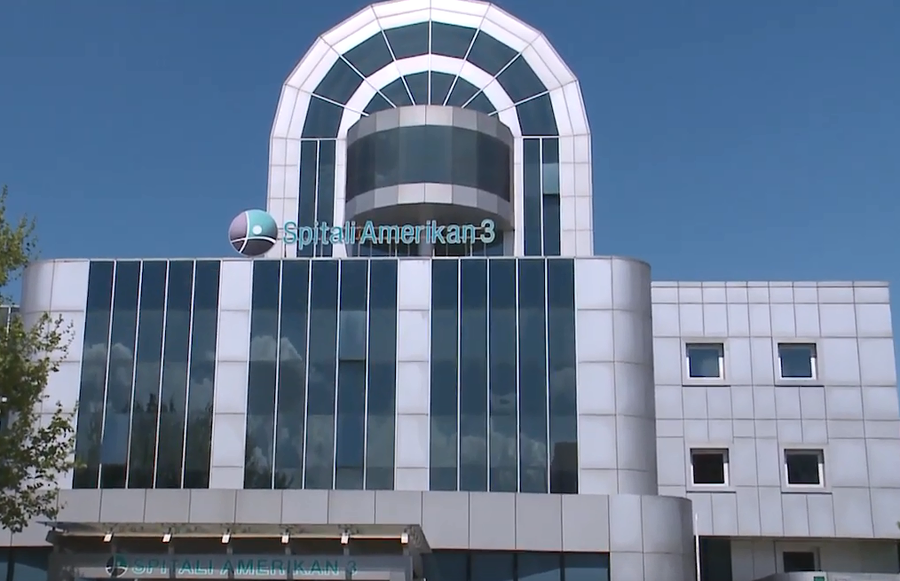
Saimir Sulaj lost his mother, Sanien, in the tragic event of July 25, 2016. A fire broke out in the dialysis ward of the American Hospital and the event was tried to be hidden.
Today, after 7 years since the tragedy at the dialysis ward, the fear of the repetition of such an event exists among patients.
Now the hemodialysis ward at the American hospital number 2 is located in the garage of the building, on the -2nd floor, where there are two rooms with a capacity of 29 patients.
"The big room has 23 beds, the small one has 6 beds," said Isa Muhadri, a dialysis patient.
The conditions remain scandalous, there are no windows for ventilation, the exhaust pipes of the entire building are above the heads of the patients. In this environment, where in addition to the patients there are also at least 15 employees who provide the service, there is no toilet.
"The conditions are scandalous, the car garage has turned into a dialysis pavilion, 25 people in one room, 15 are staff, there is no toilet... A pavilion to breathe. It does not occur to me that the doctor who signed off to return that patient to the dialysis ward brings his brother, mother, or sister there. To stay for 4 hours without seeing sunlight, they have installed fake windows. All the discharges of the pipes are done in the car park, all the pipes are above our heads' - said Isa Muhadri, a dialysis patient
The current state of the ward where dialysis is offered in the private hospital reveals the violation of the criteria defined in the concession contract. It was clearly defined there that the service should have 4 separate rooms.
There are 4 hemodialysis rooms, located along the corridor. The rooms have a capacity of 10, 6, 8, 5 beds, equipped with a plug panel and oxygen outlet for each, there is a nursing corner with a work table and a medical cart, and in one of the rooms there is a portable defibrillator. Next to the room is also the block of hygienic-sanitary units for patients, separated by gender. The block includes two patient changing rooms with wardrobes.
According to the dialysis protocol, each patient who receives the service must be treated with a personalized nutritional diet depending on the clinical condition.
"The food has been the same for 4 years, it hasn't changed, and it's the same for everyone," said Isa Muhadri, a dialysis patient.
Being important for the therapy, the food diet is provided in the concession contract which turns out to have been seriously violated by the concession company DiaVita. This has also been established by the audits carried out by the High State Control.
It was noted that all patients were offered the same nutritional diet, not personalized for each patient, although the concession contract in Annex 8 stipulates that the dietitian will work part-time in each center.
So, these detected violations seriously endanger a patient like 34-year-old Arditi. He has co-morbidities and his diet should be differentiated.
Arditi has experienced clinical death 3 times in Fier, before moving to Tirana for a more specialized service. But official audits reveal deficiencies in DiaVita's dialysis centers that put patients' lives at risk. Specialist doctors are not present there during therapies.
In all five hemodialysis centers, the nephrologist is employed part-time, as well as the general practitioner in some cases, there is a shortage of employment for general practitioners, no center has been filled with a doctor such as: endocrinologists, gastrohepatologists , nutritionist, laboratory technician.
The life of patients with concomitant diseases is even more difficult. In many cases the medication bill becomes unaffordable. Such is the family of Ladimir Gjika, who is the father of 4 children.
Two are autistic, while the 15-year-old boy is on dialysis. The teenager also has other concomitant diseases. The monthly bill for his treatments totals 50,000 new lek. / Inside Story



Lini një Përgjigje