


 Shkruar nga Pamfleti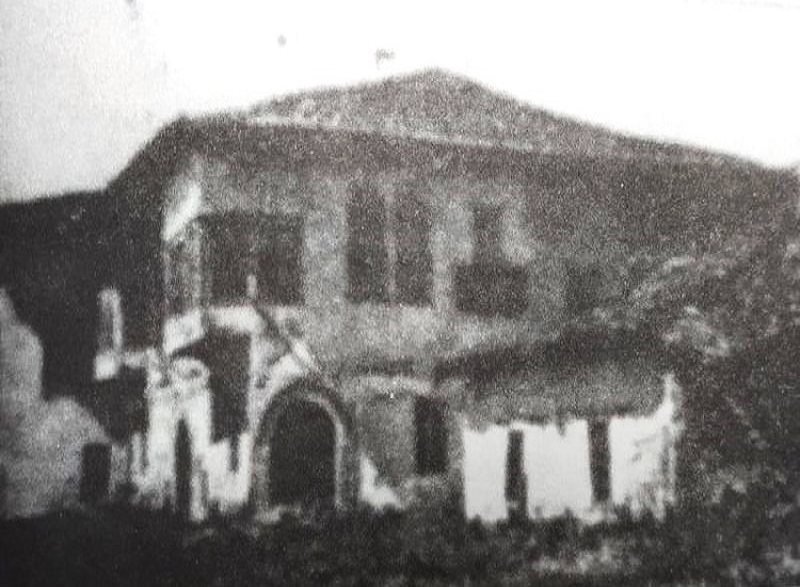
Mal Metalia, originally from the Tropoja district and living for years in Mamurras, Kruja district, was sentenced to political imprisonment when he was still a child, along with his two slightly older brothers. In this article, he testifies to the entire history of his life and that of his family, with the vicissitudes he had to face and go through until 1991, when the communist regime collapsed.
The full testimony of Mal Metaliaj
I am Mal Xhemail Metalia, originally from the village of Dragobi in the Tropoja district. Like all Albanian families, after communism came, we were made kulaks. A large family of 70 people. We have been told that we are Metaliaj, but we are the house of the Elezajs of Dragobi. Many Albanians have known us, from all regions, even Kosovo. From the beginning, the large families did not like communism. My grandfather used to say: “Where did these communists come from”?!
Well, they made us kulaks… a big house, they took our property, they burned our house. The communist regime took my father's uncle, Asim Jaka, a strong, well-known man, and shot him in the middle of the city, in 1946. They shot him without trial. Our family was a family against communism. My uncle had been imprisoned. Meanwhile, Mustafa Salihi, they also put the other two uncles in prison. Jakup Salihi, they sentenced him to 20 years in political prison and confiscated half of his property. Mustafa Salihi, as soon as he was put in prison, escaped. Less than a year later, they came to get us. In Dragobi, the border is close to Montenegro.
We got ready. They told us where we were going to go. When the State Security spies arrived, they had found out that they had come to take me and my father. They fought with the soldiers and the Border Forces. After they fought, we, the three brothers, stayed there in the camp. They had told us to go here. They had fought, they ran away and took my father and came back. There they surrounded our house, took us, tied us up, me, Riza Xhemaili, may God have mercy on him, and Imer Xhemaili. They found out, the whole other family of 60-70 people, put them in the car and drove them to Lushnje.
They kept us in the dungeon for a month. The investigator would come and ask us about our father: “Did you know about our father, did you show us the way to where the guards were?” My brother and I, Riza Xhemaili, Imer Xhemaili, Mal Xhemaili, said: “Did the others know? We knew that we wanted to escape. But we didn’t say where the guards were, we wanted to escape on that road, not that we wanted to ambush anyone”! The investigator took us to court in Bushat, Shkodra, after a month.
The investigator at the time I was taken to Shkodra in the Internal Affairs Branch was a certain Sadik Pema. Wherever he was, he left bad examples.
They treated us very badly in the investigation. I was young. They didn't let us sleep for 15 days, just to make us admit that we had supposedly told our father where the guards were. Every day, until we went to court where we said that we didn't know where the guards were. We went out to escape and go to our uncle.
The trial began. The pretext was: Riza Xhemaili is sentenced to death, shooting. Imer Xhemaili, the second brother, 17 years old, is sentenced to 25 years in prison. Mal Xhemaili is sentenced to 8 years. The court's decision was given for Riza Xhemaili, he is sentenced to death, shooting, and they let him go. Since Imer Xhemaili was underage, they let him go for 12 years. I, Mal Xhemaili, am sentenced to 5 years. After the trial ended, they let us talk outside, with the brother they sentenced, for about 10 minutes. After 10 minutes, we never saw our brother again.
What happened to the big brother?
In Shkodra prison, there were dungeons for those sentenced to death. We were in a large, high room, with many annexes, with 200 men. There was 60 meters of space to sleep. They put us inside, those men gave us a little space. They took us on foot and treated us well. We knew that my brother was in the dungeon when we went out to the parole board, but we were never able to see him.
After 17 days, an officer comes and we prisoners in that room stand up. – “Who is Imer Xhemaili, Mal Xhemaili”? – says the duty officer. – “I am Ymer”, – said Ymer. I said I am Mali. – “We shot your brother”, he said excitedly. We stood, we didn’t scream at all. Our brother had left us a legacy. Those men came, reconciled us, consoled us. There were about 200 men, from all regions. The indictment was: “attempted escape”, while we had not left the door of the house, but they shot him at the age of 19. A two-meter-tall boy, very young, at that age! Imer and I remained in prison.
After two months, the prison car came and they were going to take us somewhere. We got into a covered vehicle, we had never been there before, only my brother had come to Kurbin once to see his uncle. “We passed Mamurras”, said Ymeri. They took us to Tirana to the Meat Plant. It was the big camp where the prisoners worked. The Meat Plant was a big refrigerator. They put us in there, there were 1000 of us men. They came out to us like the young boys we were and they took us in, they congratulated us, they left us bread and food, and we started prison life in the labor camp.
There Ymeri turned almost 18, young and charming, they took him to do concrete, the hardest work. To tell you the truth, for several months, I was not at work. There are men who are alive today and I don't want to add anything. Even today I am with them, with Mark Ali, with many men from Albania. They didn't put me to work for about 6 months. Then, a man from Mokra says to me: "Are you coming to teach you how to be an ironworker, with me"? Before I was 16, they took me in with kindness, they made me an ironworker, they gave me the trade. Ymeri suffered more, he worked in hard work, with concrete, carts.
What were the conditions like in the convict dormitories?
When we were young, the regime had built a separate bunker for us. They took the youth to a separate room. I stayed there until I was released.
How were the camp leaders behaving towards you?
They weren't bad. For the communist regime, if you made trouble, if you wanted to escape, you were sentenced to prison. The military police were good. They would tell us: "Hey, you bastard, stay safe because maybe you'll be released."
I did two and a half years. After two years, there was an amnesty. Anyone under 18, who had been sentenced to 25 years, would be released. I turned 17, and I was also caught up in the amnesty. When lunch came, they called the names. I went out to the wires, they called me “Artizanati” there. I came to my uncle, I went to the Internal Affairs Branch here, I reported myself and they told me to go to Tropoja. But then, they told me: “You are not allowed to go to Tropoja”. They gave me a letter that I had been released from prison, and they told me: “You have no right to cross the Mati Bridge, ever”. They gave me a letter, I went and got my passport, I stayed with my uncle for a year. I started looking for work. My uncle had a lot of acquaintances, he would take you to work in the private sector too.
How many years did your brother serve in prison?
Ymeri served 9 years. Before Ymeri was released, I was also drafted into the army. I served two years in the army in Zall-Her, Martanesh. Then I was released, and Ymeri came after nine years. We were both single. We built a small house, where I had a hut. We bought both. Ymeri was a craftsman, a master, and I also worked in construction. We got married. An old man, Hysen Takuti, gave me a daughter. Avdi Berisha gave his daughter to Ymeri. We lived, worked, and behaved well. We left four children.
Did you receive any news from your father?
With my father, we were unable to receive any letters. He stayed in Kosovo, then fled to America with his younger brother. Until 1990, we did not receive any letters, nothing. When my father died, in 1980, after three months we found out that my father had died in America./ Memorie.al


Lini një Përgjigje