


 Shkruar nga Pamfleti
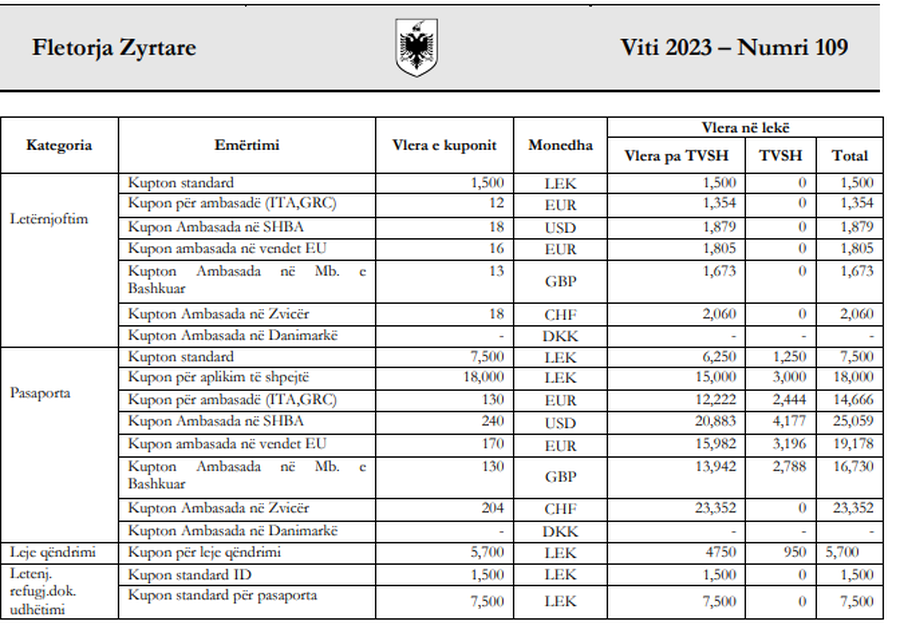
Albania is one of the countries with the highest prices for identification documents. In addition to the unfairly high costs imposed on citizens, this issue also has political implications. The most recent case was that of the elections in Himara, where thousands of citizens were not allowed to vote because their identification documents had expired, the renewal of which is expensive.
The government earned 8.5 million euros in just six months from the sale of identification documents to Albanian citizens. Data from the balance sheet of the public company Identitek show that the production and sale of passports remains one of the most profitable businesses in the country with a profit rate of over 50 percent.
According to the balance sheet, last year the Identitek company collected a total of 1.59 billion ALL or 15.9 million euros from the sale of identification documents, while the profit before taxes was 8.5 million euros.
The production and distribution of identification documents has been one of the most profitable concessions in Albania. Allied Company was contracted by the Albanian government for the exclusive concession in 2008, initially for a period of 5 years. The concession agreement was accompanied by a significant increase in the prices of passports and identity cards for citizens.
At the time, the government justified the concession as a necessary measure to meet the conditions for visa liberalization and increase national security. But in 2013, the government extended the concession for another 10 years without competition, just like the concessions of the Rinas Airport and the chrome mine in Bulqiza.
For 15 years in a row, Aleat has been one of the most profitable companies in Albania, recording profit rates ranging from 25 to 50 percent of turnover.
Historical data shows that for the entire 15-year period, Aleat collected 52.5 billion ALL or 525 million EUR from the sale of passports and identity cards, and recorded a net profit of over 140 million EUR (exchange rate 1 EUR = 100 ALL) .
The government's gold monopoly
The 15-year ID concession ended last year. Former interior minister Blendi Çuçi announced that the government would no longer renew the concession and that the service would be nationalized. For this purpose, the government created the public company Identitek.
"Politically, we have the will to repair the price in order to lower it", Çuçi emphasized when he announced the nationalization of the service. But a few months later, the government changed its attitude 180 degrees and did not reduce the tariffs. Already the staggering profits of this service are going to the government.
Keeping the prices unchanged is clearly an unfair decision, because the concession of this service for the past 15 years was justified by the fact that the private sector will make the investments and leave the infrastructure ready at no cost to the government. But despite this, the government did not reduce prices.
Albania is one of the countries with the highest prices for identification documents. In addition to the unfairly high costs imposed on citizens, this issue also has political implications. The most recent case was that of the elections in Himara, where thousands of citizens were not allowed to vote because their identification documents had expired, the renewal of which is expensive./ Kapital






Lini një Përgjigje