


 Shkruar nga Pamfleti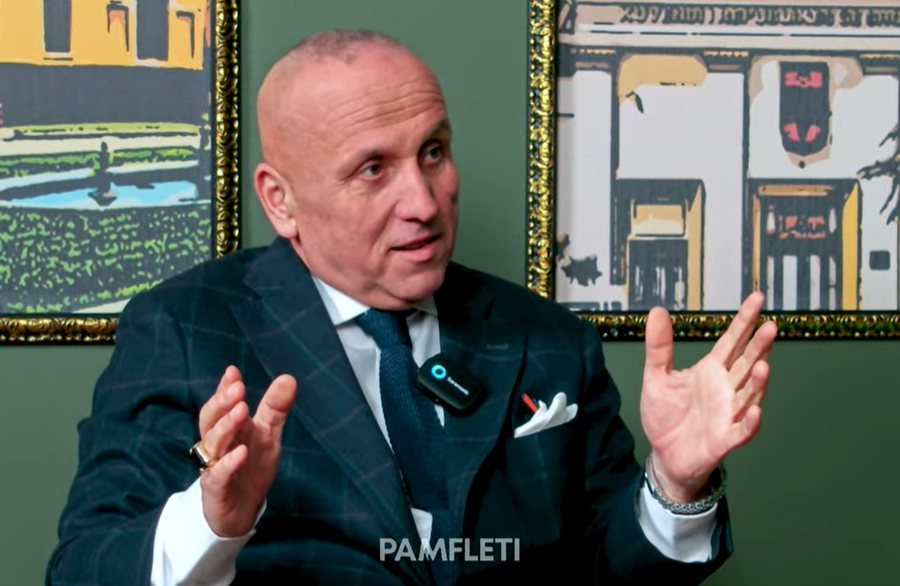
Security expert Ilir Kulla, invited to the podcast "Të Pashoq", analyzed the recent protests that have erupted in Iran, describing them as more complex than they appear on the surface. According to him, the spark of the revolt comes from the increase in prices and the depreciation of the rial, but it does not end there.
"It was triggered by economic reasons, but the motives are much deeper. The protest is spread throughout the territory, and this makes it different from other times," said Kulla, emphasizing that the situation is not spontaneous, but organized and potentially supported by external factors.
He brought to attention the massive protests of 2022-2023 on the issue of women's veiling, comparing them to the current ones which, according to him, although smaller in number, have clearer political objectives.
Ilir Kulla: This time the protests were sparked by rising prices and the devaluation of the local currency, the rial. The main reason is economic conditions. It was triggered by the economy, but the reasons are multiple. We recall that in 2022 and 2023 there were protests over the issue of women's veiling. Those protests were much bigger than these current ones.
Iranian society itself is a very divided one. As well as the extreme wing, there is also a liberal wing, especially in the cities. What makes the situation different this time is that the protests are spread across the entire territory. There are also indications that there may be a supporting hand from abroad, at least in terms of their spread.
This is where what is called reputation management comes into play. What does this mean? When such events occur, as we have seen in the case of Syria during the Arab Spring, there is a management of the media to influence the public perception of the uprising. True news, half-truths and falsehoods mix in a battle for public opinion.
For things to really move in Iran, one of the country's three or four main powers must move. In this case, the protests seem to be aimed precisely at attacking the reputation of the religious leader, as a way of undermining his legitimacy.



Lini një Përgjigje