


 Shkruar nga Pamfleti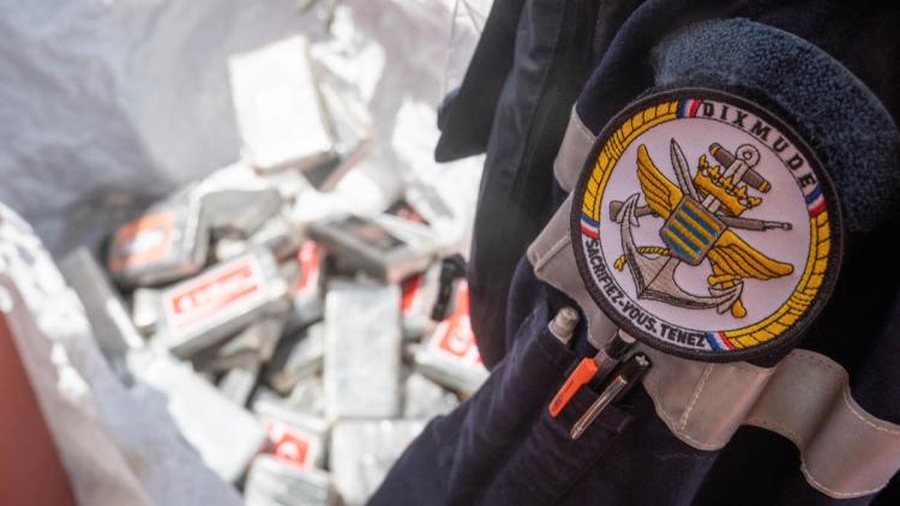
"Rip-off" allows traffickers to use boats that have already been programmed to open certain 'packages' to place cocaine inside. They then proceed to reseal them, allowing the ship to be inspected without the cargo showing.
Increasingly, French secondary ports have become the scene of record drug seizures. Customs are therefore adapting to these 'new gateways' of trafficking, as well as to the many innovative techniques of drug traffickers.
"We are completely rethinking our way of thinking."
Following a drug bust in Le Havre, police explain how drug trafficking has evolved. New ports targeted, the use of cocaine balloons, the targeting of clone containers, not to mention air routes, these are the new methods used by drug traffickers.
In recent weeks, French customs have discovered a new drug trafficking technique: the use of cargo bales. "A few years ago, we didn't see these phenomena. Now we are completely rethinking our way of thinking and acting: we are probably at the beginning of history here, goods are coming, not only through the main ports," explained Jean-Pierre Stephan to AFP, referring to the maritime areas of Brittany-Pays de la Loire.
Using secondary ports
The representative of the Solidaires des Douanes inter-regional union cites an investigative commission, which reports that "Dunkirk, Rouen, Montoir-de-Bretagne" are the places "among the most exposed". A shift to smaller ports is probably due to lower security measures. "The strengthening of security measures in the port of Le Havre has helped reduce its use by drug traffickers".
Thus, in North Finistère, a route usually little used by traffickers, "unprecedented seizures of drug quantities" were made.
In other little-known regions, seizures have been impressive: 124 kg of cocaine were discovered in 2022 in La Rochelle, or 700 kg packaged and waterproofed floating off the coast of Fécamp in 2023.
"Drop-off", "Rip-off" or even "clone containers"
This latest example illustrates the "drop-off" technique, which makes it possible to avoid controls once the boats arrive in port. The aim is to "drop the goods before their destination", as Clotilde Champeyrache, an author specializing in mafia infiltration of the legal economy, also explained to AFP. She explains that when the operations fail, the consignments end up on beaches without being able to return to the open sea.
To ensure the operation is successful, drug traffickers equip the boats with commercially purchased tracking devices and may hire fishermen to retrieve the goods. "The fishermen are currently under surveillance, if at all, but that is one of the hypotheses." "We have data, they remain data. The fishing world is currently experiencing difficulties. And it is no secret that the fishing industry is affected by drug use," he says.
In major ports, such as Le Havre, one of the new techniques discovered is the use of "clone containers". This involves replacing, in the unloading area, a container with another with the same characteristics (same card and same marking) as the one actually referred to. On 30 December, the Rouen Research Section (SR) seized more than 2 tonnes of cocaine, with an estimated value of 130 million euros, which was smuggled using this technique.
"Rip-off" allows traffickers to use boats that have already been programmed to open certain 'packages' to place cocaine inside. They then proceed to reseal them, allowing the ship to be inspected without the goods being exposed. In 2024, a shipment of animal textiles from the Middle East was subjected to this drug trafficking method, and several bags of cocaine were discovered in the displaced boxes.
By sea, air or land
While the Interior Ministry's website states that "90% of global trade is carried by sea", other routes are at the main customs checkpoint. The route between Cayenne (French Guiana) and Paris is the most closely monitored by the authorities, who have noticed another innovation in the way drug traffickers operate: "it has a deterrent effect," the French Observatory on Drugs and Addiction Trends (OFDT) explained to AFP journalist Philippe Grelard. These now favor "bypass routes": "planes departing for the Antilles, then from the Antilles to mainland France, subject to less systematic checks".
Similarly, the marketing system appears to have changed: OFDT reports that "dedicated websites" are no longer used "but traffickers' accounts on apps and social networks are used."
Le Havre remains the center of drug trafficking
As the options available to illegals continue to diversify and the number of ports used to bring drugs into France increases, the city of Le Havre remains a major concern for French customs. Earlier this year, Bruno Retailleau explained: "Le Havre is a major hub, a major infrastructure in terms of international trade, and obviously the drug traffickers follow these infrastructures closely."
He also reported a situation that was becoming increasingly difficult for the authorities to manage, explaining that “in 10 years, we have seen a tenfold increase in cocaine seizures.” A reality that is verified by figures: 2024 was a record year in Le Havre with 13 tons of cocaine seized. /Adapted from Pamphlet by Cnews/





Lini një Përgjigje