


 Shkruar nga Pamfleti
Petr Klement stresses that authorities must act as a joint structure to tackle cross-border financial crime
The new head of the European Anti-Fraud Office (OLAF), Petr Klement, told Euractiv that European Union institutions must cooperate more closely and in a coordinated manner to combat financial fraud.
When Klement opened his office as head of OLAF, most of his personal belongings were still in boxes. The Czech prosecutor had just taken over one of the most sensitive positions in the EU, overseeing investigations into fraud, corruption and misuse of European funds. Two months into his job, he describes the situation as “getting on a moving train.”
In addition to participating in inspections and dealing with internal staff issues, Klement also faces fundamental questions about OLAF’s current role. The office operates in parallel with the European Public Prosecutor’s Office (EPPO), which has handled criminal cases and uncovered major cross-border fraud schemes, particularly in the areas of VAT and customs, areas previously considered OLAF’s natural competence.
This situation has raised the increasingly frequent question in Brussels: what is the role of OLAF today?
Klement gives a straightforward answer: institutions should act as a “herd,” cooperating to track down and stop fraudsters. He emphasizes that the fight against fraud should not be driven by institutional rivalry, but by cooperation.
According to him, the EU has many actors engaged in this field, such as OLAF, EPPO, national police, customs authorities and audit bodies, but challenges remain in overlapping mandates, lack of interconnection of data systems and unclear responsibilities.
The risk of fraud has increased along with the growth of the EU budget. The post-pandemic recovery funds revealed weaknesses in the distribution and monitoring of funds, and similar models are expected to be used in the future.
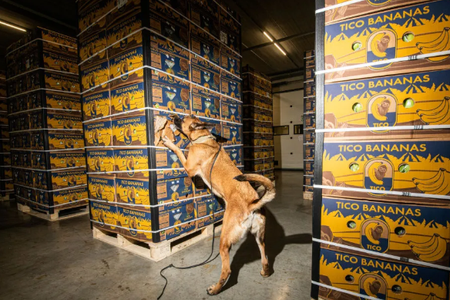
Klement warns that criminal groups operate on a global level, exploiting international trade to undervalue goods, evade customs duties and unfairly compete with legitimate businesses.
He emphasizes that cross-border cooperation is essential: authorities must share information and analyze it jointly, without interfering with each other's competencies.
Klement underlines that OLAF should not be judged solely by the standards of criminal prosecution. Its role includes identifying fraud patterns, coordinating authorities, recovering funds and uncovering systemic weaknesses.
With around 25 years of experience in the prosecution service, including work in Albania and Kosovo, as well as at the EPPO, Klement emphasizes the importance of a comprehensive and collaborative approach.
One of OLAF's most sensitive powers remains internal investigations into EU institutions. The office has the right to enter institutions' premises and seize documents and equipment without warning. This power has provoked reactions, particularly from MEPs involved in scandals involving EU funds.
Klement emphasizes that abuses exist everywhere and that it is important that institutions act with transparency and accountability.
Going forward, OLAF aims to publish more detailed data on recovered funds and activity in member states, to show the concrete impact of its work. However, according to Klement, success will be measured on the basis of concrete results, faster cooperation with prosecutors and effective implementation of recommendations.
It aims to demonstrate that OLAF remains an important institution in the fight against fraud in the European Union. /Adapted Pamphlet /




Lini një Përgjigje