


 Shkruar nga Pamfleti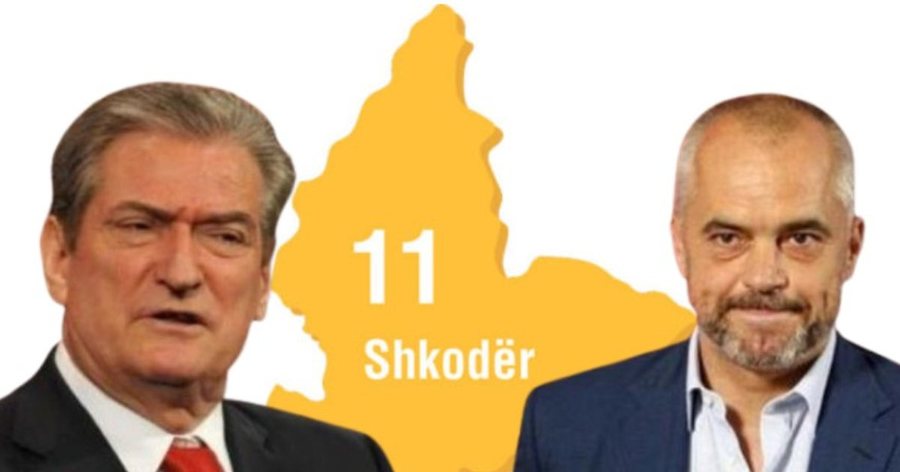
Voters in the Shkodra region, which includes a diverse coastal, plain, hilly and mountainous area, are expected to mandate 11 deputies in the May 11 elections, while past elections, due to the large fluctuation in voter behavior, have made it one of the battleground regions for determining the governing majority.
And, while the battles have been fierce in the past, what cannot be ignored in this year's elections is the fact that, over the past two years, several sensational investigations against organized crime by the Special Structure Against Crime and Corruption, SPAK, have sent behind bars some of the key figures rumored or known for electioneering on both sides of Albanian politics.
In this context, any prediction of the outcome of May 11, based on the analysis of past results, is simply impossible because past results have been consistently influenced by the involvement of organized crime in elections and, in the shadow of past investigations and threats of current investigations into electoral crimes, any prediction must await the opening of the ballot boxes.
The entire Shkodra region was once a stronghold of the Democratic Party, a product of the region’s history of multiple persecutions, political, religious, and cultural. And it took more than two decades after the fall of communism for the Socialist Party to begin to penetrate the area politically, recruiting politicians who spoke in Gheg Albanian at press conferences and recruiting politicians from among Catholics. Prime Minister Edi Rama himself crowned the Socialists’ opening to the north when, in 2014, on the occasion of Pope Francis’ visit to Albania, he publicly declared that he had been baptized as a Catholic by his grandmother in his infancy.
The relationship between Shkodra and the Democratic Party has by no means been unconditional. Dissatisfaction has often been expressed as the area has remained traditionally disadvantaged by public investment programs. For example, the largest city in the north continues to have a two-lane road connection with Lezha and the rest of the country, a road that is almost permanently congested with traffic.
In 2009, the first time that elections were held with the closed list system at the district level, the Socialists and their allies received 35% of the vote and 4 mandates, while the Democrats and their allies received 58% of the vote and 7 mandates. Two coalitions without mandates competed in those elections; the coalition led by the SMI received 2.9% of the vote while the Pole of Freedom coalition, a coalition led by the Movement for National Development but which in Shkodra had the Democratic Christian Party as a key factor, received 3.5% of the vote. The Democratic Christian Party of Albania itself received over 3,300 votes, which on the one hand shows how important religious identity is for a part of the district population and on the other hand, the not always unconditional relationship between the Democratic Party and the Catholics of the north.
The big surprise happened in 2013, and, in this case, the key factor also had a religious-sounding name.
The coalition led by the Socialist Party and the Socialist Movement for Integration managed to take 53% of the district's votes while the Democratic Party and its allies fell to 45%.
The Socialist Movement for Integration with its MP Agron Çela, a local businessman, was key in this overthrow, but an equally important factor was a party called the Christian Democratic Party. In alliance with the SP, this party received almost 7,000 votes. Its candidate, Mark Frroku, the brother of the party leader, who was indicted for the murder of a police chief, while Marku himself was suspected of murder, was elected MP. Mark Frroku was later acquitted of the murder charge in court, served some time in prison on other charges, and was declared rehabilitated by the court.
Overall, in the 2013 elections, the left-wing coalition won 6 seats, while the right-wing coalition won 5, a key reversal at the national level. The Socialists won 4 seats, the same as they had won before, but their two allies, the SMI and the PKD, won one seat each.
In the 2017 elections, the opposition Democratic Party continued to lose ground, when, in Shkodra and across Albania, a significant portion of its electorate apparently decided to stay home rather than vote for it. But the Christian Democrats disappeared from the electoral map, falling to 193 votes.
In the overall result and in the fate of the majority, however, there were no fundamental changes. The Democrats in opposition again became the first force in the region with a slight advantage over the Socialists and received 5 parliamentary mandates against the Socialists' four. The SMI, this time running on its own, retained Agron Çela's mandate. What changed was that the departure of the Christian Democrats from the playing field was replaced by the arrival of the Social Democrats.
Po, në Shqipëri ka një parti me emrin Socialdemokrate, një emër i huazuar nga e majta evropiane që kundërshtoi, në vitet 1930 e më pas, diktaturën e proletariatit të vendosur në Bashkimin Sovjetik dhe, në mënyrë kuptimplotë, kjo parti në Shqipëri u themelua nga një numër komunistësh, kryetari i së cilës, Skënder Gjinushi, ishte ministri i vetëm i qeverisë komuniste shqiptare që arriti të manovrojë në epokën postkomuniste. Gjinushi ia transferoi partinë politikanit Tom Doshi. Doshi ishte një deputet i Partisë Socialiste që fitoi në zgjedhjet e vitit 2005 në zonën 1, zonë që mbulonte cepin më verior të Shqipërisë. Ai u rizgjodh për socialistët më 2009 dhe 2013 ndërsa Edi Rama e përjashtoi nga Partia Socialiste dhe grupi parlamentar në vitin 2015 pasi Doshi, bashkë me deputetin kristiandemokrat Mark Frroku, akuzuan publikisht Ilir Metën, aleatin e Ramës, se kishte paguar Durim Bamin, një i akuzuar për vrasës me pagesë, për t’i hequr qafe. Ngjarja u shpall e sajuar në gjykatë.
Doshi fitoi mandatin në Shkodër më 2017, por në vitin 2018, administrata amerikane e presidentit Trump në mandatin e tij të parë, “e emërtoi” atë si zyrtar i huaj i përfshirë në korrupsion madhor dhe e sanksionoi duke i ndaluar hyrjen në SHBA.
Shpallja “non grata” nga amerikanët nuk e pengoi Doshin që të fitonte në zgjedhjet e vitit 2021, jo më një, por tre mandate: dy në Shkodër dhe një në Tiranë.
Doshi dha dorëheqjen pas zgjedhjeve nga partia dhe shpalli aleancë me socialistët, ndonëse socialistët nuk firmosën ndonjë marrëveshje konkrete. Deputetët e kësaj partie mbështetën rregullisht Ramën në parlament duke u konsideruar si aleatë të pashpallur.
Në zgjedhjet e 11 majit ka disa faktorë njëherësh që kanë ndryshuar dhe që mendohet se do të kenë efekt në rezultat, ndonëse efekti nuk është lehtësisht i parashikueshëm. E para, socialistët fituan bashkinë Shkodër me përmbysje në zgjedhjet për pushtetin vendor 2023, fitorja e parë e tyre që kur i ndërruan emrin partisë nga Partia e Punës në Partia Socialiste tridhjetë e pesë vjet më parë. Kjo përmbysje u parapri nga një ndryshim tjetër madhor. Deputeti Agron Çela i LSI-së, i cili e ka mbajtur këtë pozicion që nga viti 2013, ndonëse nuk njihet si orator dhe nuk mbahet mend të ketë folur ndonjëherë në parlament, ka kaluar në mbështetje të Partisë Socialiste. Aktualisht Çela ka vendosur të mos garojë në këto zgjedhje, por vajza e tij, Xhenis Çela, është e treta në listën e mbyllur për Partinë Socialiste. Xhenis Çela është nga deputetët që konsiderohen sakaq të zgjedhur sepse PS nuk ka rënë kurrë më poshtë se sa tre mandate në Shkodër.
Ndryshimi i tretë i madh ka të bëjë me Doshin, i cili së fundmi ka shprehur planin e vet për të qenë forcë përcaktuese në maxhorancën parlamentare të ardhshme por njëkohësisht, ka shenja të qarta se marrëdhënia mes PSD-së dhe PS-së nuk është aq fjollë sa ka qenë katër vitet e fundit. Doshi ka shprehur objektivin që të fitojë tre mandate në Shkodër dhe, nëse ia del, ai mundet të bëhet forca që LSI ka qenë në vitet 2009-2017, një herë në koalicion me PD-në dhenjë herë në koalicion me PS-në.
Kjo është veçanërisht e vërtetë nëse shikohet rezultati i zgjedhjeve të vitit 2021. Partia Demokratike fitoi 44% të votave në Shkodër, rezultati i saj më i mirë që nga viti 2009, gjë që i dha asaj 5 mandate. Aleati i saj LSI mbajti një mandat ndërsa Doshi fitoi dy mandate. Rezultati për PS-në ishte zhgënjyes, kjo parti ra në 28% të votave dhe mori vetëm 3 mandate. Me pak fjalë, PSD-ja ka gërryer nga mandatet e socialistëve dhe, me gjasa, edhe nga elektorati i socialistëve pa e dëmtuar shumë PD-në. Në këtë kontekst, nëse votat e deputetit Çela të LSI-së i kalojnë PS-së, atëherë PS-ja rritet në 4 mandate, por, nëse merr parasysh rezultatin e vitit 2021, PD mbetet forcë e parë dhe me tepri votash gjë që bën që rezultati i përgjithshëm në mandate, i vlefshëm për maxhorancën e ardhshme, të mos jetë i sigurt për PS-në.
Qarku i Shkodrës është një nga zonat më të larmishme nga pikëpamja gjeografike, sociale e kulturore të vendit. Territori i qarkut shtrihet nga brigjet e detit Adriatik deri në Alpet e Shqipërisë dhe përfshin zona të ulëta dhe pjellore dhe njëkohësisht, zona të thella malore. Pasuria natyrore është e jashtëzakonshme, me detin, lumenjtë Drin, Bunë, Kir e Gjadër, liqenin e Shkodrës dhe malet e shumta.
Qyteti i Shkodrës ka qenë historikisht qendër kyçe për kulturën kombëtare ndërsa përbërja fetare e popullsisë është e ndarë 47% myslimanë dhe 44% katolikë, krahas religjioneve të tjera.
Gjithsesi, popullsia ka pësuar rënie të konsiderueshme gjatë dekadave të fundit pasi ekonomia jobujqësore nuk është zhvilluar mjaftueshëm për të plotësuar nevojat e popullsisë së gjerë për punë. Rënia e popullsisë ka përfshirë të gjithë territorin e qarkut, si zonat rurale ashtu edhe zonat urbane, si qytezat si Puka apo Vau i Dejës ashtu edhe vetë qytetin e Shkodrës.
Censi i vitit 2023 numëroi 149 mijë banorë në qark, me rënie 25% kundrejt vitit 2011 dhe 54% kundrejt vitit 2001, rënia më dramatike e regjistruar në vend. Rreth 63% e popullsisë jetonte në zonat urbane. Vetë qyteti i Shkodrës ka rënë në më pak se 62 mijë banorë, 20% më pak se sa në censusin e vitit 2011.
Ekonomia e qarkut është e diversifikuar nga turizmi bregdetar në zonën e Velipojës apo turizmi malor në zonat e tjera, te manifaktura në qytetin e Shkodrës dhe bujqësia e orientuar drejt zarzavateve dhe bostanorëve për eksport në zonën e Bushatit.
Marjana Koçeku, an agrotourism entrepreneur, leads the Socialist Party's closed list, followed by Onid Beleri, deputy mayor and former director of the Cadastre, and Xhenis Çela, daughter of LSI MP Agron Çela. Fourth on the Socialists' closed list and the person who will likely have to improve on the Socialists' 2021 result if he wants to get a mandate is Bujar Rexha, who declares his work experience as a "guard director."
Luçiano Boçi, previously a deputy of Elbasan, leads the closed list of Democrats, followed by Kliti Hoti, a doctor and director of a foreign pharmaceutical company, current deputy Greta Bardeli, and Ramadan Likaj, the latter, former mayor of Koplik Municipality until 2015.
Former mayor of Shkodra Bardh Spahia is running from the open list position alongside ten other candidates.
Tom Doshi leads the closed list of the Social Democratic Party in the region, followed by Sabina Jorgo, director at Profarma, and Osman Teta, also director at Profarma. Profarma is a pharmaceutical company owned by Doshi./ BIRN


Lini një Përgjigje