


 Shkruar nga Pamfleti
"Albania is no stranger to organized crime, but Prime Minister Edi Rama has taken criminality to another level..."
With thousands killed in the latest escalation of fighting between Hezbollah and Israel in Lebanon, it is hard to imagine today that Lebanon was once considered an oasis of peace and tolerance. Beirut rightly enjoyed the reputation as the “Paris of the Middle East.”
According to the author, this status ended not only with the outbreak of the Lebanese civil war in 1975, but also with the rise of the Assad regime in Syria a few years earlier. President Hafez al-Assad never relinquished Syrian claims to the entire territory of Lebanon, but was content to treat the country as a special zone of influence.
While Syria's support for terrorism exposed Damascus to US sanctions in 1979, Assad's autocratic regime began to stifle Syrian society, and the state-controlled socialist economic model further isolated the Syrian economy. In this context, Lebanon became an outlet for the Syrian regime, a place where money laundering, drug trafficking, and sanctions evasion flourished.
Syrian elites would travel to Beirut for weekends of luxury and entertainment, temporarily easing the restrictions on life in Syria. According to Rubin, this relationship was profitable for the Assad regime but parasitic for Lebanon, which paid the highest price.
The author argues that Lebanon is not the only small state caught in such an exploitative relationship. He cites Pakistan as a territory through which China promotes its strategic interests. According to him, the fact that Pakistan is both a major non-NATO ally and a recipient of US military aid, while remaining dependent on China, creates a dangerous contradiction for national security.
Rubin also draws a comparison with Turkish-occupied Northern Cyprus, which he considers Lebanon's equivalent to Assad's Syria. Just as Syria did not respect Lebanese sovereignty, the author says that Turkey also rejects the integrity and sovereignty of Cyprus.
According to him, while Syria transformed Lebanon into a “mafia state,” Turkish-controlled Northern Cyprus is today an international center for money laundering. While the Republic of Cyprus has reformed its financial system and enjoys one of the most transparent banking sectors in Europe, the Turkish area across the line of control, according to the author, functions as a haven for criminals, smugglers, and terrorists.
He argues that investors choose Northern Cyprus because they can operate with impunity and use the island's complex status to create a base for criminal activity in Europe, also taking advantage of the fact that Cyprus is a member of the European Union.
However, the author points out that Cyprus' island status limits its use for some activities, as the Cypriot coast guard and Greek navy can prevent the distribution of drugs and contraband to other countries.
It is precisely for this reason, according to Rubin, that Turkey is gradually shifting its attention towards Albania.
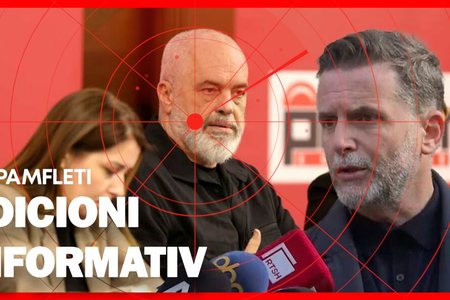
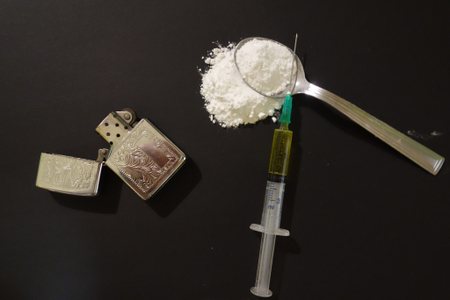
He writes that Albania is no stranger to organized crime, but claims that Prime Minister Edi Rama has taken criminality to another level. According to him, the legalization of cannabis cultivation has created opportunities for laundering drug profits, while Albania is becoming a trafficking center not only for marijuana, but also for heroin, cocaine and methamphetamine.
Rubin claims that Rama frequently consults with Turkish President Recep Tayyip Erdogan, whom he considers a political role model. He adds that, like Erdogan and his circle, Rama and his allies benefit economically from confiscating properties for development.
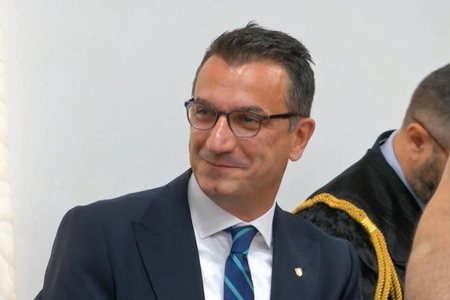
According to the author, political figures considered obstacles to Rama, such as former Deputy Prime Minister Arben Ahmetaj and Tirana Mayor Erion Veliaj, are facing what he calls politically motivated charges by SPAK. Rubin describes SPAK as an anti-corruption structure that is increasingly functioning as the prime minister’s “private police.”
He adds that support from partisan American ambassadors, as well as relationships with Alex Soros and Jared Kushner in the real estate field, have created a sense of impunity for Rama.
In his analysis, Rubin warns that developments in Albania will not remain isolated within the country’s borders. Just as Lebanon descended into chaos, he argues that attacks on political opponents and the weakening of clean governance are disillusioning Albanian citizens, once considered among the most pro-American peoples in Europe.
The author also warns that organized crime and the drug economy could give criminal and terrorist groups a foothold in Europe. According to him, just as the Assad regime used Lebanon to support terrorism while maintaining denial of direct involvement, Turkish President Erdogan could pursue a similar strategy in Albania.
In conclusion, Rubin writes that although Albania is a small country, Prime Minister Edi Rama represents, according to him, a political "gangrene" that must be stopped before its influence spreads further. /Adapted from "Pamphlet", from "Washington Examiner"
Michael Rubin is a contributor to the Washington Examiner, director of analysis at the Middle East Forum, and senior fellow at the American Enterprise Institute.




Jam shumë dakort me artikullshkruesin dhe do të shtoj se:Edi Rama është Tradhtar i Kombit Shqiptar dhe Gangsterizmi qeveritar shqiptar ka lënë në mjerim një popull të tërë!
Super Like Lilit.
Arielle I Ben skaner kryegangsterit Rama . Amerikane LaCivita qe analyze Jensen politike ne Shqiperi deklaroi se Rama eshte gangster