


 Shkruar nga Eric Margolis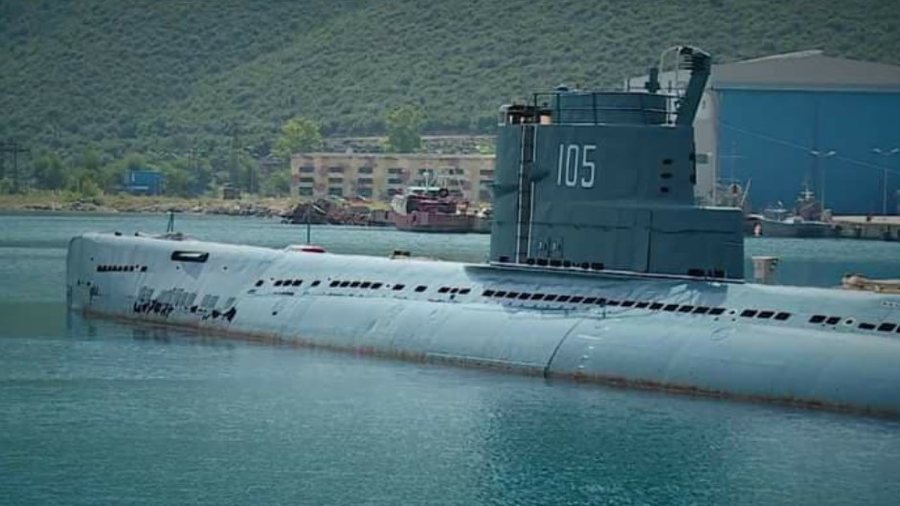
If the West does not create a diplomatic buffer for Albania, it seems likely that it will again fall under the Soviet Union - an event that could herald the most drastic shift in the balance of European power since World War II." This was the biggest fear expressed in an analysis by the prestigious daily New York Times in 1982 and which bota.al brings today in Albanian.
According to the American daily, the Soviets have not forgotten 1961 when they were expelled by the Albanians. They have organized three coups, and considering the illness of Enver Hoxha and the news of Mehmet Shehu's suicide, they may be organizing a fourth, along with an invasion by air, land and sea. According to this analysis, for the Soviets, Albania was important for the dominance of the Mediterranean, just as Hawaii was for the US's dominance of the Pacific.
The article
Albania, the lesser-known European country, could be the scene of a drastic shift in the East-West balance of power. Albania's strategic value, although practically forgotten in the West, is fully understood by Moscow. Close to Yugoslavia, Greece and Italy, Albania with two excellent deep water ports, in Vlora and Durrës, dominates the Balkan peninsula and the entrance to the Adriatic Sea. The Italian coast is only 50 miles away, across the Strait of Otranto.
In 1961, Albania became the only country to successfully expel Soviet "occupying" forces and a pro-consular establishment. At that time, party leader Enver Hoxha, a great admirer of Stalin, suddenly severed all ties with Moscow because of Nikita S. Khrushchev's de-Stalinization program. The Russians were just completing a complex of naval installations and underwater berths for submarines on the rocky island of Sazan, known as the "Gibraltar of the Adriatic", in the port of Vlora. Sazani, and its associated air and logistics bases in mainland Albania, would have been the vanguard base from which the Kremlin would spread its influence throughout southern Europe and the Middle East.
The Albanians took all these installations, expelling thousands of Soviet advisers and even taking two submarines. Although outraged, the Soviet Union was unable to mount an effective military response because 21 years earlier, when the United States Sixth Fleet dominated the Mediterranean, the Russians lacked long-range amphibious and air power.
The Russians have not forgotten this humiliation from a country of 2.5 million inhabitants, and Moscow's pattern of anti-Albanian activities over the past two decades indicates that re-establishing control over Albania is an important goal of the Kremlin's grand strategy.
Tangible evidence of Moscow's interest in overthrowing the Albanian regime has been clear. The KGB, using an extensive pro-Soviet fifth column in Albania, organized at least three coup attempts.
Today, the events in Albania may present Moscow with the opportunity it has been patiently waiting for. Mr. Hoxha, 73 years old, is reported to be in poor health. The news of the Albanian radio about the "suicide due to nervous depression" of Mehmet Shehu, the second in command, suggests the presence of increasing pressures in the Albanian Communist Party, as the day of leaving the heir approaches.
The sense of new opportunity for Moscow is undoubtedly increased by the complete isolation of Albania. Capitalist America is the number 1 enemy of Mr. Hoxha, followed by the Soviet Union. After the death of Mao Zedong, Albania put China, once its only ally, into a group with the United States and the Soviet Union. The Yugoslavs and the Greeks, traditional enemies of the Albanians, still have territorial projects for Albania. In the process of preserving the Marxist ideological purity of his country, Mr. Hoxha has left it completely without friends or allies.
The Soviet scenario for action against Albania may be predictable: a coup d'état following successful operations in Czechoslovakia and Afghanistan. Unlike the situation in 1961, the Soviet Union today has ample long-range intervention forces and no longer lives in fear of the Sixth Fleet. The air force could jump into Albania, capture the main airstrips and bring in heavy equipment and armor. Amphibious forces from the Black Sea and Mediterranean squadrons would isolate and encircle Albania. Resistance by Albania's 50,000-strong army and police would be quickly crushed.
Albania could become the Soviet Union's most important vanguard base, as important to its centuries-old ambition to control the Mediterranean and the Middle East as Hawaii is to the United States' dominance of the Pacific. The political consequences of the presence of the Red Army 50 miles from Italy and several hundred miles north of Athens can be easily imagined.
But imagination seems to be lacking in Washington. The lack of diplomatic relations with Albania since World War II has led the West to a kind of amnesia about its existence, and one wonders if there is any backup plan to deal with a crisis there.
Neither the United States nor the North Atlantic Treaty Organization have officially supported Albania's continued independence, leaving Moscow with the tempting target of a valuable strategic prize that can be captured without the risk of an effective Western response. If a Soviet air regiment were to land at Tirana airport, Washington's likely response would be, "Where is Tirana?"
If the West does not create a diplomatic buffer for Albania, it seems likely that it will again fall under the Soviet Union – an event that could herald the most drastic shift in the balance of European power since World War II. / The New York Times (1982) – Bota.al







Lini një Përgjigje