


 Shkruar nga Pamfleti
With Operation Midnight Hammer, America demonstrated its irreplaceable role. But many in the Trump administration want America to withdraw from its role as the “world’s policeman” or at least focus its resources on the Pacific to contain China.
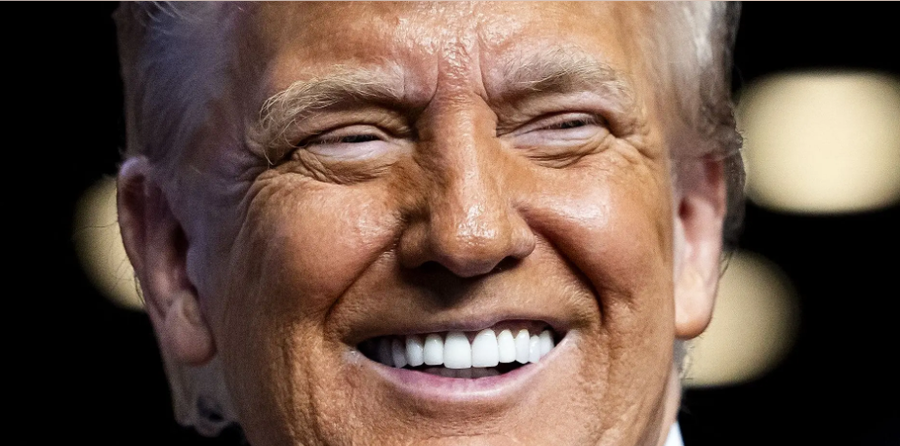
He came, he bombed, he ended the war, or so President Donald Trump wants the world to believe. Two days after a fleet of stealth American bombers struck deep into Iranian nuclear facilities, Mr. Trump announced a “complete and comprehensive” ceasefire in the war between Israel and Iran.
“I would like to congratulate both countries, Israel and Iran, for the Patience, Courage and Intelligence to end what should be called the '12-DAY WAR,'” he wrote on his Truth Social page.
Reports said Mr. Trump first secured Israeli approval for the ceasefire, then sent the proposal to Iran through Qatari intermediaries. Mr. Trump said Iran would cease hostilities first, and Israel 12 hours later. Each side “will remain PEACEFUL and RESPECTFUL,” he explained. He later told NBC News that he expected the ceasefire to last “forever.”
Stocks rose and oil prices fell as Iran's foreign minister said there was no formal deal but that Iran would stop if Israel did. But as the deadline passed, an early wave of Iranian missiles was reported that killed three people in southern Israel, in what is hoped was a final, defiant attack.
The announcement is the latest in a series of surprising twists and turns since Israel launched a surprise attack on Iran on June 13. Israeli aircraft and intelligence units knocked out many of Iran’s air defense systems, killed nuclear scientists and generals, and began dismantling a widely disseminated nuclear program that had brought Iran to the brink of acquiring nuclear bombs.
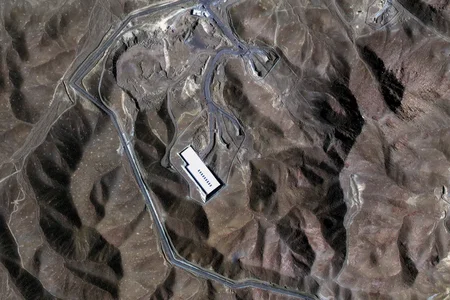
America intervened on June 22 with Operation Midnight Hammer. B-2 bombers flew a 37-hour mission from Missouri, dropping 14 GBU-57 “Massive Ordnance Penetrator” (MOP) bombs on uranium enrichment sites at Natanz and especially at Fordow. Perhaps 30 submarine-launched Tomahawk missiles struck a nuclear facility complex in Isfahan.
Iran responded the next day with symbolic retaliation, firing 14 missiles—one for each U.S. MOP bomb at the U.S. air base at al-Udeid, Qatar. All but one missile was intercepted, and thanks to Iran’s early warning, no one was hurt, the president tweeted. Two hours later, he declared a ceasefire.
JD Vance, the vice president, who was in a Fox News studio when Mr. Trump made the announcement, said the US strike had achieved its objectives. “We know they can’t build a nuclear weapon.” He claimed that Iran’s stockpile of enriched uranium had probably been destroyed by the attacks.
Three questions now hang over the region: will the ceasefire hold; will there be a follow-up diplomatic agreement to limit Iran's nuclear program; and will the Middle East become more stable after the war?
Let’s start with the ceasefire. Neither Israel nor Iran has formally confirmed a ceasefire, but both have strong reasons to call off the war. Iran’s theocratic regime has long chanted “Death to America,” but it has sought for decades to avoid a direct confrontation with the superpower, preferring to rely on proxy militias and occasional diplomacy. It is unpopular at home, its armed forces appear powerless against Israel, and its allies in the region have weakened. With America’s entry into the war, Iran may now prefer to heal its wounds.
As for Israel, it is unlikely that Binyamin Netanyahu, the prime minister, will challenge Donald Trump after praising his historic military intervention. Moreover, Israeli military sources believe they have destroyed almost all the targets on their list. Some even suggest that Israel may declare victory and stop attacking Iran, even without a formal ceasefire. Netanyahu may now feel that he has achieved a historic victory that defines his legacy against Israel’s arch-enemy.
On the other hand, Trump does not want the war to last, as he has assured Americans that he is not dragging them into another "endless war" like those in Iraq and Afghanistan, which he has long denounced.
As for the nuclear program, Iran will not forget the technology it has mastered. Humiliated and filled with rage, the supreme leader, Ayatollah Ali Khamenei, may yet decide that his regime needs nuclear weapons to survive. Even if most of the facilities are destroyed, the program could be restarted covertly. The International Atomic Energy Agency (IAEA) says it does not know the location of Iran’s official stockpile of 400 kg of highly enriched uranium (HEU), with a purity of 60%. If Iran has hidden enrichment centrifuges, it could produce weapons-grade nuclear material (typically 90%) fairly quickly — enough for ten bombs.
A nuclear deal signed by President Barack Obama in 2015 allowed Iran to have a limited uranium enrichment program, under international inspections. The goal was to keep Iran about a year away from being able to produce enough material for a bomb.
President Trump scrapped the deal during his first term, and on the eve of the Israeli attack, Iran was thought to be just days or weeks away from what is called a “breakout.” Fears were heightened by intelligence reports that Iran had begun work to accelerate the production of a nuclear warhead suitable for a missile.
In recent negotiations with Iran, Trump has sought something closer to “zero enrichment.” His special envoy, Steve Witkoff, has proposed a deal that would honor Iran by allowing uranium enrichment to take place within a regional consortium outside Iranian territory. It is not yet clear whether that deal remains on the table, or whether Israel and Iran would accept it.
Ultimately, the broader issue is regional stability and whether it can be achieved as long as the revolutionary mullahs remain in power in Tehran. If Israel discovers a covert nuclear program, it will feel compelled to back down with or without American help. It will also seek limits on Iran’s conventional weapons and its support for militias, after more than a year of fighting against regime allies and proxies and confronting missiles from Iran, Lebanon, and Yemen.
Some in Israel and America believe that peace can only be guaranteed by the overthrow of Ayatollah Khamenei. On June 23, Israel tried to weaken the regime’s instruments of repression by bombing the notorious Evin prison and the headquarters of the Basij militia, which has been suppressing anti-regime protests. However, the Iranians did not respond to Israel’s calls to rise up against the aging mullahs. This was always a hopeless idea as long as the bombs were falling.
But if the fighting stops, and Iranians begin to understand the cost of the ayatollah's mistakes, there could still be a domestic backlash. Until then, Israel and its Arab allies will want America to continue to guarantee security in the region.
With Operation Midnight Hammer, America demonstrated its irreplaceable role. But many in the Trump administration want America to withdraw from its role as the “world’s policeman” or at least focus its resources on the Pacific to contain China.
JD Vance, a prominent voice among those known as “restraintists,” said the nature of Iran’s regime is a matter for the Iranians themselves to decide. But he added: “If Iran is desperate to build a nuclear weapon in the future, then it will have to face a very, very powerful American military.”
A dramatic intervention followed by an equally dramatic ceasefire is not (yet) a reason for lasting peace./ The Economist


Lini një Përgjigje