


 Shkruar nga Pamfleti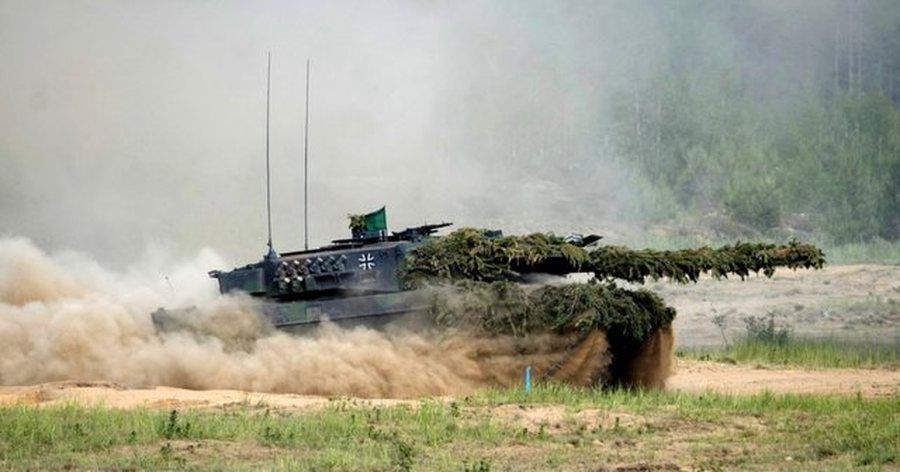
Leaders of the North Atlantic Treaty Organization (NATO) are expected to agree on a new, ambitious target for defense spending at an alliance summit in The Hague on Wednesday. The demand for increased spending comes from US President Donald Trump. They are expected to agree that NATO member states should spend 5 percent of their gross domestic product on defense and defense-related investments.
That's a significant increase from the current 2 percent target, agreed at the alliance's summit in Wales in 2014. But the new target will be measured differently. NATO member countries are expected to spend 3.5 percent of their gross domestic product on defense, including weapons and troops. The remaining 1.5 percent is focused on security-related investments — such as adapting roads, bridges, and ports for military equipment, cybersecurity, and protecting energy pipelines. Extraordinary for most of them.
There are 22 countries in the 32-member alliance that spent 2 percent of their gross domestic product or more on defense last year. Overall, member countries spent 2.61 percent of NATO’s gross domestic product on defense last year, according to the alliance’s estimates. However, this figure changes when analyzing individual countries. For example, Poland spends more than 4 percent of its gross domestic product on defense, ranking it first in this regard. At the bottom of the list is Spain with 1.3 percent.
By 2035. The target could be revised after a review planned for 2029. It is difficult to put a precise figure on this, as it will all depend on how large these economies will be in the future. Also, NATO does not currently measure spending in the category of defence and security sector investment – so there is no baseline for comparison. But NATO countries spent over $1.3 trillion on defence in 2024, compared to almost $1 trillion in 2021 prices. If all NATO countries spent 3.5 percent of their gross domestic product on defence last year, the figure would be $1.75 trillion.
That means meeting the target could mean hundreds of billions of dollars more per year than current spending. Russia's war in Ukraine, concerns about a potential future Russian threat, and US pressure have prompted European capitals to increase defense spending and plan for even greater increases in the future.
"Russia could be ready to use military force against NATO within five years," NATO Secretary General Mark Rutte said earlier this month.
Europe is also preparing for the possibility that under President Trump, the United States will withdraw some military troops from Europe.
"America cannot be in every country all the time, nor should it be," US Secretary of Defense Pete Hegseth said earlier this year.
NATO agreed this month on new military capabilities — the troops, military units, weapons, and equipment that NATO believes each country should have to defend itself and the alliance. The targets are confidential, but Rutte said the countries agreed to invest more in “air defense, fighter jets, tanks, drones, personnel, and logistics.”
No. Spanish Prime Minister Pedro Sanchez has said his country can meet its military targets by spending just 2.1 percent of its gross domestic product. His government has approved a draft declaration stating that it does not intend to spend more. Some analysts have said that there are countries that have expressed their willingness to increase spending, even though they will not have the capacity.
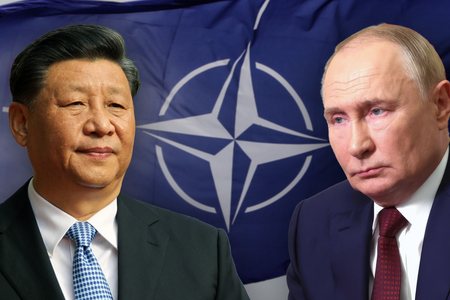
NATO allies allocate a much smaller share of their economies to defense than Russia, but together they spend far more than Moscow. Russia's military spending is set to rise by 38 percent in 2024, reaching $149 billion, or 7.1 percent of gross domestic product, according to the Stockholm International Peace Research Institute (SIPRI).
China, the world's second-largest military spender, is estimated to have allocated 1.7 percent of its gross domestic product to this, according to SIPRI. In NATO member countries, defense occupies a small space in state budgets. Military spending accounted for 3.2 percent of government spending in Italy, 3.6 percent in France and 8.5 percent in Poland in 2023, according to SIPRI data. In Russia, that year, military spending accounted for 19 percent of government spending./ REL



Lini një Përgjigje