


 Shkruar nga Pamfleti
In the event of a conflict with Russia, they fear they will have less time to prepare than with China and North Korea. This nightmare scenario, the so-called "horizontal escalation", would see Russia strike in Europe and at the same time in Asia.
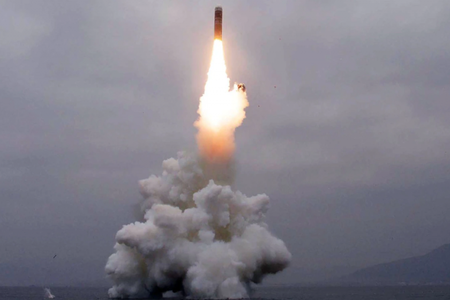
The fear of conflict is not only scaring Europe, also in the Far East the possibility of war is a hypothesis that is no longer ignored.
In the Asian continent, Russia, China and North Korea are among the countries committed to rewriting the balance of power by exploiting the difficulties of the United States on the eve of the inauguration of Donald Trump. Until now it was thought that Beijing's intentions towards Taiwan and Pyongyang's provocations on the Korean peninsula were the most worrying in the region, but the Financial Times now reveals that Moscow could be "the most dangerous agent of chaos".
Western sources have actually shown the British newspaper secret Russian documents containing a list of 160 military and civilian targets in Japan and South Korea that Moscow would hit in the event of a conflict. Among the targets identified by the Russian Federation and indicated in documents drawn up between 2013 and 2014 would be roads, bridges and nuclear power plants.
The first 82 places on the list are military in nature and correspond to the headquarters and premises, air bases and naval installations of the Japanese and South Korean armed forces. Among the remaining targets, of a civilian nature, are the Kanmon tunnel connecting the islands of Honshu and Kyushu and the Tokai nuclear complex in Japan and, in addition to various bridges, the Pohang steel plant and the Busan chemical plants in South Korea.
The documents obtained by the Financial Times were intended for officials at the Combined Arms Military Academy in Moscow and contain a presentation of an attack plan against the Japanese radar base at Okushiri accompanied by a gif reproducing an explosion.
The slides contain many details on the identified targets. These include accurate measurements of buildings and estimation of the force required to breach base protection. For the raids, the Kremlin planned to use Kh-101 non-nuclear subsonic missiles, which, however, did not prove very effective in the special military operation against Ukraine.
Russia's plans, which would still be "relevant" to Russian strategy, show Moscow's "deep concern about its eastern flank" exposed to any conflict with NATO and vulnerable to attacks by the United States and its allies in the region.
William Alberque, an expert at the Stimson Center, says the documents and Vladimir Putin's decision to send 12,000 troops from his North Korean ally to Ukraine show how "the European and Asian theaters of war are directly and inextricably linked."
Alberque then added that "Asia cannot stay out of the conflict in Europe, nor can Europe stand by and watch if a war breaks out in Asia."
There are over 52,000 American soldiers present in Japan, over 23,000 in South Korea, and both countries participate in the Western coalition's efforts supporting Kiev against Moscow. The Japanese may be the ones most concerned about the Russians' intentions, even if analysts say the Japanese armed forces have a higher perception of danger than civilians. There is another aspect that keeps the Tokyo authorities awake.
In case of conflict with Russia, they fear that they will have less time to prepare than with China and North Korea. This nightmare scenario, the so-called "horizontal escalation", would see Russia strike in Europe and at the same time in Asia.
Russian Deputy Defense Minister Andrei Belousov, speaking at a Defense Ministry meeting on December 16, said Russia must prepare for various scenarios, including a "possible conflict with NATO within the next decade."
Belousov accused NATO of preparing for war, citing actions such as appointing a representative in Kiev and supporting Ukraine's NATO membership during the alliance's 75th anniversary summit in July 2024.
On the Atlantic side, NATO's European foreign ministers have begun discussing a gradual increase in the alliance's defense spending target from 2% to 3% of GDP by 2030.
German Defense Minister Boris Pistorius in particular has advocated a bigger defense budget, saying: "If Putin attacks, we should be able to fight back"./ Pamphlet


Lini një Përgjigje