


 Shkruar nga Pamfleti
In 2025, China imported about 48% of its oil needs from cargoes passing through the Strait of Hormuz, not including unofficial purchases of Iranian crude under sanctions. According to data from the Chinese customs agency, the main suppliers were Saudi Arabia, the United Arab Emirates, Oman, Iraq and Kuwait.
However, this does not pose an immediate problem for Beijing. China possesses very large strategic reserves, designed for about 200 days of energy autonomy, while most Western countries hold reserves that cover up to 60 days of consumption. According to the analysis published by Corriere della Sera, the challenge is mainly strategic and related to the US policy of the Donald Trump administration.
As the conflict over Iran continues, the situation is increasingly being interpreted as a clash that could also affect China's strategic future.
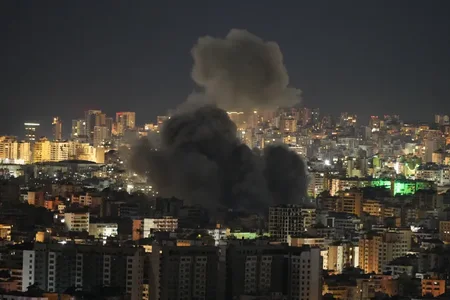
Officially, the US plan for Iran does not envisage direct control of the oil trade. However, according to the analysis, the strategy of Trump's people follows the model used in Iraq in 2003. Military operations, including the bombing of strategic targets and the neutralization of the Iranian fleet, are aimed at creating the conditions for taking control of the island of Kharg in the Persian Gulf.
Kharg Island, along with the port of Bandar Abbas at the narrowest point of the Strait of Hormuz, forms the main hub of Iran's oil infrastructure. At certain times, it processes up to 90% of the country's crude oil exports and therefore a crucial part of the Iranian state's income.
The Iraqi model relied on American control over these resources. After the fall of Saddam Hussein in 2003, the US-run Coalition Provisional Authority opened an account at the New York Federal Reserve where Iraqi oil revenues were deposited. This structure has allowed Washington to maintain a significant level of influence over Baghdad's funds.
The official objective was to ensure transparency in the use of revenues and protect Iraq from foreign creditors, a mechanism the White House also uses in the case of Venezuela. In practice, control of this account limits Baghdad's ability to use oil revenues to purchase weapons.
Following the same model, the Iran plan envisages the opening of a deposit account in the name of Iran, but administered by the US authorities, with the aim of guaranteeing the disarmament of the regime and the Revolutionary Guard. In this context, military control of the oil infrastructure would be crucial, even if regime change in Tehran is not achieved.
China is watching the situation with concern, given its dependence on Persian Gulf oil. If Iran were forced to cooperate with Washington in the future to ensure the regime's survival, the United States would gain new leverage. In a scenario of tensions between the superpowers, this could give the Americans the opportunity to curb or discourage oil supplies to China.
In the opposite scenario, if Iran remained hostile after the war, the Gulf states could turn to Beijing to pressure Tehran to ensure stable oil flows through Hormuz. In this case, China's influence in the region would increase.
Recent developments in the region fit into this strategic context. The current semi-paralysis of the Strait of Hormuz is believed to have blocked around 200 million barrels of oil, equivalent to about two days of global consumption.
For Western countries, the possibility of releasing 300-400 million barrels from strategic reserves is considered more of a signal to the markets than a long-term solution. Experts estimate that these reserves would not be enough to offset the effects of a closure of Hormuz that would last more than a month.
Even the reopening of the Saudi East–West pipeline does not fully solve the problem. This system can only transport about a quarter of the Gulf's oil to the Red Sea via land routes.
In this context, the issue of control over Iran's key oil infrastructure remains crucial for the energy and strategic balance in the region. Beijing will continue to closely follow any developments related to this scenario./ Corriere della Serra





Lini një Përgjigje