


 Shkruar nga Pamfleti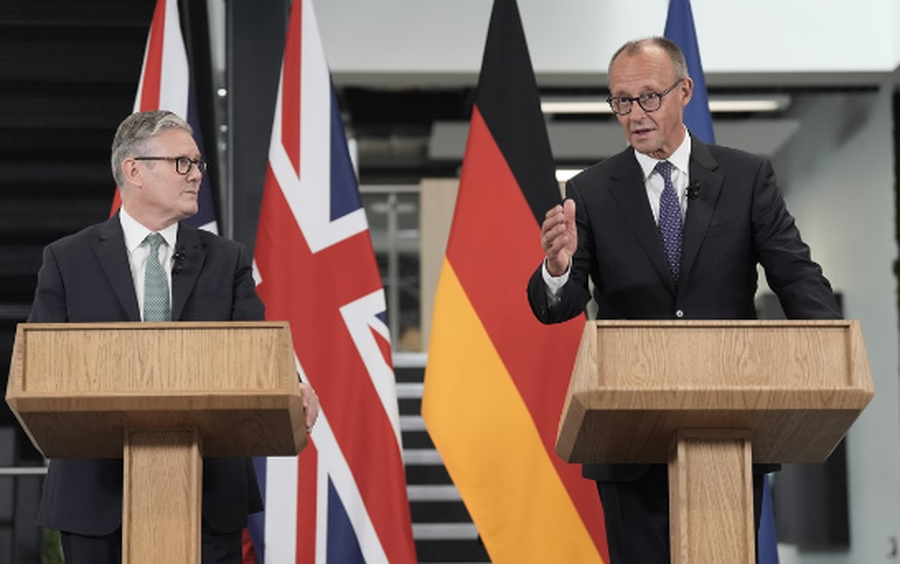
Despite Brexit, Germany and the UK are getting closer together economically. At a summit in Berlin, both governments called for closer cooperation.
Six years after Brexit, Germany's trade relations with the UK have stabilized, according to Economy Minister Katharina Reiche. The UK is once again among the top ten trading partners, the German minister said at a German-British economic conference in Berlin.
The trade volume between the two countries reached around 118 billion euros in 2025, Reiche noted. Germany imported goods worth around 33 billion euros from the UK and exported goods worth 80 billion euros to the UK. Hundreds of companies operate on both sides of the border. These generate prosperity.
“This shows that our economic ties are solid; they are real,” Reiche said. “And I am convinced that they can become even more intertwined.” The numerous crises of recent years have shattered the illusion that global markets can operate ‘on autopilot.’ A new reality has emerged; the extensive blockade of the Strait of Hormuz, vital for energy supplies, is another example of this.
Germany and the UK share common goals in many areas, such as trade and technology development. Cooperation will also be extended to critical raw materials and the creation of resilient supply chains.
Since the EU is no longer a framework for cooperation after the UK leaves in February 2020, a new framework must be found, Reiche said. She called on the British government to cooperate constructively with the European Commission.
'Chance of a lifetime'
British Economy Minister Peter Kyle had previously announced a deal with Germany to jointly procure rare earth metals. At the German-British conference, he declared that now there was a “chance of a lifetime” to rebuild relations.
"I consider it my personal duty to bring our markets closer together." Germany is the UK's most important economic partner after the US, Kyle said.
The German-British economic summit is based on the Kensington Treaty, signed by both countries in July 2025, which agreed on increasingly close cooperation in the areas of defense, security, economy, health and culture.
In June 2016, the British people voted to leave the EU. The UK officially left the EU on January 31, 2020, and the European single market at the end of 2020./DW





Lini një Përgjigje