


 Shkruar nga Pamfleti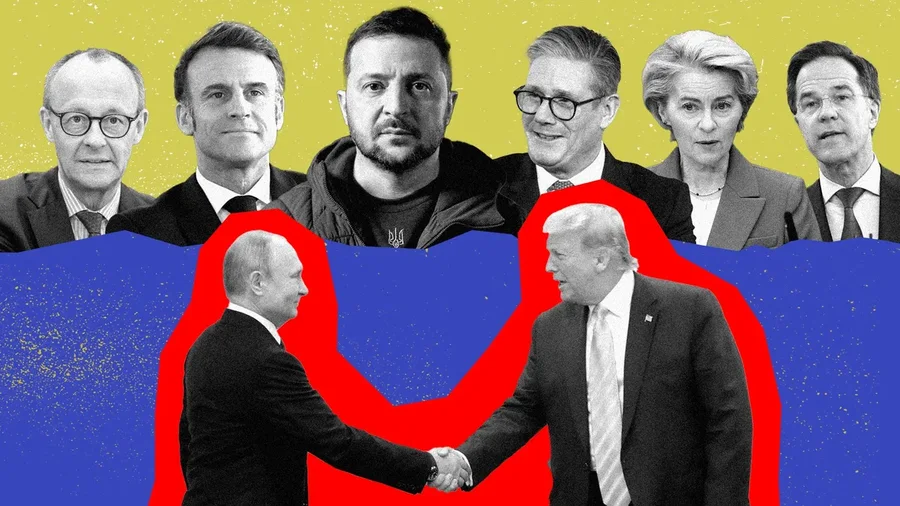
Governments also understand that there is a tangled web of diplomacy at play where little can be taken for granted and there can be double bluffing on all sides. Trying to undo this has also become a European priority.
When European leaders meet on Thursday, they do so knowing they must find a way to maintain their best footing on Russia – even though the Americans may be negotiating far away.
The Paris summit represents a moment of truth. Leaders will try to agree on a collective response to signals coming from Washington that Donald Trump's administration wants to ease sanctions on Moscow as an incentive to stop the war in Ukraine. While the United States may see that as a useful tactic, European governments believe that many concessions are not in America's hands to make.
On Wednesday, US and Kremlin officials claimed that negotiators in Saudi Arabia - where they held face-to-face talks - had opened the door to easing restrictions on access to the international financial system, as well as security for oil and gas tankers, as part of a trade for a ceasefire in the Black Sea.
Now, the European Union is seeking clarity on what is being offered in the backroom talks, especially given that decisions on sanctions against the Belgium-based international payment service, SWIFT, and on the Russian shadow fleet - ships that Moscow uses to circumvent sanctions and safeguard oil exports - stand firmly with European capitals.
"We are talking about substantial and strong sanctions," said an EU diplomat, adding that "if the Russians want them removed, they should have a negotiation with us, not just with the Americans."
Governments also understand that there is a tangled web of diplomacy at play where little can be taken for granted and there can be double bluffing on all sides. Trying to undo this has also become a European priority.
In addition to the direct choice of whether to keep sanctions in place, "there is also a risk that if the EU rejects Putin's demands, both Trump and Putin would seize the opportunity to blame the EU for Trump's failed peace efforts," said Janis Kluge of the German Institute for International and Security Affairs. If the EU starts to back down "it could also cause divisions within the EU, which could be Putin's main goal."
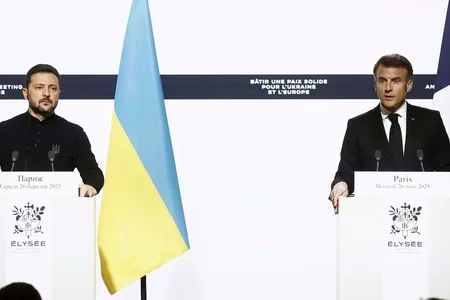
The Paris summit is the latest in a series of meetings that have been held in Paris and London in recent weeks, with French President Emmanuel Macron and UK Prime Minister Keir Starmer leading efforts to provide Ukraine with security guarantees.
The summit is expected to be attended by leaders from more than 30 countries and international organizations, including EU members as well as the UK and Turkey. Ukrainian President Volodymyr Zelensky held talks with Macron on Wednesday evening and will remain at the summit.
"There is so much going on behind the scenes, the first point is to have clarity" about what Ukraine and the US agreed on, where Zelensky can help the EU, a European diplomat said.
The European Commission on Wednesday denied claims that the EU's stance on sanctions could change as a result of US-Russia talks.
The idea that Europe will lift sanctions before Russia stops the attacks "is completely absurd," said Miloš Vystrčil, the head of the Czech Senate.
While any change to EU sanctions – whether lifting them or renewing them – must be approved by all 27 members of the bloc, countries close to Russia's border are not only wary of lifting them, they are pushing for more.
"Sanctions are crucial in limiting Russia's ability to rebuild and launch future aggression against its neighbors," said Latvian Foreign Minister Baiba Braže. Her country will push for sanctions to be "further strengthened," rather than weakened, she said, "to push Russia toward a real engagement in peace efforts."
After Russia-US talks on Tuesday, the Kremlin said the US would help "restore access for Russian agricultural and fertilizer exports to the world market, reduce the cost of maritime insurance, and expand access to ports and payment systems to conduct such transactions."
"Simply lifting sanctions is not possible unless the situation is completely corrected, which means giving up the occupied territories, stopping the aggression and paying for damages," said Estonia's ambassador to France Lembit Uibo.
An official from the French president's office told reporters on Tuesday that sanctions and asset freezes were not on the official agenda for Thursday's summit. However, they are likely to be discussed in light of the possible Black Sea deal.
According to the same official, the leaders will discuss ways to make the Franco-British proposal to deploy a "security force" in Ukraine "more operational and concrete" in the event of a ceasefire.
France, Britain and several other European countries have sought to weigh in on ceasefire talks between the US and Russia, pushing for the deployment of European troops to Ukraine, with the support of US forces. /Adapted from Politico Pamphlet/


Lini një Përgjigje