


 Shkruar nga Pamfleti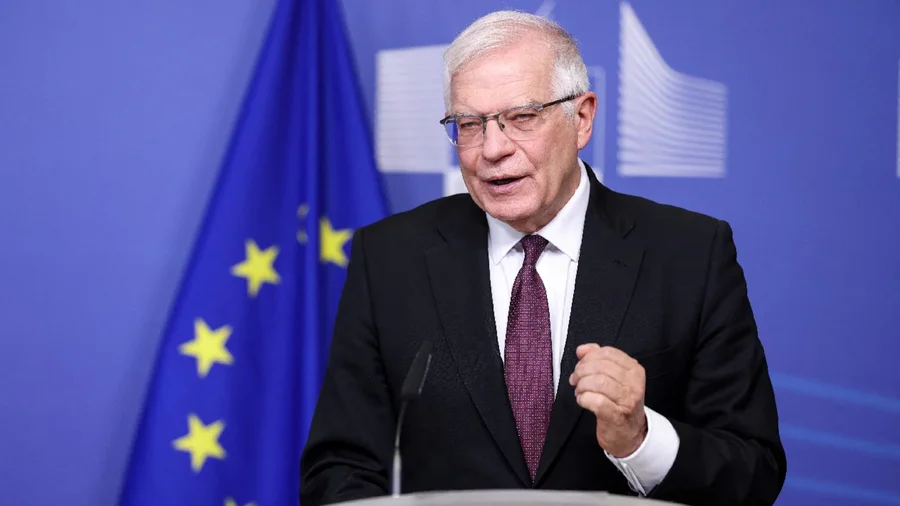
The high representative of the EU for foreign policy and security, Josep Borrell, gave me a recommendation last month for the removal of punitive measures against Kosovo, but for the decision to be taken, the agreement of all member states is needed. Currently, it remains unclear if there will be a decision in this mandate of the Commission, although it is constantly being discussed in the EU working groups.
EU spokesman Peter Stano reiterated on Friday at a press conference in Brussels that the punitive measures against Kosovo, imposed in 2023, are temporary and that they can be removed, depending on Kosovo's actions on the ground, especially in north of Kosovo.
"The answer is the same as the last time and the issue is being considered in the Council and will be decided by the member countries regardless of when the new institutions will start their mandate" , said Stano, although he did not have an answer, if the punitive measures against Kosovo can be removed before the end of the mandate of the current European Commission, or will the composition of the new Commission be expected.
Kosovo: There is no justification for keeping the punitive measures in force
For their part, the highest authorities of Kosovo persistently ask the European Union to remove punitive measures, arguing that the de-escalation in the north of Kosovo has already taken place and there is no reason to continue with measures against Kosovo.
The President of Kosovo, Vjosa Osmani, says that "the continuation of the measures against Kosovo is unfair and that the country has met the conditions for them to be finally removed". Meanwhile, the Prime Minister of Kosovo, Albin Kurti, said after a government meeting that "the measures punitive measures against Kosovo are unfair".
"The measures, which are in force against Kosovo, contradict the efforts of the region for accelerated integration in the EU, especially in the Growth Plan and its purpose. On the other hand, we are continuing our efforts to open more opportunities within of the reform dialogue with the EU. In this context, we have fulfilled all the EU's requirements for the removal of restrictive measures and these measures must be removed" , said Kurti.
Why were punitive measures imposed on Kosovo?
The punitive measures that the EU imposed on Kosovo in June of last year included the temporary suspension of the working groups for the Stabilization and Association Agreement, the suspension of the funding program for Kosovo, the non-invitation of Kosovo to high-level meetings except meetings within the the Kosovo-Serbia dialogue and the disapproval of projects from the Fund for Investments in the Western Balkans.
According to diplomatic sources in Brussels, a group of representatives of the member countries of the European Commission has requested that all measures against Kosovo be lifted immediately. Meanwhile, another group of countries has requested that the EU have a more balanced approach towards Kosovo and Serbia, concluding that Serbia has also done nothing to bring to justice those responsible for the armed attack in Banjska of Zvecani in September in 2023 where a Kosovo policeman was killed.
The government of Kosovo, led by Albin Kurti, has undertaken several actions in the north, which have been criticized by the international factor as uncoordinated actions. The government banned the use of the Serbian dinar, closed several branches of the Serbian post office, as well as parallel institutions of Serbia in Kosovo. And some representatives of the member states of the European Commission say that it would be counterproductive to remove all measures against Kosovo, precisely considering that the Kosovo authorities have continued to take unilateral and uncoordinated measures in the north inhabited by a Serbian majority ./DW


Lini një Përgjigje