


 Shkruar nga Pamfleti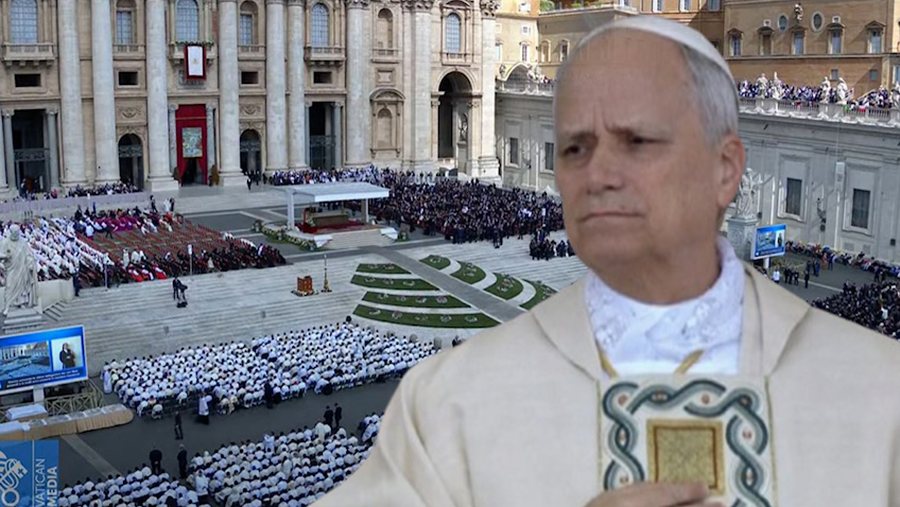
“The Vatican’s official diplomacy is back. This gives meaning to the demand for reorganization that emerged before and during the Conclave. And it restores the centrality to the Church…” The statement is made without any polemical tone towards the past papacy, nor as a warning of a restoration. Leo XIV’s first positions on Ukraine; the words of rapprochement, turned in the same way, with Israel; and the willingness to once again propose the Vatican as the heart of efforts for a global ceasefire are only the first steps of a major operation to build a “piecemeal peace,” to withstand and defeat the “piecemeal war” that Pope Francis had foresaw with foresight. An operation that, according to rumors gathered by the Wall Street Journal, could lead to a Russia-Ukraine summit in the Vatican in mid-June, with an American delegation made up of Secretary of State Marco Rubio and the presidential envoy for Ukraine, Keith Kellogg.
But the differences are obvious. More than a continuity, we are facing a completely new chapter. No one in the Vatican speaks openly of a break, not least so as not to disturb the climate of unity that was created with the election of Pope Prevost. The guardians of “Bergoglism” (the current of Pope Francis) tend to present him as a creature of Francis, who guarantees his continuity. And in essence, that is so. Moreover, Leo XIV does not do much to oppose them – quite the opposite. He never forgets to mention and thank Francis. But, by appropriating his legacy, he actually transcends and elaborates it, revealing its limits. And in fact, he archives it.
Leo XIV is the natural linker and reconciler not only of two culturally distant universities like North and South America. He is above all the one who can carefully but decisively mend the wounds within the American episcopate; and the point of union, less and less obvious during the Argentine papacy, of the divisions between the United States and the Vatican and between the Pope and his Curia. In just a few days, all ideas of a parallel diplomacy entrusted to the narrow or wide circle of Casa Santa Marta – the hotel inside the Vatican where Francis resided – have disintegrated.
The strategy of governance has returned to the hands of the Secretariat of State and Cardinal Pietro Parolin. But not because Parolin, the candidate who lost the Conclave, immediately switched his support to Prevost, avoiding divisions. More simply: “diplomacy is returned to the hands of the one who has the institutional responsibility for it”, notes one of the most influential cardinals. “Also because that parallel of the House of Santa Marta yielded few results, in Ukraine and in the Middle East”. The “piecemeal peace” of Leo XIV begins, step by step, stage by stage, with relations within the Church. The reconstruction of harmony passes from there.
Quietly, those who had been involved in the Ukraine issue by supporting Cardinal Matteo Zuppi, president of the Italian Episcopal Conference, protagonist of a difficult mediation to return home Ukrainian children kidnapped by the Russians, have been displaced from the Secretariat of State – although Zuppi will continue his valuable humanitarian effort. At Parolin’s side, when he met Ukrainian President Volodymyr Zelensky in Rome on April 26, an unknown Latvian monsignor, Antons Prikulis, appeared, who, due to his Baltic origin, knows Polish and Ukrainian. Meanwhile, the Secretary of State’s main collaborator for the moment remains Monsignor Paul Richard Gallagher, the “foreign minister” of the Holy See, respected even by Moscow.
The fear expressed by many is that the Orthodox Patriarch of Moscow, Kirill, is unlikely to allow a Catholic Pope, let alone an American one, to promote a ceasefire. The Russian invasion of Ukraine has not only divided the two states, but also the two Orthodoxies – Russian and Ukrainian. There are therefore religious consequences, as complex as the political ones. But anyone who has spoken to Kirill recently will remember that, in reality, his behavior is subservient to the wishes of Vladimir Putin: a historical constant of the Moscow Patriarchate since the time of Stalin.
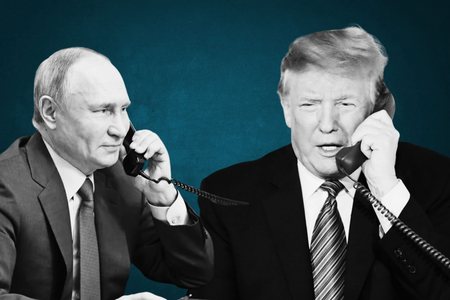
The real fear is that, if Putin were to show some willingness to negotiate – something very unlikely at present – Kirill could show some hesitation towards the Vatican of Leo XIV; and become an alibi for not signing a truce. However, for those who have deliberately exploited the Argentine Francis’s misunderstandings towards North America and the West, it will be more difficult to do the same with Pope Prevost. His strategy is to present himself, because this is the mandate of the Conclave, as the Pope who must restore certainty and clear strategy to the Church.
The "greatest desire" he expressed on the day he took office was to recreate unity in the Catholic world. In continuation, perhaps as prerequisites for a new synthesis, are governance and collegiality, with a return to tradition. This will be better understood from the choices of his collaborators. But what is happening overturns the sense of spontaneity of some of his predecessor's actions, even in foreign policy: those that forced Parolin to arrange prophetic but shocking outbursts. So unexpected that they made it difficult to build any strategy.
The result was that the Church was offered inadequate weapons by its adversaries, in the East and in the West; and that the ecclesiastical army remained disorganized. Recovering the predictability of the Holy See, of its institutional references, of its structures, is seen as the best way to get the best out of the Francis experience, leaving aside the most controversial and divisive aspects. “Sometimes, to move forward, you have to take a step back,” is the mantra heard today in the Prevost circle.
They are not premises for a restoration, but for a reconstruction in the footsteps of Francis and Benedict XVI, both victims of a stormy phase: of a "war of pieces" even within the Church, which with the Conclave showed the need for a "Leonian peace", still in embryo, but determined to spread like a good virus./ Corriere della Sera


Lini një Përgjigje