


 Shkruar nga Federico Ferraù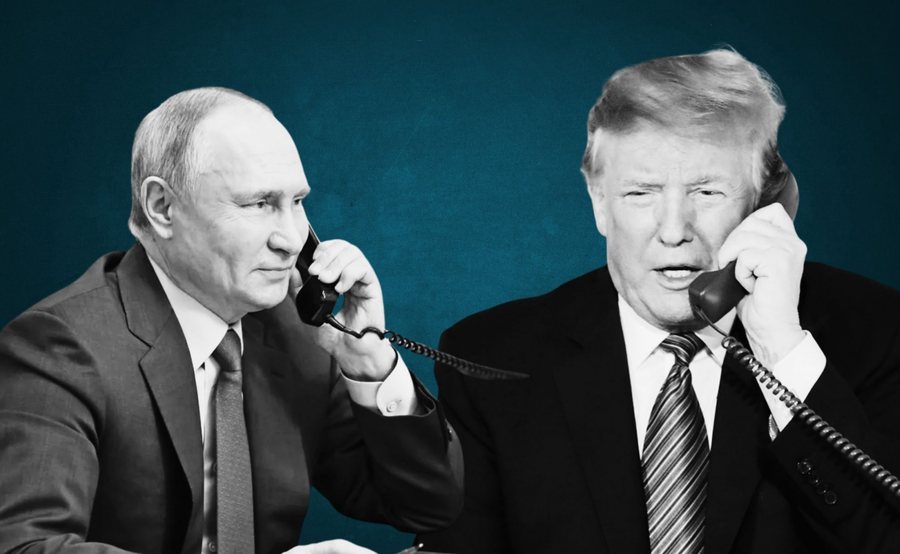
If Trump fooled himself into thinking he could end the war in a day, the Kremlin also fooled itself into thinking that decades of transatlantic cooperation could end just because an unusual president entered the White House...
Both Donald Trump and Vladimir Putin spoke of a positive balance of their second telephone conversation after the one on March 18. But the Russian president rejected the idea of an immediate ceasefire in Ukraine and of a face-to-face meeting with the American president, although he left open the possibility of a memorandum with Kiev for a "possible future peace treaty" in which a ceasefire would be established conditional on reaching relevant agreements.
It seemed as if Putin was pursuing a strategy of delay, but in reality he repeated the already well-known demand to eliminate the “root causes of the conflict.” But the new element is the Vatican’s entry into direct negotiations between the two powers. We discussed this issue with Aldo Ferrari, professor of Armenian language and literature and Eurasian history at the University of Venice.
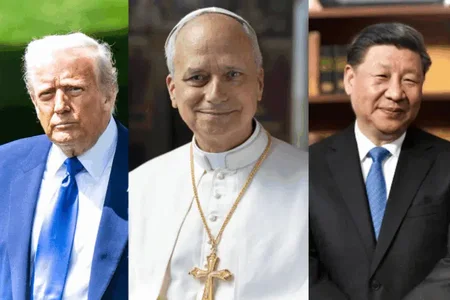
Trump has offered the Vatican's willingness to host peace talks. What do you think of this particular proposal?
I don't think the Vatican has much chance of acting concretely between two non-Catholic countries like Russia and Ukraine. I think the solution has to be found elsewhere.
Moscow repeated a well-known demand: “the most important aspect is the elimination of the root causes of the conflict.” Why this insistence on the root causes?
Moscow's demands are very clear. If the situation does not change, many may suspect that Washington and the capitals of major European countries are pretending not to understand them, or that they are demands that they do not want to accept.
Are you a non-believer?
No, but if we stick to the facts, Russia continues to repeat demands already included in the Minsk II Agreements, and reiterated before the invasion of Ukraine in February 2022: better treatment for Russian or Russian-speaking citizens of Ukraine, and a formal commitment from Ukraine that it will not join NATO.
And haven't developments affected these demands?
On the contrary. Russia invaded Ukraine precisely because its demands were not met. In 3 years of war, although things did not immediately go well on a military level, it has almost completely occupied 2 regions - Donetsk and Lugansk - and half of two others - Kherson and Zaporizhzhia, and is currently able to continue its advance, albeit slowly.
These are Russia's demands, and they need to be discussed. At this point, if we consider that Ukraine's position is to reclaim the territories, and that this demand is still supported by European countries, it is practically impossible to achieve a quick resolution of the conflict.
So Trump's 24-hour end to the war has turned out to be a mirage...
Either Trump was deluded, or maybe he was just campaigning. Or maybe he hadn't studied the Ukraine dossier carefully enough.
After his talk with Putin, Trump is expected to consult with the leaders of France, Britain, Germany and Italy. What will he tell them?
We don't know. But if he wants to make Russia more cooperative, Trump must persuade European government leaders to abandon their plans for military support for Ukraine and new sanctions. The latter have proven ineffective for years. Russia has always been able to adapt, and its economy, despite some warning signs, continues to resist.
Is the raw materials agreement capable of providing Ukraine with the security guarantees that Zelensky seeks?
First, we should be very careful in judging it, as it needs to be read in detail. We currently do not know enough about it. Second, the agreement protects US economic interests much more than those of Ukraine. Finally, as some analysts have acknowledged, nothing seems to prevent Washington from applying it to the territories occupied by Russia.
So what is the political meaning of this pact?
The US managed to guarantee a profitable exploitation of the Ukrainian subsoil, in exchange for the military and economic support provided during the 3 years of the war, but also earlier. I believe that Ukraine will be penalized by it, but it signed it because it had no other choice.
Not even that of support for Europe?
Despite the money raised and declarations from the "ready", European support is still uncertain and ineffective, because the EU does not have sufficient political and military strength.
What is Moscow's true strategic ambition?
When Trump was reelected, Moscow immediately revived its hopes of realizing a dream that had been nurtured for decades even in the Soviet era: the separation of the United States from Europe. But if Trump deluded himself into thinking he could end the war in a day, the Kremlin also deluded itself into thinking that decades of transatlantic cooperation could end simply because an unusual president had taken office in the White House.
So do you think a division between the two sides of the Atlantic is impossible?
Yes, and I fear that the confrontation, not only military and geopolitical, but also cultural, between Russia and the West will continue./ Adapted from "Pamphlet" by "Il Sussidiario"


Lini një Përgjigje