


 Shkruar nga Pamfleti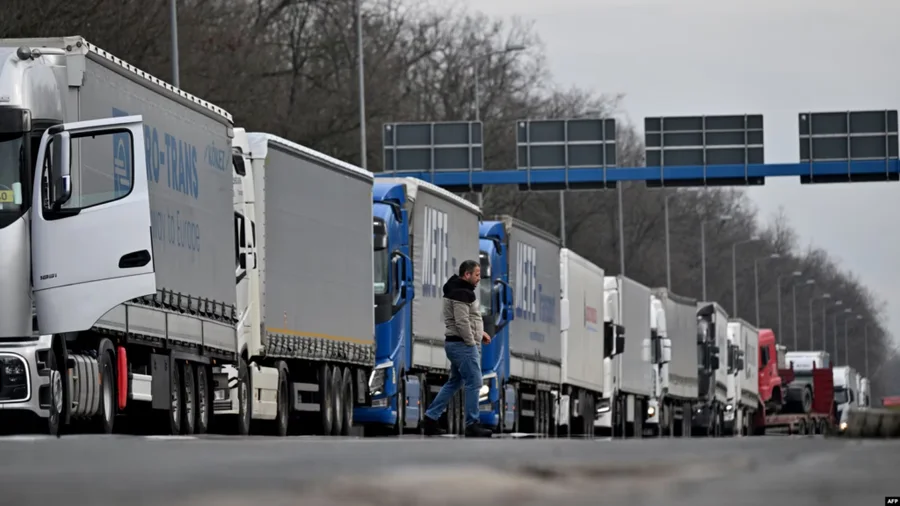
Transporters from Serbia and Bosnia and Herzegovina are continuing blockades at border points with the European Union for the fifth day in a row.
Meanwhile, their counterparts from Montenegro and North Macedonia have abandoned these measures on January 29, after the European Commission announced that it is working on a new visa strategy that envisages solving the problem of limited days for third-country workers who need to enter the Schengen Area.
Freight terminals are blocked at 22 exit points and 19 entry points in Serbia alone.
Freight carriers are protesting against what they consider harsh procedures for entering the Schengen Zone, which, they say, have shortened their time of stay in European Union countries.
They are requesting that the period of stay be extended from 3 to 4 months within a 6-month period.
Initial warnings were that the blockades would last for at least seven days, if no agreement was reached.
The President of the Chamber of Commerce in Serbia, Marko Čadež, said on the first day of the blockades that the direct daily damage caused to the economies of the Western Balkans amounts to around 100 million euros.
The new visa strategy, which was adopted by the European Commission on January 29, foresees that the institution will work closely with member states to find "pragmatic solutions" and approve extensions of stay for certain categories of citizens coming from third countries.
The Kosovo Chamber of Commerce and Industry said on Friday that it welcomes the lifting of blockades by the region's transportation companies, a reference to Montenegro and North Macedonia.
"This is a positive step towards normalizing the circulation of goods and the functioning of supply chains for Kosovo businesses, as these blockades caused significant delays in imports and exports, increased operating costs for companies and uncertainty for entire economic sectors in the country," the Kosovo Chamber of Commerce said in a press release.
Kosovo did not participate in the protest, but it has noticed its consequences, as most of its imports and exports are carried out through transit through these countries.
Several Kosovar businesses that Radio Free Europe spoke to said that in recent days they have faced delays, jeopardized contracts, and financial damages. / Taken from REL




Lini një Përgjigje