


 Shkruar nga Pamfleti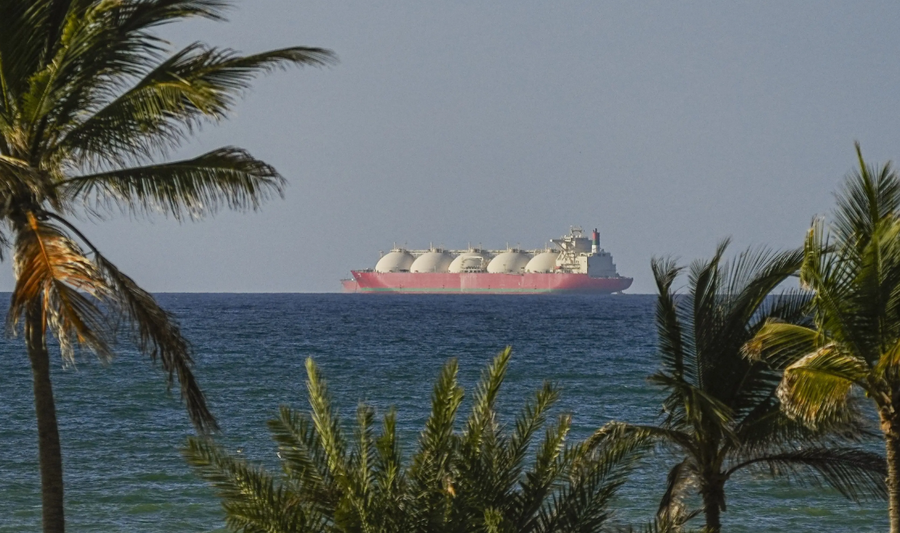
Since the negotiations failed to produce an agreement, US President Donald Trump is increasing pressure on Tehran with a complete naval blockade. The Islamic Republic threatens to close the entrance to the Red Sea. After the air war, the conflict is escalating on the economic front...
Washington has long watched as Tehran turned the Strait of Hormuz into its main instrument of power. To calm markets during the air war, the US government even temporarily lifted sanctions on Iranian oil that was already in transit, according to an analysis by the Swiss media Neue Zürcher Zeitung.
As a result, the Revolutionary Guard allowed only ships from friendly countries to pass through the strait and, depending on the level of relations, imposed passage fees of up to two million dollars.
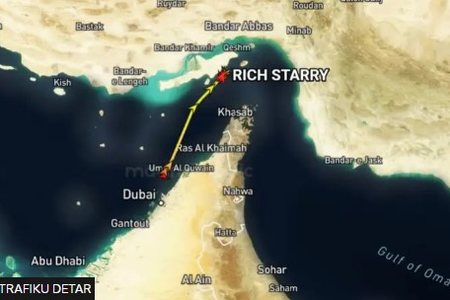
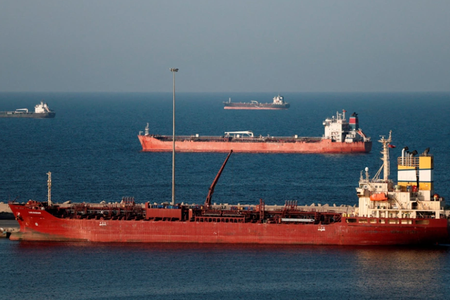
Donald Trump no longer wants to accept this unilateral blockade. Since talks with Iran over the weekend in Islamabad failed to produce any results, the US president announced a complete blockade of Iranian ports starting Monday at 10:00 Washington time. Iran is not respecting the ceasefire and the promise to open the Strait of Hormuz, Trump wrote on Sunday on the Truth Social platform. Any ship passing through the strait will be stopped. The goal of the blockade is: “Everyone should be allowed in. Everyone should be allowed out.”
Against all Iranian ports
The US military command in the Middle East, Centcom, clarified the embargo on Sunday on Platform X: “The blockade will apply to all ships entering or leaving Iranian ports. This includes Iranian ports in the Gulf of Oman, east of the Strait of Hormuz. This also blocks Iranian oil exports through a pipeline that bypasses the strait. Ships that do not use Iranian ports will not be stopped .”
Trump also announced that the US would begin operations to clear mines in the strait. On Monday, he warned Tehran not to use fast naval vessels to maintain control of Hormuz. If one of these vessels attacked the US blockade, it would be “immediately eliminated.”
However, Iran has made permanent control of the Strait of Hormuz a condition for a peace deal in the negotiations in Islamabad. The regime sees this vital corridor for the global oil economy as a guarantee of survival and a means of deterrence against future attacks by the US and Israel. For this reason, Tehran is threatening countermeasures to block the oil and gas exports of the Gulf Arab states. One option is to activate the Houthi militia in Yemen to block the Bab al-Mandab Strait at the entrance to the Red Sea.
Saudi Arabia currently exports some of its oil through the East-West Pipeline to the Red Sea. But Ali Akbar Velayati, an advisor to Iranian leaders, stated in X that the joint command of the “resistance” considers Bab al-Mandab the same as the Strait of Hormuz. If the US repeats its mistakes, the global energy trade could be disrupted with a single action.
Part of the "diplomatic wave"
David Sanger, a New York Times journalist and security expert, wrote that the blockade will be a test to see which side can withstand the most pressure. If Iran fails to export raw materials for a long period, the consequences will be severe for the regime. According to sanctions expert Miad Maleki, the losses could reach $435 million per day. After 13 days without exports, storage capacity would be full, forcing a halt to production and risking long-term damage to the oil fields.
However, it remains unclear whether the US and the global economy can withstand the consequences longer than Iran, especially if Tehran manages to hit Gulf countries' energy exports. Iranian negotiator Mohammad Bagher Ghalibaf warned of a significant increase in fuel prices.
Trump can also count on China's pressure on Iran. Beijing buys more than 80% of Iranian oil exports and gets about half of its needs from the Persian Gulf. However, China has strategic reserves that could help it withstand a blockade for several months. According to US intelligence sources, Beijing could supply Iran with portable anti-aircraft missiles.
Currently, the US insists on maximum demands on Iran: stopping uranium enrichment, handing over its stockpile of enriched uranium, ending support for foreign militias, and opening the Strait of Hormuz. Tehran is expected to reject these demands even under strong pressure.
Former US diplomat Richard Haass supports the blockade, calling the current situation untenable. He sees the increased pressure as part of the ongoing negotiation process, adding that “the diplomatic dance has just begun.” /Adapted from Pamphlet /





Kësaj i thonë një i marrë hedh gurin ne puse dhe 40 te mencur nuk e nxjerrin dote , lind pyetja kushe eshte i marri ?? Pergjigjia "PARAJA" KU po shkon kjo bote ?? MOS VALLE qellimi eshte qe te zvogëlohet popullata sidomos te varferit se teknologjia po zvendeson zvendeson krahun e punës me robotët!!!!